Engine Cylinder Honing Delivers Perfect Wall Finish

According to research on piston ring-cylinder liner friction, friction between the piston ring and cylinder liner assembly accounts for roughly 15% of total fuel power loss in an automotive engine. That single figure tells you something important: the surface where your piston rings meet the cylinder wall is one of the biggest levers you have for improving engine performance and longevity. Engine cylinder honing is the precision process that controls exactly what that surface looks like - and getting it right separates a tight, powerful, long-lasting rebuild from one that burns oil, loses compression, and wears out prematurely.
Whether you are rebuilding a passenger car engine, refreshing a performance block, or simply replacing rings, understanding what cylinder honing actually does - and how to do it correctly - gives you real control over the outcome. This guide covers everything from the microscopic mechanics of a honed surface to grit selection, honing oil, crosshatch angles, and the mistakes that quietly destroy engine rebuilds.
Key Takeaways
-
Ring seal depends on surface texture, not smoothness: According to EngineLabs' blueprint series on honing, a near-polished cylinder surface was found to be less than desirable - the optimal finish combines microscopic peaks with deeper valleys that retain oil and allow rings to seat.
-
Surface roughness has a measurable target: Engine Builder Magazine's cylinder bore refinishing guide states that many late-model engines now require a surface finish in the 15 to 20 microinch Ra range - if your honed bore reads higher than that, your finish grit sequence needs adjustment.
-
Crosshatch angle affects oil migration: Galloway Engines' technical guide on cylinder honing explains that the honed crosshatch angle determines ring rotation speed and oil migration up and down the cylinder wall - most general applications use a 45-degree included angle, so verify yours against piston ring manufacturer specs before assembly.
-
Plateau honing pre-empts break-in wear: A plateau finish, as described in US Patent documentation on plateau honing, attempts to duplicate the finish an engine achieves after break-in by removing the sharp peaks before the engine ever runs - therefore specify plateau honing on every fresh rebuild to reduce early wear debris in your oil.
-
Honing oil is non-negotiable: Quaker Houghton's guide to honing oil explains that proper honing fluid acts as both a lubricant and a flushing agent, clearing metal debris (swarf) during the cut - use a purpose-built honing fluid, never straight engine oil or WD-40.
Quick-Start Prioritization Framework
| Scenario | Recommended Approach | Effort Level | Time to Results |
|---|---|---|---|
| Ring replacement, cylinder in spec | Deglaze/hone only | Low | Hours |
| Engine rebuild, standard bore | Full hone with grit progression | Medium | Half-day |
| Rebored block | Hone to final size after boring | Medium | Half-day |
| Performance or race build | Torque-plate honing + plateau finish | High | Full day |
| Severe scoring or taper | Bore first, then hone | High | Machine shop schedule |
| Aluminum block | Fine-grit flexible hone, no rigid stones | Medium | Hours |
Start here if you are:
-
A DIY rebuilder doing a basic ring job: A 240-grit ball hone or flexible hone chucked into a drill with proper honing oil will restore the crosshatch pattern - follow manufacturer break-in recommendations after assembly.
-
A professional engine builder doing a full rebuild: Use a rigid hone machine with a two-stage grit progression, verify Ra with a profilometer, and always finish with a plateau step.
-
Building a performance or competition engine: Use a torque plate during honing, match your crosshatch angle to the ring manufacturer's specification, and confirm bore geometry is round to within manufacturer tolerances.
What Is Cylinder Honing and Why It Matters
The Science Behind the Surface
The honing process employs a honing stone of a certain grit applied with precise pressure and speed, to create the desired crosshatch pattern. That pattern is the functional heart of the whole process. When a freshly honed cylinder is viewed microscopically, the surface appears as many peaks and valleys - the peaks are the highest point of the surface, which makes contact with the rings, while the valleys are areas cut by abrasives during the honing process.
Once a fresh engine is fired, the tops of the peaks are literally sheared off as the rings seat into the cylinders, creating a plateau for the rings to ride over and a light film of oil that is retained in the valleys. This controlled wear-in is the goal. A surface that is too smooth gives the rings nothing to conform to and can cause delayed seating or glazing. A surface that is too rough accelerates wear, consumes oil, and leaves abrasive debris circulating through your oiling system.
Pro Tip: Think of a properly honed cylinder wall like a microscopic landscape: flat plateaus where the rings ride, and channels between them that hold your lubricating oil film. Destroy either feature and you destroy ring seal.
What Honing Accomplishes in Practice
In practice, the honing process removes irregularities, standardizes the cylinder diameter, and improves piston ring sealing. When properly performed, honing improves engine efficiency, compression, and reduces oil consumption. These are real, measurable outcomes - not abstract engineering theory.
Honing is designed to leave the cylinder with a surface that distributes oil, serves as an oil reservoir, and provides a place for worn metal and abrasive particles to escape. The surface must also have enough flat area to act as a bearing surface on which an oil film can form. That dual requirement - rough enough to hold oil, flat enough to support a film - is what makes honing a precision operation rather than just a cleanup step.
Honing vs. Boring: Understanding the Difference
Boring is a machining process that removes material from the inside of a cylinder and increases its diameter, while honing is used to provide a proper finished surface after the boring process is complete. These processes solve different problems. Boring fixes size and alignment but cannot give a finished surface against which rings can provide adequate sealing. Honing gives a perfect finish and geometry but cannot be used to correct major distortion, although it may fix minor cylinder wall scoring issues.
Boring always comes first to establish the correct geometry, and honing comes second to give you that beautiful finish and bring the bore to the exact size. If you are dealing with significant taper wear, deep scoring, or a displacement increase, bore first. If the cylinder is within specification and you are refreshing for new rings, a hone alone is appropriate.
What Is a Honing Tool and Which Type Do You Need
Rigid Stone Hones
There are two types of cylinder hones: rigid and flexible. A rigid hone consists of two or more slender grinding stones on spring-loaded arms. Rigid hones are the standard tool for precision material removal and bore geometry correction. There are two main types of cylinder honing tools: stone-style tools use strips of fine-grit polishing stones attached to spring-loaded arms, while brush-style hones - sometimes called ball hones - have dozens of abrasive balls attached to stiff metal bristles.
For most DIY mechanics and professional shops alike, a variable-speed electric hone with diamond or silicon carbide stones offers the best balance of control, durability, and surface consistency. Rigid hones mounted in a machine deliver the best bore geometry correction and are the professional standard for full engine rebuilds.
Flexible Hones (Ball Hones)
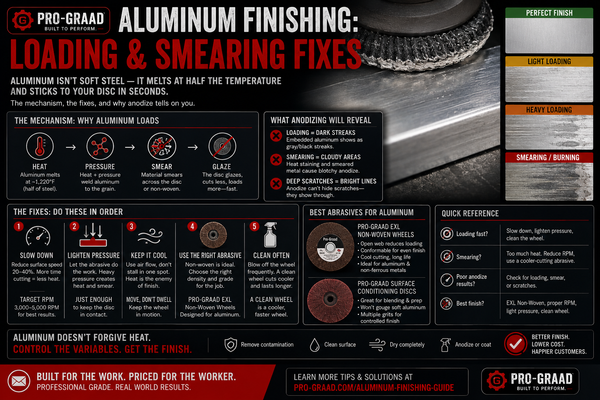
For aluminum blocks with thin walls, flexible hones are preferred to avoid distortion. The flex hone, or ball hone, uses abrasive balls on flexible wire stems that conform to the bore. This self-centering action makes them well-suited for deglazing and for the final plateau step after a rigid hone has already established size. Pro-Graad TwistFlex Cylinder Hones reduces raised areas or ridges to a uniform height while creating a uniform series of oil-retaining valleys.
Abrasive Materials: Choosing the Right Stone
Cylinder honing tools are available in different abrasive types, such as silicon carbide, diamond, and aluminum oxide, allowing users to select the best style for their application. The material you are honing determines the correct abrasive. Aluminum oxide is best suited for steel and is also used when honing Nikasil. Silicon carbide abrasive is effective for cast iron, bronze, brass, and aluminum.
Pro Tip: When working with cast iron blocks, silicon carbide stones are your primary choice. For steel liners and Nikasil-plated aluminum bores, switch to aluminum oxide. Using the wrong abrasive type will produce a poor finish and can contaminate the bore with embedded particles that accelerate ring wear.
Engine Honing Guide: Grit Selection and the Progression Sequence
Understanding Grit Numbers
The amount of work to perform and the degree of surface improvement required determine the grit size. The lower the grit, the coarser and more aggressive the hone. In engine cylinder work, grit selection follows the principle of starting coarse enough to cut efficiently, then stepping progressively finer to achieve the correct Ra (roughness average) target.
For engine rebuilds, start rough with 60-120 grit and finish finer with 180-240 grit. This two-step sequence establishes size with the coarser stone, then refines the surface texture with the finer grit. For late-model engines with tighter surface requirements, an additional plateau step follows.
The Professional Grit Progression
With conventional vitrified stones, rough to near-size with #220 then finish with #280; plateau with #400-#600 or a dedicated plateau brush and ball-hone for a few light strokes and passes. With diamond and CBN stones, use approximately #325-#550 diamond for the rough and finish phase to target the same base texture window, then plateau using fine conventional (#400-#600) or brush tools to remove peaks and debris.
Engine Builder Magazine's cylinder bore refinishing guide for late-model engines vary, but many are now in the 15 to 20 microinch Ra range. If bores are honed with #325 to #400 diamond stones, the finish will typically be in the 22 to 24 Ra range - which is too rough. Therefore, always follow a rough honing pass with a finer finishing sequence and verify the result with a profilometer before assembly.
Plateau Honing: The Modern Standard
A plateau finish is similar to a conventional finish, except that the peaks have been removed or flattened out. The finish attempts to duplicate the finish after the engine has been broken in, and removes or smooths out metal that would otherwise be removed by piston rings. A proper plateau finish contributes to the mechanical and environmental efficiency of the engine.
The introduction of CBN abrasives is a significant advancement. These abrasives act like a standard vitrified abrasive that is sharp and cuts cleanly, but last thousands of cylinders unlike standard abrasives. They are necessary to use after diamond honing to clean all the torn and fragmented metal from the surface and to produce the consistent plateau finishes needed in today's race engines.
Pro Tip: Never over-plateau a cylinder. According to Goodson Tools' technical guide on plateau honing, sixteen to eighteen strokes with an ultra-finish brush are the maximum. More strokes produce a surface too smooth to retain adequate lubrication, leading to premature ring wear and oil film breakdown.
The Crosshatch Pattern: Angles, Oil Retention, and Ring Behavior
Why Crosshatch Angle Matters
Galloway Engines' technical guide on cylinder honing angle determines ring rotation speed and its ability to promote proper oil migration up and down the cylinder wall. Most general application blocks use a 45-degree (included) angle. This 45-degree standard is widely cited because of how it distributes oil across the bore. When cylinder walls have a 45-degree crosshatch, the upward motion of the piston spreads the oil sideways in both directions and covers the entire wall. When these oil-retaining grooves are evenly spaced, the piston rings tend not to rotate or surge in the direction of the groove.
Adjusting Angle for Specific Applications
The cross-hatch angle should be the same the full length of the cylinder. Some builders prefer as little as a 20-30 degree cross-hatch when using low-tension oil rings, because it reduces oil movement up and down the cylinder. On the other hand, long-stroke engines may perform better with a larger 60-degree cross-hatch, as the angle provides increased oil movement to the top of the bore.
Some applications use angles as steep as 60 degrees and some high-end race applications are as flat as 30 degrees. Longer cylinder bores with longer strokes generally require a steeper angle, as this helps to promote oil migration to the top of the cylinder. The practical action here: confirm the crosshatch angle specification with your piston ring manufacturer before you begin honing, since ring pack designs are matched to specific bore textures.
Controlling Crosshatch Angle During Honing
The angle and depth of the crosshatch pattern are a function of how fast you move the hone (rpm and stroke speed) and the grit of the abrasive. A medium-grit hone will leave a more pronounced pattern than a fine or extra-fine-grit hone. It is absolutely wrong to allow a hone to dwell in one position with no stroking motion. Consistent, steady strokes from top to bottom of the bore are required to maintain a uniform pattern across the entire cylinder length.
Engine Honing Oil: The Fluid That Controls Finish Quality
What Honing Oil Actually Does
Honing oil is a specially formulated fluid used during the honing process. In simpler terms, honing oil acts as both a lubricant and flushing agent, allowing abrasive tools to cut smoothly while removing metal debris (also called swarf) from the work surface.
In a machine shop, honing oil also carries away excess heat and, depending on composition, may prevent unintentional tearing and welding of the metal. That last point matters more than many builders appreciate. Without adequate fluid flow, the abrasive stones can smear or tear the metal surface rather than cutting cleanly, producing a poor finish with folded metal peaks that accelerate ring wear from the first startup.
Choosing the Right Fluid
Achieving the correct surface texture relies heavily on using the appropriate honing oil, which is specially formulated to suspend abrasive particles and metal debris. Using a substitute like engine oil or solvent will lead to the abrasive stones loading up with material, which results in an uneven cut and a poor finish.
For most engine cylinder applications, a purpose-built petroleum-based honing fluid is the correct choice. Wet honing involves using a honing oil or coolant to cool the cylinder and lubricate the honing stones, which helps to prevent overheating and reduces friction. Synthetic oils should be avoided during honing, as they can interfere with ring seating during the break-in period. If you are using a ball hone in a drill, apply honing oil liberally and re-apply frequently - the fluid should flow freely, not sit as a thin smear.
Torque Plate Honing: The Step That Separates Good from Great
How Block Distortion Affects Bore Geometry
When a head is bolted to a block the load created by the tensioning process causes block distortion. This distortion can alter the geometry of the cylinder, meaning a block without load will have a slightly different shaped cylinder bore than the same block with load.
Dimensional variations of .003" to .004" have been recorded. Those numbers may sound tiny, but at modern engine tolerances they are significant. Poor bore geometry can cause a number of problems. If the bores are not concentric, especially with thin low-tension piston rings, the rings will not seal as tightly and the engine will experience blowby and oil consumption problems. The compression losses will also hurt performance and emissions. Therefore, if you are building a performance engine or working with a block known to flex under head bolt loading, torque plate honing is essential.
How Torque Plate Honing Works
Torque plates are designed to the same specifications as the head of that particular application and are bolted to the block with the same tensions used to clamp the head to the block. The honing is then performed with the block in its loaded, distorted state. If you have a torque plate torqued to the block when the hone and boring is done by the machine shop, the block will retain that distortion when machined, and when the motor is actually assembled and the real heads bolted on, this will leave you with perfectly straight bored and honed cylinders.
Engines assembled with a torque plate not only have better ring sealing, but also wear more evenly. For street builds, torque plate honing is a premium step. For race engines, forced induction applications, or any build where cylinder pressure is elevated, it should be considered mandatory.
Common Cylinder Honing Mistakes and How to Avoid Them
Mistake 1: Using the Wrong Surface Finish for the Application
Most ring sealing and oil consumption problems are the result of an improper surface finish and/or the wrong crosshatch in the cylinders. This is the most common root cause of post-rebuild oil burning and poor compression. The bigger issue is matching bore finish to the application as a whole - the block material, the fuel, the oiling environment, and the intended use. It is important that the cylinder finish be matched to the ring.
What to do instead:
-
Consult your piston ring manufacturer for Ra and crosshatch angle specifications.
-
Measure with a profilometer after honing - visual inspection alone is not reliable enough.
-
Adjust your grit sequence if the Ra reading falls outside the target range.
Mistake 2: Skipping or Over-Doing the Plateau Step
A too-rough bore results in scuffing and rapid wear of components, poor ring sealing, reduced component life, and oil consumption. But over-plateauing is equally damaging. Excessive fine honing and brush time will reduce valley depth and harm oil retention. Both errors cause problems - one from the start, one gradually over miles. Limit your plateau brush passes to the manufacturer-recommended stroke count and measure before and after.
Mistake 3: Neglecting Post-Honing Cleaning
After the cylinders have been honed, scrub them out with warm soapy water and a brush to remove all honing and metallic debris. This is an often-overlooked step that can ruin a new set of rings in a hurry. Abrasive particles left in the bore will embed in piston ring faces and cause rapid, accelerated wear from the first startup. Always deep-clean with hot soapy water after plateauing to remove abrasive residue that can accelerate wear and prevent proper ring seating.
Mistake 4: Inconsistent Stroking Technique
Use a slow speed and rather large plunging and retracting movements to create a large crosshatch pattern on the cylinder surface. Spinning the tool too fast will sling lubrication out and the crosshatch will not form correctly, making proper sealing difficult to attain. Maintain a consistent, smooth stroking rhythm for the entire duration of each honing pass. Dwelling at the top or bottom of the stroke creates uneven patterns and can cause bell-mouthing at the bore opening.
Mistake 5: Allowing Cylinder Glazing to Go Untreated
Oxidized oil can collect on cylinder walls and create a somewhat shiny surface coating that has completely filled in the peaks and valleys of the honing process. When cylinder walls glaze over, rings can no longer conform to the surface, compression drops, and oil consumption rises. A common question is whether you need to deglaze a cylinder. The answer is yes, unless it is time for a replate or resleeve. If your engine has any time on it, the glazing process has already begun. Therefore, any ring replacement job should include at minimum a light deglazing pass with a flexible hone.
For workshops and engine builders looking for precision honing tooling and abrasive solutions, Pro-Graad offers professional-grade TwistFlex cylinder hones and brake hub cleaning & finishing hones suited to both production and specialist engine rebuilding environments.
Frequently Asked Questions
What is honing and how is it different from boring?
Honing involves removing a small amount of material from the cylinder wall to create a smooth surface finish, while boring involves removing a larger amount of material to increase the cylinder diameter. The former is typically done to restore the proper surface finish of the cylinder, while boring is done to increase engine displacement or to repair a damaged or worn cylinder. In practice, boring corrects size and alignment issues, and honing follows to deliver the precise surface texture that allows rings to seal.
What grit should I use to hone cylinders for ring seating?
For a final finish compatible with most modern piston ring sets, a conventional stone hone in the 280 to 320 grit range is typically used. This is often followed by a flexible hone with a very fine abrasive such as 400 or 600 grit, to gently remove the sharp peaks and folded metal. This secondary process ensures the ring rides on a smooth plateau while the deeper valleys remain intact for oil storage.
What is the correct crosshatch angle for cylinder honing?
The recommended crosshatch angle for most cylinder honing applications is between 20 and 60 degrees. This range ensures optimal performance in terms of sealing and wear characteristics of the cylinder surface. For most general passenger car and truck engines, a 45-degree included angle is the standard starting point. High-performance and long-stroke applications may require steeper angles, so always confirm with your piston ring manufacturer.
Do I need to hone cylinders when just replacing piston rings?
More often than not, you will need to hone your cylinder when replacing piston rings. That is because honing creates small crosshatches in the surface of the cylinder, to allow the wall to retain oil and provide lubrication for the piston ring. At minimum, a deglazing pass with a flexible hone is required. If the existing crosshatch has worn smooth, a full honing sequence with appropriate grit progression is warranted.
How important is honing oil and what happens if I skip it?
Cleanliness is critical during honing. Debris left behind can damage the cylinder wall or reduce tool performance. That is why investing in a clean-running, purpose-built cylinder honing fluid pays off. Skipping honing oil - or substituting with an unsuitable fluid - causes the abrasive stones to load with swarf, which leads to uneven cutting, glazed stone surfaces, and a bore finish that will not support proper ring seating.
What is a torque plate and when is it necessary?
A torque plate bolts to the engine block during the boring and honing process, and it replicates the distortion that will be present in the bores when the cylinder head is bolted on. It is most critical for engines with closed-deck designs, thin-wall blocks, or those subjected to high cylinder pressures. When rebuilding an engine, it is essential that a cylinder bore is honed, regardless of whether the engine has been re-bored or not. For high-performance builds, always use a torque plate.
The Bottom Line
Engine cylinder honing is the process that turns a machined bore into a working engine surface. The crosshatch pattern it creates is responsible for ring seating, oil retention, compression sealing, and controlled break-in wear - all of the outcomes that determine whether a rebuild lasts 50,000 miles or 250,000. Getting it right means understanding grit progression, matching your crosshatch angle to your ring specification, using proper honing oil throughout, cleaning the bore thoroughly afterward, and - for serious performance builds - using a torque plate to account for assembly distortion.
Every decision you make during the honing process either adds to or subtracts from the precision of that microscopic surface. Take it seriously, measure the result, and your engine will reward you with tight compression, minimal oil consumption, and a fast, clean break-in.
Sources
-
EngineLabs Blueprint Series: The Art and Science of Cylinder Honing - EngineLabs. Technical overview of honing process, crosshatch mechanics, and surface finish requirements. https://www.enginelabs.com/engine-tech/enginelabs-blueprint-series-the-art-and-science-of-cylinder-honing/
-
Cylinder Bore Refinishing with Honing Tools - Engine Builder Magazine. Surface roughness Ra specifications for late-model engines. Engine Builder Magazine's cylinder bore refinishing guide
-
Cylinder Honing: The Importance of Peaks and Valleys - Circle Track Warehouse / Motorstate. Peaks, valleys, and ring seating mechanics. https://motorstate.com/cylinder-honing-peak-and-valleys/
-
Cylinder Honing Recommendations - Engine Builder Magazine. Crosshatch angle specifications and grit recommendations. https://www.brakeandfrontend.com/cylinder-honing-recommendations/
-
Cylinder Honing - Galloway Engines. Crosshatch angle selection, oil migration, and plateau finishing. Galloway Engines' technical guide on cylinder honing
-
Flex-Hone Tips: Cylinder Walls and Cross-Hatch Angles - Brush Research Manufacturing Blog. 45-degree crosshatch angle mechanics and oil distribution. https://blog.brushresearch.com/flex-hone-tips-cylinder-walls-and-cross-hatch-angles
-
What Is Honing Oil and Why It Matters for Engine Cylinder Performance - Quaker Houghton. Honing fluid function, swarf removal, and product selection. https://store.quakerhoughton.com/blog/what-is-honing-oil-engine-cylinder-fluid-guide
-
Smooth and Straight - Engine Builder Magazine. Post-honing cleaning, ring seal, and surface finish guidance. Most ring sealing and oil
-
Torque Plate Simulation Honing - Galloway Engines. Block distortion, torque plate mechanics, and dimensional variation data. When a head is bolted to a block
-
Honing Stone Grit Selection and Progression in Engine Cylinder Honing - Honing World (Krishna Machine Tools). Grit sequence recommendations for conventional, diamond, and CBN stones. https://www.honingworld.com/victoria/latest-update/honing-stone-grit-selection-and-progression-in-engine-cylinder-honing/20
-
Friction Losses between Piston Ring-Liner Assembly of Internal Combustion Engine: A Review - ResearchGate. Piston ring friction as a percentage of total engine fuel power loss. research on piston ring-cylinder liner friction
-
Selecting Cylinder Honing Stones - Goodson Tools and Supplies. Abrasive type selection by material (aluminum oxide, silicon carbide). https://goodson.com/blogs/goodson-gazette/selecting-honing-stones-for-your-next-job
-
A New Finish in Honing - Goodson Tools and Supplies. Plateau and ultra-finish honing technique, stroke limits. https://goodson.com/blogs/goodson-gazette/a-new-finish-in-honing
-
What Grit to Hone Cylinders for Proper Ring Seating - Engineer Fix. Final grit ranges and plateau finishing process. https://engineerfix.com/what-grit-to-hone-cylinders-for-proper-ring-seating/
-
Cylinder Honing Vs Boring - Jalopnik. Practical explanation of boring versus honing and order of operations. https://www.jalopnik.com/2097184/cylinder-honing-vs-boring-differences/
-
Honing A Cylinder: A Comprehensive Guide - HEMS Ltd. Honing versus boring comparison, wet versus dry honing. https://www.hemsltd.com/blog-honing-a-cylinder/
-
Hone in on Honing - Engine Builder Magazine. CBN abrasives and plateau honing machine capabilities. The introduction of CBN abrasives
-
Torque Plates: Critical For Engine Boring and Honing? - HP Academy. Block distortion and torque plate purpose explained. https://www.hpacademy.com/q-and-a/torque-plates-critical-for-engine-boring-and-honing/
-
Should I Hone My Cylinder When Replacing My Piston Rings? - Extrude Hone AFM. Decision guide for ring replacement honing requirements. https://www.extrudehoneafm.com/faqs/should-i-hone-my-cylinder-when-replacing-my-piston-rings/
-
Flexible Hones: Choose the Right Abrasive Type and Grit Size - Brush Research Manufacturing Blog. Grit size and abrasive type selection guide for flexible hones. https://blog.brushresearch.com/flexible-hones-abrasive-type-grit-size