How Much Money Do You Save Buying Sanding Discs Bulk?
If you've ever reached the end of a sanding session and realized you burned through your last disc before the job was done, you already know the pain. Abrasives are a genuine line item, and the cost of buying them in small quantities adds up faster than most people expect. The global abrasives market is valued at USD 52.06 billion in 2026, a figure that reflects just how central these products are across woodworking, metalworking, automotive finishing, and construction. The pricing structure behind this market matters directly to your wallet, because the gap between single-pack and bulk pricing on sanding discs can be dramatic.
In my experience, most people dramatically underestimate what they spend on sanding discs per year. They compare single-pack prices at the hardware store without ever doing the math on what a bulk order actually costs them per disc. This article breaks it all down, the real numbers, the conditions that make bulk buying worthwhile, and the mistakes that turn a smart purchase into dead stock.

Key Takeaways
-
Bulk pricing cuts per-disc cost significantly: Basic aluminum oxide 6-inch hook-and-loop discs sell for $0.25 to $0.50 each in multipacks, compared to far higher single-disc retail rates. Therefore, calculate your annual disc usage before every purchase cycle and buy in quantities that push you into the lowest per-unit tier.
-
The savings extend beyond unit price: Bulk orders can also lower shipping costs per unit, compounding the savings beyond the sticker discount. Therefore, always factor in freight when comparing retail versus bulk pricing.
-
Bulk buying from consumers can save 25-35%: Data from SoFi shows that individual consumers can save 25% to 35% by buying in bulk at wholesale outlets. Therefore, if you use sanding discs regularly, treat bulk purchasing as a budgeting strategy, not just a convenience.
-
Cost-per-use matters more than sticker price: A $1.20 disc lasting three times longer than a $0.40 disc saves money long-term. Therefore, never evaluate bulk purchases by unit price alone, factor in how many surface area feet each disc delivers.
-
Storage conditions protect your bulk investment: It is recommended that coated abrasive products be used within two to three years from the date of production. Therefore, only buy quantities you can realistically use within that window.
Quick-Start Prioritization Framework
| Buyer Type | Recommended Action | Effort Level | Savings Potential |
|---|---|---|---|
| Occasional DIYer (1-2 projects/year) | Buy 25-50 packs from a specialist supplier | Low | 10-20% |
| Active hobbyist (monthly projects) | Buy 100-pack multi-grit bundles | Low-Medium | 25-35% |
| Small workshop or contractor | Set up a wholesale account | Medium | 30-50% |
| Body shop or production facility | Direct supplier or manufacturer pricing | Medium-High | 40-60% |
| Reseller or distributor | Request volume-tiered contract pricing | High | 50%+ |
Start here if you're:
- An occasional DIYer: A 50-pack from a dedicated abrasives supplier gives you meaningful savings without the risk of stock expiring before you use it. Compare per-disc cost directly against what you paid last time at the hardware store.
- A regular workshop user: Set a monthly or quarterly ordering cycle and consolidate grit needs into one bulk order. The per-unit savings on a 100-disc order versus a 10-pack are significant enough to justify the upfront spend.
- Running a business: Open a wholesale or trade account. Aimchamp Abrasives, for example provides extreme discounts on high-volume purchases, allowing clients to achieve cost saving targets without necessarily affecting quality.
The Real Numbers: What Bulk Buying Actually Saves You
Single-Pack vs. Bulk: Per-Disc Price Breakdown
The most direct way to understand bulk savings is to compare per-disc costs across purchase sizes. Hand sanding discs in the 5-to-6-inch range often cost $0.25 to $0.65 per disc depending on grit and hook-and-loop quality when bought in standard retail packs. That range widens significantly once you factor in disc type and abrasive material.
Budget discs cost $0.25 to $0.50 per unit for paper-backed 5-inch discs suitable for occasional DIY projects, while mid-tier options at $0.75 to $1.50 feature ceramic and alumina blends for longer life. Professional-grade discs exceed $2.00 for specialized applications like titanium grinding. For bulk purchases over 100 units, requesting sample batches to test consistency before full orders is best practice.
The critical insight here is the spread. A single pack of ten discs from a hardware store might price each disc at $0.75 or more after you account for the retail markup. That same disc model in a 100-pack from a specialist supplier like Pro-Graad can drop to $0.30 or lower. Over a year of regular use, that difference is material.
Pro Tip: Track how many discs you actually use per project type. A single refinishing job on a hardwood cabinet might consume six to ten discs across multiple grits. Once you have a usage rate, you can calculate your annual disc spend and identify exactly how much a bulk switch saves you.
Understanding Tiered Pricing
Tiered pricing encourages buyers to increase their order sizes by progressively lowering the per-unit cost at each threshold. Most abrasive suppliers structure pricing in bands, ten packs, fifty packs, one hundred packs, and case quantities. Each step down in unit price rewards the buyer for committing to a larger quantity.
Buying in packs of 50 to 100 reduces per-unit cost, especially if you frequently sand large surfaces. This is the sweet spot for most active DIYers and small workshops, large enough to unlock a meaningful discount, small enough that the stock gets used well within its useful life.
Buying in bulk often gives you a lower per-unit price than purchasing individual items. Over time, paying less per unit adds up to considerable cost savings. The principle sounds simple, but the compounding effect over twelve months surprises most buyers when they actually calculate it.

The Hidden Savings: Beyond the Unit Price
Shipping Cost Reduction
One of the least discussed savings from bulk buying is freight. "Wholesale prices are always lower than buying individual items. Buying in bulk also means fewer orders per year and therefore lower shipping costs overall," according to Pay.com. When you buy small packs repeatedly throughout a project, you may be paying for three, four, or five separate shipping transactions per year on the same product category. A single bulk order collapses those costs into one event.
Larger orders reduce the frequency of reordering, minimizing administrative workload and logistics costs for both parties. For individual consumers this means fewer delivery charges. For businesses it also means less time spent raising purchase orders, chasing invoices, and managing receipts.
Workflow and Productivity Value
A bulk supply of abrasives ensures that production lines remain operational without the risk of running out of essential materials. This continuous supply helps avoid production delays, reduces downtime, and keeps projects on schedule.
In my experience, the hidden cost of running out of sanding discs mid-project is always undervalued. You lose momentum, you may introduce quality inconsistencies when you switch to a different disc brand mid-job, and you burn time on a hardware store trip that could have gone into the work itself. A well-stocked bulk supply eliminates all of that friction.
Batch Consistency
When orders are placed in bulk there is a higher chance of maintaining consistency in quality, as the products are often from the same production batch. This matters more than most buyers realize. Sanding disc performance can vary between production runs, especially with budget-tier suppliers. Buying a large batch from a single production run means every disc in that batch behaves the same way, same cut rate, same heat resistance, same durability.
Pro Tip: When evaluating a new bulk supplier, always request a sample pack first. Always verify return policies before bulk orders. A supplier confident in their product quality will accommodate trial testing. Pro-Graad makes it straightforward to compare disc types before committing to a full bulk order.
When Bulk Buying Sanding Discs Makes Sense, and When It Doesn't
The Case For Bulk
Bulk packs of 50 to 100 units offer significant savings per disc but only make sense if you will use them before degradation. That qualifier is important. The financial case for bulk buying is strongest when:
- You use the same grit consistently across multiple projects
- You run a workshop, trades business, or body shop with regular disc consumption
- You want to lock in pricing before raw material costs shift
- You are working on a large, multi-stage project that will consume dozens of discs
For businesses that rely heavily on these materials, purchasing abrasives in bulk can be a strategic move with far-reaching effects. Even for individuals, the economics are compelling once annual disc usage crosses a certain threshold. If you are getting through more than 30 discs per year, the math almost always favors bulk.
The Case Against Bulk
Bulk buying has real downsides. Bulk purchases require more upfront investment, reducing available cash flow for other business needs. For a hobbyist who works on one or two projects per year, over-buying creates dead inventory, and as the shelf life section below explains, sanding discs do not last forever.
Avoid extremely cheap brands - low-cost discs often use inferior adhesives or inconsistent grit coating, leading to poor performance and potential safety issues. This is the trap many first-time bulk buyers fall into: chasing the lowest per-unit price and ending up with discs that wear out twice as fast, effectively eliminating the savings. According to National Abrasives, Inc., competitive pricing and bulk options should always come with quality assurance, not in place of it.
How to Store Bulk Sanding Discs to Protect Your Investment
Buying in bulk only saves money if the discs remain usable. Storage conditions are the single biggest variable that determines whether a bulk purchase was a smart move or an expensive mistake.
Temperature and Humidity Control
For coated abrasives, there are three common enemies that shorten service life: temperature, humidity, and dust. Managing these three factors is all it takes to protect a bulk purchase.
To give abrasives a longer life with better performance, store them away from the ground in an area with moderate temperatures of 60°F to 80°F and low humidity. A workshop that swings between freezing winters and hot summers without climate control is a hostile storage environment. Temperature fluctuations cause the disc materials to expand and contract, which leads to warping and delamination over time.
The recommended relative humidity level for resin fiber disc storage is 35% to 50%. Below that range, the resin can crack. Above it, moisture absorption causes the fiber backing to curl and the adhesive to degrade.
Flat Storage and Packaging
Discs should be stored flat, in their original packaging, or on a clean, level surface to prevent warping. Avoid stacking them unevenly, as this can create pressure points that deform the discs.
Labeling and organizing discs according to their grit size and purpose is essential. This not only makes it easier to find the right disc when needed but also prevents mix-ups and cross-contamination of grit sizes. When you buy bulk across multiple grits, a clear labeling system saves time every time you reach for a disc.
Pro Tip: Store unused discs flat in a cool dry place to prevent warping and adhesive issues. A simple flat storage bin or the original manufacturer packaging works well. What kills bulk purchases is leaving open boxes near machinery where heat, oil mist, and vibration degrade the discs before they are ever used.

Common Mistakes That Cancel Out the Savings
Buying the Wrong Grit in Bulk
The most expensive bulk buying mistake is over-ordering a grit you don't actually use at that volume. The single biggest mistake is jumping grits. Going straight from 80 to 220 doesn't save time; it just buries 80-grit scratches that show up the moment stain hits the wood. If you buy 100 discs of a grit that sits between steps in your process, those discs will sit on the shelf unused.
Before placing any bulk order, map out your full grit progression and calculate how many discs each grit step consumes per project. Then multiply by your expected project volume for the year. That number tells you exactly how many discs of each grit to order.
Ignoring Disc Compatibility
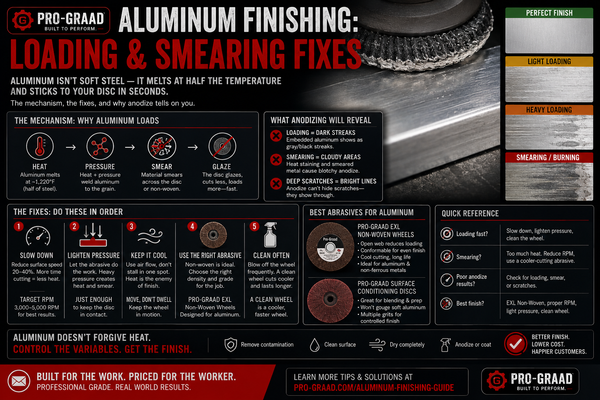
Loading and clogging happens when dust from the workpiece clogs the gaps between the abrasive grains, making the disc useless. It is often caused by using a closed coat disc on a soft material. The fix is to switch to an open coat disc or one with an anti-clog coating.
Buying 100 closed-coat discs for use on pine or other soft, resin-rich woods creates a compatibility problem that no amount of bulk savings can offset. Match the disc specification to the material before you commit to volume.
Sacrificing Quality for Price
Cheap abrasives are hardly ever worth the savings. A disc that wears out in half the time at half the price delivers no net saving, and may deliver worse surface quality, requiring rework. Ceramic grain sanding discs last 30% to 50% longer than other abrasive grains on steel and stainless steel, which means the higher upfront cost per disc often translates into a lower total cost of ownership when working on demanding materials.
The Benchmark Abrasives buying guide recommends evaluating disc performance across the full lifecycle of a project, not just at the point of purchase. Apply the same thinking when evaluating bulk options.
Frequently Asked Questions
How much can I realistically save buying sanding discs in bulk?
The savings depend on your baseline purchase method and disc type, but the range is significant. Data from SoFi shows that individual consumers can save 25% to 35% by buying in bulk at wholesale outlets. For sanding discs specifically, the per-unit cost difference between a 10-pack from a hardware store and a 100-pack from a specialist abrasives supplier can easily exceed 40%. The actual dollar saving depends on how many discs you use per year, but any regular user who switches to bulk purchasing will notice the difference immediately.
How long do sanding discs last in storage?
Coated abrasive products may contain organic material that breaks down over time. It is recommended that coated abrasive products be used within two to three years from the date of production. Coated abrasive products could survive over three years in the right conditions, but you should exercise caution in using older abrasives. Store discs flat, at consistent moderate temperature and humidity, and use them on a first-in, first-out basis to keep your stock fresh.
What is the difference between PSA and hook-and-loop discs when buying in bulk?
Hook-and-loop discs are best for applications where discs are changed frequently. They are reusable and cooler-running due to the fabric backing. PSA discs are best for high-speed, heavy-duty sanding where a firmer attachment to the backup pad is required, often resulting in a flatter finish. When buying in bulk, choose the attachment type that matches your primary tool and workflow. Buying a large quantity of the wrong backing type creates waste, not savings.
Are premium ceramic or zirconia discs worth buying in bulk?
Balancing cost with performance is important, especially for large or prolonged projects. Higher-end discs like those made from ceramic offer excellent durability and cutting efficiency but come at a higher price point. For shorter or less demanding tasks, more affordable options like aluminum oxide discs may be sufficient. For users who regularly sand metal, stainless steel, or hardwoods, buying premium discs in bulk is a strong financial decision because the extended lifespan of each disc lowers the effective cost per square foot of surface sanded.
Should I test before placing a large bulk order?
Yes, every time. Request samples before placing large orders to test compatibility and performance. A reputable supplier will not hesitate to provide a trial quantity. Confirm that the disc holds up to your specific material, that the hook-and-loop backing grips your sander pad correctly, and that the abrasive delivers a consistent finish before committing to volume. Pro-Graad is built around this kind of informed buying, helping customers identify the right disc specification before they scale up their order.
The Bottom Line
Buying sanding discs in bulk is one of the most straightforward cost-reduction moves available to anyone who works with abrasives regularly. Buying in bulk often gives you a lower per-unit price than purchasing individual items, and over time, paying less per unit adds up to considerable cost savings. The key is pairing the price benefit with the right disc quality, correct storage, and a realistic assessment of how many discs you will actually use before they degrade.
If you are buying ten packs from a hardware store every few weeks, you are leaving real money on the table. Map your usage, choose your grits, and place a considered bulk order from a specialist supplier. The per-disc savings are immediate, the shipping savings compound over the year, and the consistency benefits show up in the quality of every surface you finish.
For a reliable range of sanding discs available in bulk quantities, visit Pro-Graad to explore options matched to your material and project type.
Sources
-
Abrasives Market Size and Forecast 2026-2031, Mordor Intelligence. Global abrasives market valuation and growth data. https://www.mordorintelligence.com/industry-reports/abrasives-market
-
How to Choose the Best Sanding Discs for Your Project, Alibaba SmartBuy. Pricing tiers and bulk purchasing guidance for sanding discs. https://smartbuy.alibaba.com/buyingguides/sanding-discs
-
Sandpaper Cost Breakdown: Price Ranges by Type, Size, and Quantity 2026, One and Done Prep. Retail disc pricing and per-unit cost analysis. https://oneanddoneprep.com/sandpaper-cost-breakdown-price-ranges-type-size-quantity/
-
Finding the Right Flap Disc for Your Project, National Abrasives Inc. Benefits of bulk purchasing for abrasives. https://www.nainc.org/blog/how-to-select-the-right-flap-disc-for-your-project/
-
How to Store Abrasives for the Best Performance, Red Label Abrasives. Shelf life and storage condition recommendations for coated abrasives. https://www.redlabelabrasives.com/blogs/news/how-to-store-abrasives-for-the-best-performance
-
Resin Fiber Discs: Proper Storage and Handling Techniques, Benchmark Abrasives. Temperature and humidity guidelines for disc storage. https://benchmarkabrasives.com/blogs/sanding/resin-fiber-discs-storage-and-handling
-
The Benefits of Buying in Wholesale for Your Business, U.S. Chamber of Commerce. Consumer savings data from SoFi on bulk purchasing. https://www.uschamber.com/co/grow/marketing/wholesale-and-bulk-buying
-
Buying Abrasives In Bulk Made Better, Derekh South Africa. Business case for bulk abrasive purchasing and supply chain benefits. https://derekh.co.za/buying-abrasives-in-bulk/
-
Sanding Discs Buying Guide, Benchmark Abrasives. Common mistakes and disc selection advice. https://benchmarkabrasives.com/blogs/selecting-tools/sanding-discs-buying-guide
-
How to Choose Sanding Discs: Expert Buying Guide, Alibaba SmartBuy. Cost-per-use analysis and bulk purchasing thresholds. https://smartbuy.alibaba.com/buyingguides/sanding-disc
-
Abrasive Discs Buying Guide for Metal Sanding, FastPlus. Ceramic vs. aluminum oxide disc lifespan comparison. https://fastplus.eu/blogs/sanding-polishing/how-to-choose-right-sanding-discs-for-metalworking
-
Bulk Pricing: Because Nobody Buys Just One, Sales Layer. Tiered pricing mechanics and volume discount structures. https://blog.saleslayer.com/bulk-pricing-because-nobody-buys-just-one
-
What to Look for When Selecting Wholesale Sanding Discs Suppliers, Aimchamp Abrasives. Supplier discount structures for high-volume abrasive orders. https://www.aimchamp.com/blog/selecting-wholesale-sanding-discs-suppliers
-
Tips to Improve Sanding Performance and Extend Sandpaper Life, Sandeburring. Environmental variables affecting sanding disc lifespan. https://sandeburring.com/tips-to-improve-sanding-performance-and-extend-sandpaper-life/