Sanding Discs Make Surface Prep Work Effortless
Surface preparation is one of those tasks that separates a forgettable finish from a genuinely professional one. Yet for many people, it still feels like guesswork. Pick the wrong disc, apply too much pressure, or skip a grit stage, and you end up redoing the entire job. The good news is that choosing and using sanding discs correctly removes nearly all that uncertainty.
According to Mordor Intelligence's 2026 abrasives market report, the global abrasives market is expected to grow from $49.58 billion in 2025 to $52.06 billion in 2026, driven by rising demand across automotive, construction, and metal fabrication industries. That growth signals one thing clearly: more people rely on abrasive tools than ever, and the demand for better surface outcomes has never been higher. If you want results that hold up under paint, stain, or coating, understanding sanding discs is the place to start.
Key Takeaways
- Grit is the starting point: According to the Benchmark Abrasives sanding disc buying guide, coarse grits (24-60) handle aggressive removal tasks like rust stripping and paint removal, while medium grits (80-120) serve as the everyday workhorse for general surface preparation.
- Abrasive material matters more than price: Per the AIMS Industrial sanding disc guide, ceramic alumina maintains its cut rate through controlled microfracture, while aluminum oxide rounds rather than fractures on hard metals, choosing the wrong grain wastes both time and discs.
- The golden rule prevents rework: Empire Abrasives identifies the golden rule of sanding as never skipping more than one grit level, because fine papers lack the cutting power to remove deep scratches left by coarser grits.
- Attachment method affects efficiency: Benchmark Abrasives confirms that hook-and-loop discs are the most commonly used for portable power sanders due to their fast grit-change capability, making them ideal for multi-stage sanding projects.
- Wholesale buying reduces per-job costs: The DLF Can B2B buying guide advises evaluating total cost per completed task rather than per disc, since low-cost discs often increase labor and rework costs over time.
Quick-Start Prioritization Framework
| Strategy | Best For | Effort Level | Time to Results |
|---|---|---|---|
| Coarse grit (40-60) disc for heavy removal | Rust, thick paint, old coatings | Low | Minutes |
| Medium grit (80-120) for surface prep | General prep before paint/primer | Low | 15-30 minutes |
| Fine grit (150-220) for final smoothing | Pre-paint, between-coat sanding | Medium | 30-60 minutes |
| Ceramic/zirconia grain for metal | Stainless steel, hard alloys, weld zones | Medium | Varies by job |
| Hook-and-loop system for multi-stage work | Projects requiring frequent grit changes | Low | Immediate setup |
| Wholesale/bulk purchase for regular use | Workshops, contractors, repeat projects | Low | Cost savings ongoing |
Start here if you are:
- A homeowner doing a single project: Use a medium grit (80-120) aluminum oxide hook-and-loop disc as your starting point; it covers most DIY tasks and tolerates mistakes well.
- A tradesperson or workshop operator: Invest in ceramic grain discs and evaluate grinding discs wholesale options from a supplier like Pro-Graad to cut per-disc costs and ensure consistent supply.
- Working on metal or automotive surfaces: Start with a zirconia or ceramic disc at 60-80 grit and build up progressively, following the advice from Red Label Abrasives on automotive sanding.
Understanding Sanding Disc Types
Sanding discs are coated abrasives designed to be mounted on power tools such as random orbital sanders or angle grinders, allowing for mechanical surface modification. Their function is to smooth rough surfaces, strip away old coatings, or shape material by removing stock quickly and efficiently. Choosing the right type before you start working is the single fastest way to improve your results.
Hook-and-Loop Discs
Hook-and-loop sanding discs are the most commonly used for portable power sanders. They feature a hook-and-loop mechanism that makes changing discs as quick and easy as Velcro, making them perfect for working with a random orbital sander or DA sander where you might need to switch between grits often. For multi-stage projects, this is the disc type to reach for first.
PSA (Pressure-Sensitive Adhesive) Discs
PSA discs use a sticky backing that bonds directly to the tool's platen. These provide a very strong bond and a flat profile, making them the right choice for production sanding on flat surfaces where you do not want any cushion between the tool and the material. They are best suited for extended runs on flat surfaces where disc changes are infrequent.
Fiber Discs
Fiber discs are more rigid abrasive discs designed for heavy-duty applications, specifically on an angle grinder. They consist of a vulcanized fiber backing layered with tough abrasive grains and a strong resin bond. This construction allows them to withstand extreme pressure and heat, making them ideal for aggressive material removal on metal surfaces.
Flap Discs
Flap discs are composed of overlapping sandpaper flaps bonded to a backing plate, providing a self-sharpening action as the outer flap wears away to expose a fresh layer. Flap discs offer a balance of grinding and finishing in one tool, while flat sanding discs are better for blending and finish work on irregular surfaces.
Pro Tip: When choosing between disc types, let the tool drive the decision first. As the Engineer Fix guide to sanding discs explains, the disc's physical dimensions must align with your specific tool, including diameter and the hole pattern designed for dust extraction. Mismatched tools and discs waste money and reduce finish quality.
Grit Selection: The Decision That Drives Results
Grit measures the particle size bonded to the disc, using a counter-intuitive numbering system: a lower number signifies a larger, coarser particle, while a higher number indicates a smaller, finer particle. Getting this selection right at the start of each project eliminates most of the rework that frustrates beginners and experienced users alike.
Coarse Grit (40-80): Heavy Removal
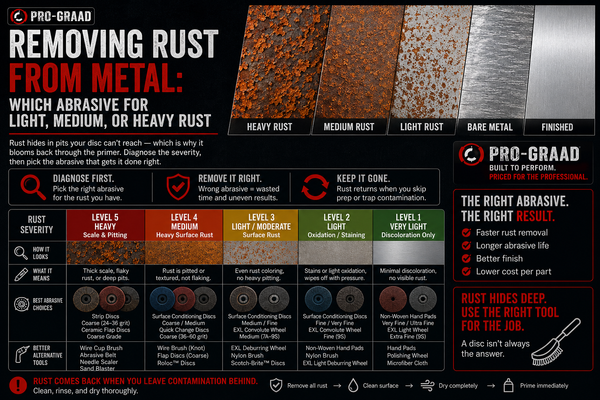
Coarse grit in the 24-60 range is for aggressive tasks like heavy rust removal, taking down high spots on wood, or stripping old layers of paint. It leaves a very noticeable scratch pattern and is not for final finishing. Use this range to remove material, not to prepare a surface for coating. If you start here, plan to follow it with at least two additional grit stages.
Medium Grit (80-120): The Everyday Workhorse
Medium grits (80-120) balance material removal with surface smoothing and suit general-purpose surface preparation. In my experience, this is the grit range that gets skipped most often when people are in a hurry, and skipping it is exactly what causes visible scratches under primer. Start at 80 if the surface has visible defects, or jump to 100-120 if it is already relatively even.
Fine Grit (150-220+): Pre-Finish Smoothing
Medium grits, generally falling between 100 and 180, are suitable for sanding bare wood, smoothing light imperfections, and preparing a surface after initial coarse sanding. Fine grits, starting at 220 and moving upward, are reserved for final smoothing, sanding between coats of finish, and achieving a highly refined surface texture. For paint preparation, Norton Abrasives recommends starting with 120 grit on softwoods and finishing no finer than 220 grit for water-based stains.
Pro Tip: Follow the advice from Empire Abrasives: never skip more than one grit level in a single jump. Each finer grit must fully remove the scratches left by the previous one. Empire Abrasives moving from 80 grit directly to 180 or 220, the finer abrasive particles lack the necessary cutting power to effectively remove the deep valleys created by the coarser grit. The finer grit just sands down the peaks of the existing scratch pattern, leaving the deeper valleys largely untouched.
Abrasive Materials and Backing: What Actually Wears the Surface
The grain type determines how a disc cuts, how long it lasts, and which materials it can handle without damage. The most common abrasive materials used in sanding discs include aluminum oxide, zirconia alumina, ceramic, and silicon carbide.
Aluminum Oxide
Aluminum oxide discs are the workhorses of the industry. They are a great general-purpose abrasive that works well on most metals, and they are affordable and reliable for standard sanding project needs. For wood and light metal work, aluminum oxide covers most situations at an accessible price point.
Zirconia Alumina
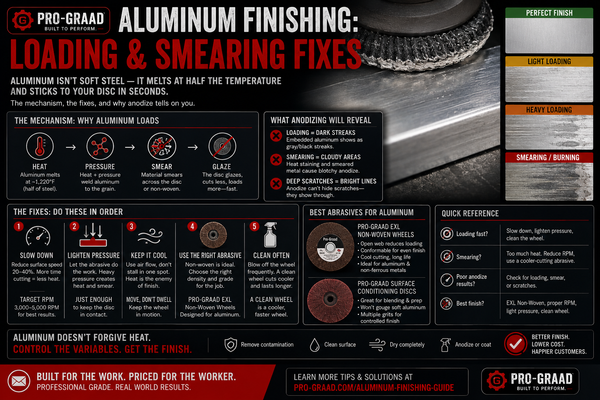
Zirconia alumina is a step up for heavy-duty applications. It is a self-sharpening grain that excels under high pressure, making it ideal for grinding hard and durable materials such as carbon steel. If you work with mild or carbon steel regularly, zirconia outperforms aluminum oxide significantly.
Ceramic Alumina
Ceramic alumina grain is engineered with controlled fracture geometry, as the cutting edge dulls, it microfractures to expose a fresh sharp edge, maintaining cut rate throughout the disc's life. Ceramic alumina is the right grain for stainless steel, hardened tool steel, and weld zones. It costs more per disc than aluminum oxide or zirconia, but the cost per work area is competitive because the disc maintains cut rate. The AIMS Industrial disc guide validates the community rule of thumb: "Soft metals are fine with aluminum oxide, mild steels are best with zirconia, and hardened or alloyed or stainless steel are best with ceramic."
Backing Material
The backing material provides structural support for the abrasive grains and influences the disc's durability and flexibility. Paper backings are the most cost-effective option, from lighter 'A' weight for fine finishing to heavier 'E' or 'F' weights for machine sanding. While paper is suitable for light sanding on flat surfaces, it is the least durable and is not recommended for wet sanding applications. Film backings utilize a thin, strong plastic sheet that is more tear-resistant than paper and offers superior uniformity and flexibility, making them excellent for conforming to contours.
Best Grinding Discs for Metal and Heavy-Duty Applications
Grinding discs are thick bonded abrasive wheels used for aggressive stock removal; they grind metal away. Sanding discs are flexible or semi-flexible coated abrasives used for surface smoothing, leveling, and finishing; they sand material away in smaller increments. Knowing where the line falls helps you select the best grinding discs for each phase of a job.
When to Use Grinding Discs
The most common abrasive materials grinding discs made with silicon carbide abrasive and a ribbed, semi-flexible backing, designed for aggressive stock removal on hard materials like stone, concrete, and masonry. For weld dressing and structural steel surface prep, AIMS Industrial identifies zirconia as the trade-tier choice, while ceramic alumina is preferred for stainless steel and titanium alloys.
The Wholesale Advantage for Regular Users
When purchasing grinding discs in bulk, businesses can benefit from significant cost savings while ensuring they have the right tools on hand for their projects. The DLF Can B2B abrasives guide makes the case clearly: evaluate total cost per completed task rather than per disc, because low-cost individual discs often wear out faster and increase labor costs through slower cutting and more frequent replacement.
For contractors, shop owners, or anyone running through discs regularly, sourcing grinding discs wholesale from a reliable supplier eliminates the per-unit price penalty of retail buying. Suppliers like Pro-Graad offer professional-grade abrasive ranges built for consistent performance across batch orders, exactly the kind of supply reliability that keeps projects on schedule. When you buy abrasives in bulk from a factory-direct supplier, you benefit from factory-direct pricing and volume-based discounts, which significantly reduces unit costs and helps wholesalers and distributors maintain healthy profit margins.
Pro Tip: Industry sources note that premium ceramic grain discs can provide up to 30% longer lifespan than other abrasive grains on steel and stainless steel, helping distributors maintain healthy profit margins. If your team is replacing discs frequently, calculate how often you are interrupting production to change worn discs, the premium per-disc cost often disappears against that lost time.

Common Sanding Mistakes That Ruin Finishes
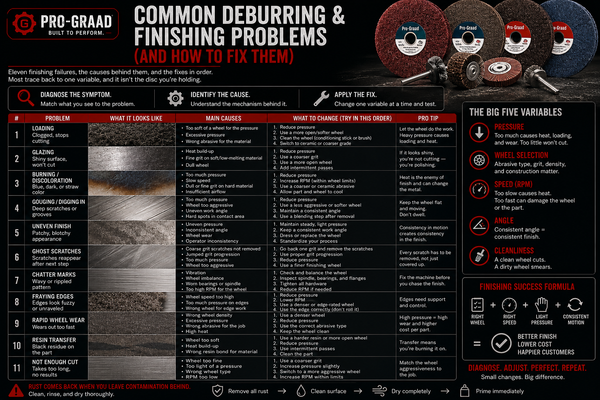
Even with the right disc in hand, technique errors cause most poor outcomes. I have found that the issues come down to just a few repeated patterns.
Skipping Grit Stages
Jumping from a coarse grit straight to a fine grit leaves scratches that are hard to remove. Always progress gradually: start with medium grits, then move to fine and super-fine grits. The eQualle Sandpaper sanding mistakes guide reinforces this: going directly from 80 to 400 grit, for example, leaves deep scratches that no amount of fine sanding can reach. Work through the stages.
Applying Too Much Pressure
Pressing down too hard on your sander is a common mistake. It can be tempting to apply more pressure to speed up the process, but this can create swirl marks, cut-through, and uneven sanding. Excessive pressure also generates heat that causes premature loading of your abrasive discs. Let the tool and the disc do the work. As the Meridian Products orbital sander guide recommends, replace sanding discs every 15-30 minutes during heavy use, worn discs encourage you to press harder, which creates a cycle of damage.
Using the Wrong Abrasive for the Material
The most common mistake is using the wrong abrasive for the application. Generic sanding discs clog quickly, overheat the surface, and lead to uneven finishes. Matching abrasive grain to material type, aluminum oxide for wood, zirconia for mild steel, ceramic for stainless, is the single variable that most dramatically affects how long a disc lasts and how clean a finish it produces.
Neglecting Dust Extraction
Misaligned disc holes reduce dust extraction efficiency, which can lead to a damaged workpiece. Beyond disc alignment, OSHA's woodworking dust guidelines recommend proper exhaust ventilation during all sanding operations. Practically speaking, connecting your sander to a vacuum system keeps the abrasive surface cleaner and extends disc life. Wear N95 respirators and ANSI-approved eye protection, because sanding generates silica particles linked to lung disease.
Frequently Asked Questions
What is the difference between a sanding disc and a grinding disc?
Grinding discs are thick bonded abrasive wheels used for aggressive stock removal; they grind metal away. Sanding discs are flexible or semi-flexible coated abrasives used for surface smoothing, leveling, and finishing; they sand material away in smaller increments. Use grinding discs for heavy-duty material removal and sanding discs when surface quality and finish control matter more than raw cutting speed.
What grit should I start with for most projects?
One of the most frequent mistakes is starting with the wrong grit. Many users either go too coarse, damaging the surface, or too fine, which does not actually prep the material. Start with a medium grit like P120 if unsure, and adjust based on the job. Use coarse grit (40-60) to strip or shape, and fine grit (220+) for finishing.
How do I know when to replace a sanding disc?
One of the most frequent mistakes too long. Once the grit wears down, it stops being effective and can even burnish rather than sand. Replace your disc as soon as you feel it becoming smooth. A burning smell or glazed-looking disc surface are also reliable signs the abrasive is spent. Continuing past this point wastes time and risks surface damage.
Is buying sanding discs in bulk actually worth it?
Low-cost discs often wear out faster, increasing labor and rework costs. Evaluate total cost per completed task rather than per disc. For anyone running through more than a handful of discs per week, bulk or wholesale buying from a trusted supplier consistently lowers the real cost of surface preparation. The per-disc price drops while supply reliability improves, reducing project delays.
What personal protective equipment (PPE) do I need when sanding?
Disposable respiratory masks deliver substantial lung protection against inhaling tiny particles and are mandated by OSHA for sanding operations. Beyond a respirator, always wear safety glasses and consider hearing protection for extended sanding sessions. Never use damaged discs, since even small cracks cause catastrophic failure at high RPMs.
Final Thoughts
Surface preparation determines the quality of every finish that goes on top of it. Sanding discs make that preparation faster, more consistent, and genuinely effortless when you match the right disc to the right task. Start with grit selection, choose an abrasive grain suited to your material, use the correct attachment system for your tool, and follow a disciplined grit progression. Those four decisions eliminate nearly every common failure mode.
For professionals and serious DIYers who go through discs regularly, evaluating bulk or wholesale sources is equally important. The discipline applied to disc selection should also apply to purchasing: cost per finished surface, not cost per disc, is the number that matters. Pro-Graad supports that approach with a professional abrasives range built for consistent quality across volume orders.
Sources
-
Sanding Discs Buying Guide, Benchmark Abrasives. Covers disc types, grit ranges, backings, and common errors. https://benchmarkabrasives.com/blogs/selecting-tools/sanding-discs-buying-guide
-
How to Choose the Right Sanding Disc for the Job, Engineer Fix. Detailed breakdown of grit systems, abrasive materials, and backing construction. https://engineerfix.com/how-to-choose-the-right-sanding-disc-for-the-job/
-
Choosing the Right Sanding Disc, Empire Abrasives. Comprehensive guide to abrasive grain types, material compatibility, and tool matching. The most common abrasive materials
-
Sanding Disc Guide: Grain, Backing & Tool Compatibility, AIMS Industrial. Practical guidance on grain selection for steel, stainless, and hard alloys. https://aimsindustrial.com.au/blogs/product-guides/sanding-disc-guide
-
Abrasives Market Size, Share, Growth Report, Mordor Intelligence. 2026-2031 market forecast for the global abrasives industry. https://www.mordorintelligence.com/industry-reports/abrasives-market
-
The Ultimate B2B Sandpaper and Sanding Disc Buying Guide, DLF Can Tech Center. Procurement guidance for workshops and distributors evaluating total cost of abrasives. https://www.dlfcan.com/tech-center/industry-articles/the-ultimate-b2b-sandpaper-sanding-disc-buying-guide
-
What Is the Golden Rule of Sanding?, Empire Abrasives. Explains grit progression logic and the consequences of skipping grit stages. Empire Abrasives
-
What Are the Best Sanding Discs for Automotive Work?, Red Label Abrasives. Covers grit selection and disc performance for automotive surface preparation. https://www.redlabelabrasives.com/blogs/news/what-are-the-best-sanding-discs-for-automotive-work
-
Bare Wood Sanding, Norton Abrasives. Grit recommendations for softwood and hardwood surface preparation. Norton Abrasives
-
5 Common Sanding Mistakes and How to Avoid Them, eQualle Sandpaper. Covers grit selection errors, pressure issues, and disc care. https://equalle.com/blogs/our-blog/common-sanding-mistakes-and-how-to-avoid-them
-
Common Orbital Sander Mistakes, Meridian Products. Guidance on pressure control, disc replacement intervals, and speed management. https://www.meridianproduct.com/blog/want-quality-results-avoid-these-6-common-orbital-sander-mistakes/
-
Wood Dust Health Hazards, OSHA. Official guidance on dust extraction requirements and respiratory protection for sanding operations. https://www.osha.gov/etools/woodworking/health-hazards/wood-dust
-
How to Choose Sanding Discs: Expert Buying Guide, Alibaba SmartBuy. Covers safety requirements including PPE standards and CE/OSHA compliance. https://smartbuy.alibaba.com/buyingguides/sanding-disc
-
Wholesale Abrasives Supplier, FOXWOLL. Factory-direct bulk abrasive supply with OEM options and volume pricing. https://www.foxwoll.com/wholesale-abrasive/
-
Abrasive Grit Guide for Sanding Discs and Metalworkers, Benchmark Abrasives. In-depth explanation of grain materials and coating density for metalworking applications. https://benchmarkabrasives.com/blogs/selecting-tools/abrasive-grit-guide-for-sanding-discs-and-metalworkers