Polishing Compounds Unlock Professional-Grade Results
The global car detailing services market was estimated at $41.40 billion in 2024 and is projected to reach $58.06 billion by 2030. Polishing compounds sit at the center of that growth; they are the core tool that separates a flat, dull surface from a flawless, mirror-like finish. Whether you are restoring oxidized automotive paint, bringing luster back to a brass fixture, or prepping jewelry for a high-gloss shine, the right compound makes all the difference. Therefore, understanding how to choose and use polishing compounds is a skill with real, measurable payoff for anyone who cares about surfaces.
This guide breaks down everything a general audience needs to know, from the chemistry behind how compounds work, to a step-by-step application process, to the most common mistakes that undermine results.

Key![]() Takeaways
Takeaways
-
Compounds work through micro-abrasion: The effectiveness of polishing compounds stems from their ability to create micro-abrasions. When rubbed or applied with a polishing machine, the abrasives gently "cut" into the surface, removing a very thin layer of material, leveling out uneven areas, reducing the appearance of scratches, and restoring reflective properties. Therefore, always match the abrasive grade to the severity of the defect; overshooting wastes material.
-
Three categories cover every scenario: Polishing compounds fall into three primary categories, Tripolis, which cut away material and remove scratches and emery marks to deliver a smooth surface; intermediates, which smooth rough surfaces and provide a certain amount of luster; and finishing rouges, which are burnishing compounds used to deliver a high-quality polish. Knowing which stage you are at determines the product you reach for.
-
Color coding is your quick reference: Each color corresponds to a grit level and purpose, black for heavy cutting, brown for medium cutting, white for fine polishing, and red for a high-gloss finish. Memorize the color chart and you will never waste time guessing which bar to pick up.
-
The car detailing market rewards quality: Dual-action polishers are used by 79% of certified detailers, which means machine polishing with the right compound is an industry standard, not an advanced technique. If you are still relying on hand-buffing alone, you are leaving results on the table.
-
Sequence matters more than effort: Using a single aggressive compound may remove defects quickly, but it often creates micro-scratches or haze that then require finer polishing to remove, or worse, it can thin the clearcoat. The professional method follows a graded sequence of abrasives and polishes, starting with the most aggressive step needed, then progressively refining the surface with milder compounds and finishing polishes until the surface is clean, clear, and glossy.
Quick-Start Prioritization Framework
| Strategy | Best For | Effort Level | Time to Results |
|---|---|---|---|
| Heavy-cut compound (black/emery) | Deep scratches, heavy oxidation, post-sanding cleanup | High | 30-60 min per panel |
| Medium-cut compound (brown tripoli) | Moderate swirls, surface scuffs, general aluminum polishing | Medium | 15-30 min per section |
| Intermediate compound (white/grey) | Haze removal, stainless steel and harder metals | Medium | 10-20 min per section |
| Finishing rouge (blue/green/red) | Final mirror shine, jewelry, precious metals, chrome | Low | 5-15 min per piece |
| All-in-one (AIO) liquid compound | Light defects, beginners, time-limited projects | Low | One pass |
Start here if you are:
- New to polishing: Pick an all-in-one liquid compound and a dual-action polisher. Polishes are typically the first product to try when doing a test spot. Because factory paint is very thin, you always want to try the least aggressive process possible before moving to compounds that remove more paint.
- Working on metal or jewelry: Use the color-coded bar system. Start with brown tripoli for aluminum or soft metals, and finish with a blue or red rouge for show-quality results.
- Dealing with severe defects: Begin with a heavy-cut compound, then step down to an intermediate, and close with a finishing rouge. Never skip stages.
What Polishing Compounds Actually Are
The Chemistry in Plain English
Polishing compounds are a type of abrasive consisting of polishing powder mixed with fats and waxes to create a bar or cake. They are used in a variety of industries to smooth metal surfaces and gradually apply a professional-quality finish. In liquid form, common in automotive applications, the same abrasive particles are suspended in a water- or oil-based carrier that helps them spread evenly and stay lubricated against the surface.
Abrasives such as aluminum oxide silica, or cerium oxide serve as the primary mechanism for material removal. The abrasiveness is often rated on the FEPA grit scale, where lower grit numbers denote coarser particles. Binders such as oils, waxes, or resins hold abrasive particles in suspension and assist in the controlled removal process, ensuring an even finish. This combination of abrasive and binder is what gives a quality compound its controlled cut, aggressive enough to remove defects, gentle enough not to damage surrounding material.
Solid Bars vs. Liquid Compounds
Polishing compounds are available in both solid bar and liquid forms. Solid compounds are commonly used in metalworking and are applied to rotary tools like buffing wheels. Liquid versions are often found in automotive or consumer applications for hand or orbital polishing. In my experience, solid bars are more economical for high-volume metalwork, while liquid compounds give finer control in automotive paint correction where consistent, light pressure is key.
Why Filler-Based Compounds Fail Long-Term
Some compounds and polishes are formulated with fillers that fill in and mask fine swirls and scratches to give the impression of a better final result. There are a few problems with fillers; they degrade over time and the defects re-appear, and fillers are technically contaminants in that they inhibit ceramic coating bonds. Therefore, choose filler-free formulas whenever possible, especially if you plan to follow up with a ceramic coating or paint sealant.
The Three-Stage Polishing System Explained

Stage 1, Heavy Cut (Cutting Compound)
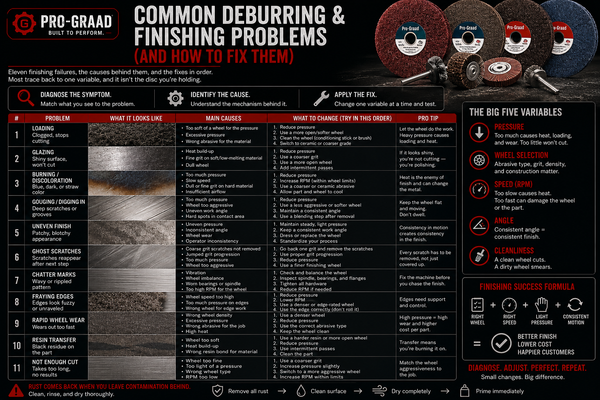
Heavy-cut compounds remove deep scratches, heavy oxidation, overspray, and thick clearcoat defects. These are aggressive and are used sparingly. On the color chart, black emery is the starting point for the most severe work. It is commonly used to remove deep scratches, so after steel cutting it can remove the 320 and 400-grit marks left by sandpaper.
For automotive paint, a heavy-cut compound paired with a firm foam or wool pad will handle oxidation and deeper swirl marks in one or two passes. The trade-off is that it will leave micro-marring of its own, which is exactly what Stage 2 is designed to address.
Pro Tip: When using a heavy-cut compound on automotive paint, keep the machine moving at all times. Dwelling in one spot generates excessive heat that can burn through the clearcoat. Use overlapping passes at low-to-medium speed, and inspect progress with a bright LED light every two minutes.
Stage 2, Intermediate (Refining Compound)
Medium and refining compounds remove moderate swirl marks and sand-scratch halos left by the heavy-cut stage. White and grey compounds occupy this middle ground for metals, while medium-cut liquid polishes serve the same role on automotive clearcoats.
After the heavy cut, move to a medium-cut compound or polish. This step removes the micro-marring left by the cutting stage and starts to restore clarity. A medium polish paired with a medium-density foam pad will refine the surface and begin reintroducing gloss.
Stage 3, Finishing Rouge
The finishing polish removes the last fine hazing and produces the deep gloss that customers expect. Finishing polishes are non-abrasive or contain ultra-fine abrasives and are used with soft finishing pads. This is where the true optical clarity and wet-look shine are created.
White rouge is very popular, and the color compounds with the finest abrasive materials, green and blue, can give most metals, woods, stones, or plastics a mirror finish. For jewelry, red polishing compound gives a high-luster finish to precious metals like gold and silver, which is why it is popular in the jewelry trade.
Matching Compound to Material: A Practical Guide
Automotive Paint
Paint correction is not a one-size-fits-all process. Single-stage paint, clear-coat finishes, soft European paint, hard Japanese finishes, freshly applied panels, and weathered oxidized surfaces all respond differently to abrasion. Therefore, always run a test spot on an inconspicuous panel section before committing to a full-vehicle correction pass.
Compounding uses heavier abrasives so it cuts away the paint more quickly to remove deeper scratches, while polishing uses milder abrasives to refine the finish. Compounding is often followed by polishing to achieve the best paint finish. Brands like Chemical Guys build their entire correction system around this concept, moving from the most aggressive cut needed, then stepping down through progressively finer grades.
Aluminum and Soft Metals
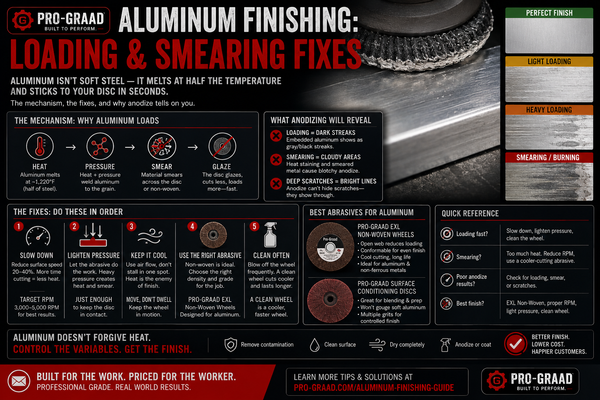
Brown tripoli polishing compound is commonly used to both buff and polish surfaces on softer metals like aluminum, brass, and copper. It can even be applied to stainless steel and wood surfaces, resulting in a lustrous finish. Follow with a green compound for stainless-finish clarity, and close with blue or purple rouge for a show-quality mirror shine.
Stainless Steel and Hard Metals
Green metal polishing compound is mainly used to finish stainless steel surfaces. It clears away scratches and provides a bright finish on both hard and soft metals. The green compound tends to work best on metals such as chrome, stainless steel, and platinum.
Jewelry and Precious Metals
Yellow polishing compounds deliver a brilliant shine on hard metals like gold and platinum, which is why this particular compound is popular in the jewelry industry. Finish with a red jeweler's rouge on a soft flannel wheel for the highest possible luster. The specialist team at Pro-Graad carries professional-grade buffing compounds designed for both metalwork and automotive applications, making it easier to source the right product for each stage in one place.
Pro Tip: Never use the same buffing wheel across different compound stages. If you use the same buffing wheel for different compounds without cleaning it, you will transfer abrasives and contaminants from one stage to the next, which can scratch the surface you are trying to polish. The solution is to dedicate specific wheels to specific compounds and clean them regularly with a wire brush.
Step-by-Step Application Process
Preparation First
Do not polish over dirt or leftover wax; it will interfere with results. A freshly washed, contaminant-free surface is the best starting point. For metals, degrease the workpiece completely and let it dry. For automotive paint, wash with a pH-neutral shampoo and clay-bar the surface before picking up any compound.
Machine vs. Hand Application
You can apply polishing compound manually with a microfiber cloth or sponge, but machine polishing, using rotary or dual-action polishers, ensures consistent results and saves time. When combined with machine polishers, consistent results are ensured while saving time, and detailing experts note that dual-action polishers are the most forgiving option for achieving professional outcomes.
Applying the Compound
Buffing pads are designed to work best with minimal compound. Apply a small amount of compound to the pad and polish until there is none left before adding any more. Work in a 2-by-2-foot section at a time. Use slow, overlapping passes, aim for 50% overlap on each row. Wipe residue with a clean microfiber towel and inspect under a bright light before moving on.
Pro Tip: Applying compound with a dual-action polisher at recommended speeds, with consistent pressure, minimizes the risk of thermal damage. Using adequate pad size and ensuring pads are clean avoids streaking or hazing. Keep a second clean pad handy to swap in when the working pad loads up with compound residue.
Protecting the Result
Following up any correction job with a wax, sealant, or ceramic coating seals the corrected surface and protects the finish from rebuilding the defects you just removed. This step is often skipped but it is essential, an unprotected polished surface will pick up new swirls from the very next wash.

Common Mistakes That Ruin a Good Polish
Skipping the Sequence
Start with the minimum aggressiveness that achieves defect removal, then follow with a refining compound and a finishing polish. Skipping steps often leaves visible micro-marring. I have found that the temptation to skip the finishing polish is the most common error beginners make, the surface looks good until direct sunlight reveals a haze of fine scratches.
Using the Wrong Compound for the Metal
One compound cannot work for all metals. Softer metals like gold need gentle rouge. Harder metals like steel require more abrasive compounds, such as emery or aluminum oxide. Using an emery bar on soft brass will cut too deep; using red rouge on oxidized steel will not cut deep enough. The Benchmark Abrasives compound guide is a reliable free reference for metal-to-compound matching.
Ignoring Safety
Polishing generates dust, heat and sometimes fumes, particularly when working with certain compounds or power tools. Ignoring safety measures can put you at risk of injury or long-term health issues. Always wear protective gloves to prevent burns or cuts, use safety goggles to shield your eyes from debris, and work in a well-ventilated area to avoid inhaling potentially toxic fumes.
Over-Applying Compound
Excessive compound and polish can build up in layers, filling and masking sand scratches. More product does not mean more correction; it means more residue, more cleanup, and less visibility of your actual progress. Use a pea-sized amount for hand application and a light prime-coat for machine pads.
Frequently Asked Questions
What is the difference between a polishing compound and a polish?
Compounds and polishes are different products. A "compound" cuts the paint away quickly, whereas a "polish" cuts the paint more slowly. This means compounds are more abrasive than polishes. In practice, compounds are used for the heavy lifting, removing deep scratches and oxidation, while polishes refine the surface afterward. Many beginners use both terms interchangeably, but on the shelf they represent distinctly different levels of aggressiveness.
Can polishing compounds damage my car's clear coat?
While polishing compounds are transformative, improper use can lead to paint damage, such as clearcoat thinning, heat-induced holograms, or even paint removal. Embracing best practices ensures consistent results and maintains vehicle integrity over time. The safest approach is to always start with the least aggressive compound that addresses your defect, use a dual-action polisher rather than a rotary, and limit each correction session to one or two passes per panel.
How often should I polish a surface?
You do not need to polish every month. A couple of sessions per year is enough to maintain that deep, flawless shine without risking your clear coat. For decorative metal items, the Kramer Industries metal polishing guide suggests once or twice a year is sufficient. Tools and automotive parts exposed to heavy use or harsh environments may need more frequent attention.
What does "diminishing abrasive" mean on a product label?
A diminishing abrasive compound is designed to start off as a coarse compound and breaks down to a fine compound as it is worked through, continuing to cut through all stages. This means it can handle everything from a heavy-medium cut right down to creating a refined, flawless finish, all without swapping pads or products. These are practical for smaller jobs, though professional detailers often still prefer a dedicated finishing polish afterward for maximum optical clarity.
Is it necessary to follow up polishing compounds with wax or a sealant?
Yes, every time. After polishing, apply a high-quality wax or sealant to protect the clear coat. This protective layer not only enhances the gloss but also provides a barrier against environmental contaminants. A polishing compound corrects the surface; protection preserves the correction. Without a top layer, your freshly polished surface will begin accumulating new swirls and oxidation almost immediately.
Is there a metal buffing compound assortment kit available?
Yes, Pro-Graad offers a 6 piece buffing compound assortment set which has 4 oz size bars.
Sources
-
The Best Polishing Compounds for Cars (2025 Guide), Dr. Beasley's. Automotive compound types, filler risks, abrasive technology. https://www.drbeasleys.com/blog/2025/06/04/the-best-polishing-compounds-for-cars-2025-guide
-
Polishing Compounds and Their Uses (A Full Guide), Red Label Abrasives. Tripoli, intermediate, and finishing rouge categories; color chart. https://www.redlabelabrasives.com/blogs/news/a-guide-to-polishing-compounds-and-their-uses
-
Buffing Compounds: Types, Color Chart, and Applications, Red Label Abrasives. Color-coded compound guide by grit and purpose. https://www.redlabelabrasives.com/blogs/news/buffing-compound-types-applications
-
What Is Polishing Compound?, Sanhui Abrasives. Compound chemistry, application steps, safety guidance. https://sanhuiabrasives.com/blog/what-is-polishing-compound.html
-
Car Polishing Compound Grit: Choosing the Right Abrasive, SYBON. Cut grades, defect matching, clearcoat management. https://www.sybonbest.com/car-polish/car-polishing-compound-grit
-
What Order of Polishing Compounds?, SYBON. Step-by-step three-stage correction workflow. https://www.sybonbest.com/car-polish/what-order-of-polishing-compounds/
-
Car Polishes Explained, Auto Finesse. Diminishing abrasives, cut vs. refine, multi-stage correction. https://www.autofinesse.com/blogs/car-detailing-guides/car-polishes-explained
-
Polishing vs Compounding: The Differences Explained, Auto Care HQ. Compound vs. polish definitions, practical selection guidance. https://autocarehq.com/polishing-vs-compounding-the-differences-explained/
-
What's the Best Cutting Compounds & Finishes?, IGL Coatings Blog. Heavy-cut, medium, and finishing polish categories with grit levels. detailing experts note
-
How to Use Polishing Compound for a Flawless Car Finish, Chemical Guys. Application technique, pad selection, product sequence. https://www.chemicalguys.com/blogs/exterior-how-tos/how-to-use-polishing-compound
-
Common Metal Polishing Mistakes and How to Avoid Them, PAVCO. Safety gear, wheel contamination, environmental factors. https://pavco.com/blog/metal-polishing-mistakes
-
Metal Polishing Compounds: A Complete Guide, Kramer Industries. Metal-specific compound selection, maintenance schedules. https://kramerindustriesonline.com/metal-polishing-compound/
-
Polishing Best Practices, PPG Refinish. Pad care, compound quantity, industry best practices. https://www.ppg.com/en-US/refinish/support/technical-tips/make-polishing-easier-with-these-best-practices
-
Guide to Polishing Compounds and Their Uses, Benchmark Abrasives. Compound types, color guide, metal applications. https://benchmarkabrasives.com/blogs/news/a-guide-to-buffing-compounds-and-their-uses
-
Car Detailing Services Market Report, Grand View Research. Global market sizing and growth projections. The global car detailing services
-
Automotive Detailing Industry Statistics 2026, Gitnux. Dual-action polisher adoption rates, paint correction tool sales. https://gitnux.org/automotive-detailing-industry-statistics/
-
The Ultimate Guide to Car Polishing Compound, Innovate Tech Hub. Clearcoat chemistry, abrasive science, best practices. Abrasives such as aluminum oxide