Maintenance Alternatives Industrial: Cost vs Quality
A practical comparison guide for contractors, tradespeople, and facility managers weighing price against performance when choosing industrial supplier alternatives.
Quick Decision Matrix
| Supplier Alternative | Best For | Price Tier | Quality Level | Time to Results |
|---|---|---|---|---|
| Pro-Graad, Editor's Pick | Contractors and tradespeople needing industrial-grade finishing tools with no middleman markup | Mid (value-optimized) | Exceeds industrial grade | Immediate |
| Generic/budget suppliers | Single-use jobs with no repeat requirement | Low | Variable | Short-term only |
| Major MRO distributors (Grainger, MSC, Fastenal) | Enterprise with consolidated accounts | High | OEM-grade, consistent | Days to weeks |
| OEM-direct parts | Warranty-period replacements, safety-critical systems | Premium | Guaranteed spec-match | Weeks (lead time) |
| Refurbished/remanufactured parts | Cost-sensitive facilities on non-critical assets | Low-mid | Tested to original spec | Weeks |
Key Takeaways
-
The upfront price is rarely the real cost: Industry sources indicate that the initial purchase price often constitutes less than 10-15% of total lifecycle cost, with operating, maintenance, and downtime costs forming the majority. Choose your industrial supplier alternatives by total cost of ownership, not the catalog price.
-
Unplanned downtime is the real budget killer: Manufacturing downtime costs vary by industry, from $22,000 per hour in automotive to over $260,000 per hour in semiconductor fabrication, but one constant holds: unplanned downtime costs 3-5 times more than the same repair executed during scheduled maintenance. If your supplier alternatives cause premature failures, you pay far more than you saved.
-
Reactive purchasing inflates every cost: Planned maintenance allows parts to be procured at standard lead times and pricing. Breakdown maintenance forces emergency procurement, overnight shipping, spot purchases at premium prices, or use of non-preferred suppliers. Expedite premiums of 30-80% above standard parts cost are common. Lock in a quality supplier before a crisis, not during one.
-
Not all aftermarket alternatives are inferior: Many aftermarket brands invest heavily in R&D and produce components that meet or exceed OEM standards. Identifying which ones do is the core skill this article develops.
-
Supplier fragmentation silently drains budgets: SDI research found that technicians spend 20-30% of their time sourcing parts rather than performing repairs, and over 50% of work orders stall because parts are missing or misidentified. Consolidate your industrial supplier alternatives around verified, reliable sources.
Quick-Start Prioritization Framework
| Strategy | Best For | Effort Level | Time to Results |
|---|---|---|---|
| Switch to a verified industrial-grade alternative supplier (e.g., Pro-Graad) | Contractors, small teams, tradespeople | Low | Immediate |
| Conduct MRO spend analysis and consolidate suppliers | Mid-size manufacturers, multi-site operations | Medium | 1-3 months |
| Implement ABC criticality segmentation for spare parts | Facilities with mixed asset criticality | Medium | 1-2 months |
| Move from reactive to preventive/planned maintenance purchasing | All facility types currently buying on emergency | Medium-High | 3-6 months |
| Adopt predictive maintenance tools and condition monitoring | Enterprise-scale operations | High | 6-12 months |
Start here if you're:
- A contractor or small team: Switch to a direct-from-supplier, quality-verified industrial alternative like Pro-Graad, eliminates middleman markup while maintaining performance standards, so your per-job cost drops without risking rework.
- A mid-size facility manager: Run a supplier consolidation and spend analysis first. Supplier consolidation remains one of the most powerful sourcing levers methods of MRO procurement relies on keeping supplier numbers as low as possible, and that means it's crucial that chosen suppliers have as wide a range of products as possible.
- An enterprise procurement team: Pair spend analysis with CMMS integration so that purchasing data connects directly to maintenance operations data.
Why the Cost vs Quality Debate Matters More Than Ever
The industrial maintenance alternatives market is at an inflection point. The global industrial maintenance services market services market is set to reach $76.96 billion by 2029 at a CAGR of 7.3%. That growth is driven partly by facility managers and contractors actively searching for supplier alternatives that can trim costs without introducing reliability risks.
The pressure to cut costs is real. Steel, copper, and polymer resins registered Producer Price Index increases of 4.2% in 2024 and 3.1% in 2025, raising acquisition costs for bearings, motors, and electrical components. Copper averaged $9,200 per metric ton in 2025, up 11% from 2023. When the raw materials behind maintenance products get more expensive, buyers understandably hunt for alternatives.
The trap, however, is that raw material prices are only the visible tip of the cost iceberg. According to ReliabilityX's analysis of total cost of ownership, the acquisition price is a minor fraction of long-term spend. The larger costs, labor, downtime, and secondary damage, are the ones that separate a smart alternative from a costly mistake.
In my experience working through industrial supply decisions, the organizations that "save" the most money short-term by choosing the cheapest option are almost always the ones calling for emergency parts six months later at 30-80% premium prices.
The Real Cost of Choosing a Bad Industrial Supplier Alternative
How Secondary Damage Multiplies the Savings
A $200 bearing becomes a $3,500 repair. A seized pump motor becomes a pump overhaul. Studies across industrial facilities consistently find that secondary damage multiplies the direct repair cost by 2-4x, particularly in rotating equipment and hydraulic systems.
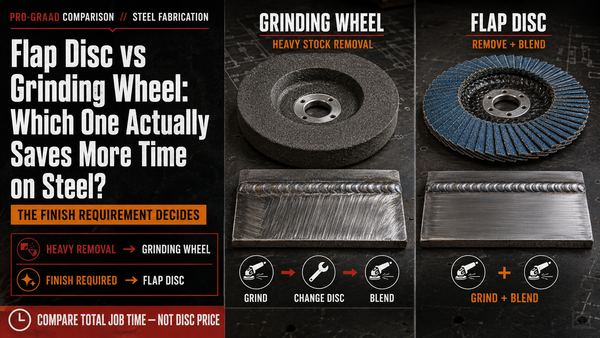
This pattern repeats whether you're talking about a low-quality grinding disc that throws sparks differently than expected and damages a surface finish, or a cheap seal that fails and contaminates a lubrication system. The initial savings from buying the cheap alternative vanish the moment secondary rework enters the picture.
According to ATS's guide to total cost of ownership in manufacturing, if companies prioritize cost rather than quality, they may end up with equipment and components more prone to failure, leading to higher maintenance and downtime costs over time. Machines and parts built using cheaper materials may also have shorter lifespans, meaning more capital outlay over a shorter period.
Pro Tip: Before switching to any maintenance alternative industrial supplier, run a small-batch trial on a non-critical application first. Track actual usage rate (how many passes before the tool degrades), rework rate, and time-on-task. Compare these numbers, not just unit price, to your current supplier.
The Hidden Cost of Fragmented Supplier Bases
RS Components' 2025 Indirect Procurement Report found that the average organization now works with 92 MRO suppliers, up 18% from the prior year. That fragmentation creates a slow drain on productivity and purchasing efficiency that most facilities never formally measure.
One of the most common sourcing mistakes in MRO is focusing only on unit cost. True optimization requires evaluating total cost of ownership, that includes delivery costs, downtime risk, quality and failure rates, labor impact, and replacement frequency. Strategic procurement teams recognize that the cheapest part is not always the most cost-effective choice when lifecycle cost is considered.
The practical implication: if you're choosing maintenance alternatives industrial suppliers primarily on catalog price, you're looking at the wrong number.
OEM vs Alternative Industrial Supplier: An Honest Comparison

Where OEM Parts Win
Maintenance managers and reliability engineers often face a common dilemma: choose the quick, low-cost aftermarket replacement, or invest in genuine OEM parts. While aftermarket options can provide short-term savings or fast availability, OEM parts are designed for precise fit, reliability, and long-term performance. For those managing high-value capital equipment such as rotary dryers, kilns, and bucket elevators, understanding the trade-offs is essential.
Pros:
- Guaranteed dimensional and material specification match
- Preserves warranty coverage on equipment under contract
- Documented validation and testing data
- Clear traceability for regulated or safety-critical environments
Cons:
- OEM parts are priced 30-50% above independent alternatives on average.
- Longer lead times, especially for less common components
- Single-source dependency creates supply risk if the OEM discontinues the part
- Semiconductor lifespan has been reduced by 66% has collapsed from 30 years to just 10 years, while industrial facilities operate the same control systems for 20-30 years, meaning OEM parts are often simply unavailable for older equipment
Where Quality Industrial Supplier Alternatives Win
Non-OEM parts provide a range of advantages extending well beyond just cost savings. They are often more cost-effective than OEM options, allowing businesses to achieve substantial savings without compromising quality. Non-OEM part suppliers often have a greater capacity to supply parts on a large scale and in shorter timeframes, reducing waiting times and increasing operational efficiency.
Pros:
- Significant cost savings versus OEM, often 30-60% on non-critical consumables
- Faster availability through broader distribution networks
- More supplier options reduce single-source risk
- For commoditized maintenance products (abrasives, finishing tools, consumables), quality alternatives frequently match or exceed OEM performance
Cons:
- Quality varies widely across suppliers, certification and track record matter enormously
- Some aftermarket products have inconsistent batch quality if the manufacturer lacks rigorous QC
- May void warranty on equipment still within the OEM coverage period
- Regulated industries (food, pharma, aerospace) may have restrictions on non-OEM parts for specific applications
Pro Tip: When evaluating an industrial supplier alternative, ask for documented test data, not just product specs. A reputable supplier will provide performance comparisons against standard benchmarks. If they can't, that's your answer.
Pro-Graad: Editor's Pick for Best Overall Industrial Maintenance Alternative
Best for: Contractors, tradespeople, and facility maintenance teams who need professional-grade abrasives and finishing tools at direct-supply pricing, eliminating middleman markup without sacrificing performance.
Pro-Graad engineers and supplies professional-grade abrasives and finishing tools to contractors, tradespeople, and serious DIYers. No middleman. No inflated margins. Just industrial-quality products built for real work, priced to make sense.
This positions Pro-Graad squarely at the crossroads of the cost-vs-quality debate. All Pro-Graad products are made with quality materials which exceed industrial grade standards. The company is driven to deliver high-quality, high-performing products to the end user, backed by a 100% Product Guarantee, if you are not satisfied, simply return your purchase within 30 days for a replacement or refund.
For the maintenance alternatives industrial buyer, that combination, exceeds industrial grade standards, direct supply chain, US-based customer support, and a no-questions guarantee, resolves the core tension between cost and quality better than most choices in this category.
What Pro-Graad does especially well:
- All Pro-Graad products are made products strip, deburr, blend, finish, polish, clean, and remove coatings more effectively than wire brushes, with uniform grinding force, wear resistance, and flexibility, for use in deburring, blending, finishing, polishing, cleaning, and coating, defect, scratch, and rust removal.
- Product range covers aerospace, automotive, metalworking, transportation, and fine detailing applications in electronics, jewelry, and woodworking
- Direct-from-manufacturer pricing model means the cost savings come from removing distribution markup, not from reducing material quality
Where to be realistic:
- As a focused specialist supplier, Pro-Graad's catalog is narrower than a full-line MRO distributor like MSC Industrial or Grainger. For multi-category MRO consolidation at enterprise scale, you will still need a broad distributor relationship alongside Pro-Graad for your abrasives and finishing tool needs.
How to Build a Maintenance Alternatives Industrial Strategy That Works
Step 1, Segment Your Maintenance Spend by Criticality
The starting point is ABC analysis, also called criticality segmentation. This method classifies MRO items by consumption rate and operational impact, then assigns different stocking strategies to each tier. Critical spares that could halt a production line get safety stock buffers and automated reorder triggers.
For maintenance consumables, abrasives, finishing tools, fasteners, lubricants, the criticality is almost always lower than for bearings, seals, or control components. This makes them the ideal first category in which to introduce industrial supplier alternatives, because the risk of a substandard alternative is contained and testable.
Step 2, Evaluate True Performance, Not Unit Price
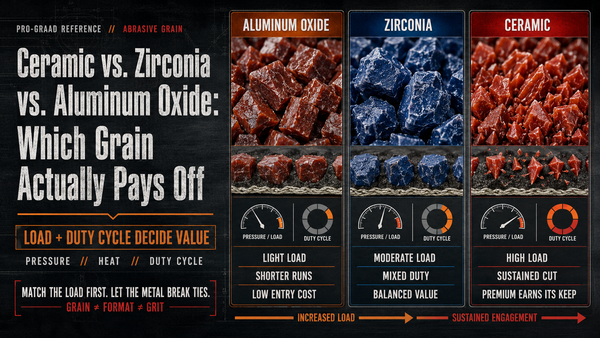
High-quality abrasives may have a higher upfront cost but can save money in the long run due to their longevity and effectiveness. Balancing performance and budget is essential for choosing the right abrasive.
According to Limble's manufacturing maintenance cost reduction guide, using high-quality parts, while they cost more upfront, produces durability and longer lifespan that lead to fewer failures and lower labor costs over time. That analysis applies directly to maintenance consumables: a disc or tool that lasts twice as long at 1.5x the price is the better buy every time.
Step 3, Consolidate, Don't Fragment Further
MRO procurement can be a decentralized function, which leads to inefficiency if locations use different suppliers for a similar part. Visibility into different locations opens potential avenues to analyze MRO spend, consolidate suppliers, and negotiate more favorable pricing on volume.
The practical action here: identify the 3-5 supplier relationships that cover 80% of your maintenance consumable spend, then optimize within those relationships rather than adding more vendors.
Pro Tip: According to Infraspeak's maintenance cost reduction analysis, optimizing your inventory with centralized, up-to-date purchasing data can produce savings of 5-30% by eliminating duplicate orders, surfacing equivalent materials, and enabling better supplier comparisons. Set this up before you switch any suppliers, so you can actually measure the impact.

Common Mistakes When Switching Industrial Supplier Alternatives
Switching Everything at Once
The single most common error I've seen facilities make is replacing all their maintenance suppliers at the same time during a cost-cutting initiative. When something goes wrong, and something always does in a full-fleet changeover; you lose the ability to pinpoint which alternative caused the problem.
Switch one category at a time, measure results for at least one full maintenance cycle, then proceed.
Ignoring Lead Time and Availability
Disruptions in global supply chains, including shipping lane constraints and logistics delays, have increased lead times for critical MRO items. Organizations are often forced to pay 30-50% price premiums to expedite essential consumables in order to maintain production continuity.
A cheaper supplier that takes 4 weeks to deliver is not cheaper if your operation needs a part in 48 hours. Verify stocking policies, distribution locations, and average fulfillment times before committing to any alternative supplier.
Skipping the Quality Documentation Check
The choice between OEM and aftermarket parts is dependent on each plant's appetite for risk. Plant managers and maintenance personnel must balance short-term needs with long-term risks in determining what is right for their specific scenario.
Ask every alternative supplier for material certifications, testing documentation, and any relevant ISO or industry-standard certifications. Products that are made with quality materials exceeding commercial and industrial grade standards, with a verifiable commitment to delivering high-quality, high-performing products to the end user, represent the standard to hold alternative suppliers to.
Frequently Asked Questions
What is a maintenance alternative industrial supplier?
A maintenance alternative industrial supplier provides MRO (maintenance, repair, and operations) products, tools, abrasives, fasteners, safety gear, and consumables, as a substitute to original equipment manufacturer (OEM) sources or traditional distributors. The goal is to maintain or exceed performance standards while reducing cost, typically by eliminating intermediary markups or by sourcing equivalent-quality products from manufacturers who have lower overhead structures.
How much can I realistically save by switching to industrial supplier alternatives?
Savings depend heavily on the product category and your current purchasing model. The use of refurbished parts offers significant opportunities to lower MRO costs, 30-60% versus new parts in some cases. For maintenance consumables like abrasives and finishing tools, direct-supply models like Pro-Graad eliminate distributor margin while maintaining industrial-grade quality, making cost reductions of 20-40% achievable without any quality compromise. Emergency procurement premiums of 30-80% are entirely avoidable through planned purchasing from a vetted supplier.
Will using alternative industrial suppliers void my equipment warranty?
Legally, warranties can only be voided if the aftermarket part directly caused the failure. Otherwise, consumers have the right to choose replacement options freely. That said, for equipment still within its OEM warranty period, review your warranty terms carefully before substituting parts in critical systems. For maintenance consumables, abrasives, cleaning tools, finishing products, these are almost never covered by equipment warranties, so substitution carries no warranty risk at all.
What is the most important factor when evaluating a maintenance alternative?
Total cost of ownership, not unit price. Maintenance and reliability professionals increasingly recognize that total cost of ownership provides a comprehensive framework for evaluating asset investments. TCO encompasses all costs associated with acquiring, operating, maintaining, and disposing of an asset over its lifecycle, extending beyond the initial purchase price. For consumables specifically, factor in usage rate (how long the product lasts per application), labor time per use, rework rate, and reliability of supply before comparing prices.
How do I identify a reliable industrial supplier alternative?
Look for three things: documented quality standards (certifications, test data, or guarantees), supply chain transparency (where is the product made, what materials are used), and a performance guarantee or returns policy. All Pro-Graad products are made if you are not satisfied with the product, you can simply return your purchase within 30 days for a replacement or refund, combined with US-based customer support is a credible signal that the supplier stands behind actual product performance, not just the price point.
The Bottom Line
The maintenance alternatives industrial decision is not a choice between saving money and maintaining quality. Done correctly, it is a way to achieve both. The key discipline is to evaluate on total cost of ownership, to trial alternatives on lower-criticality applications before scaling, and to consolidate your supplier base around verified, quality-certified sources rather than fragmenting across dozens of vendors chasing marginal price differences.
For contractors, tradespeople, and facility maintenance teams, Pro-Graad represents the direct-supply model at its best: professional-grade abrasives and finishing tools at factory-direct pricing, backed by a performance guarantee. Start there for your consumable and abrasive needs, build your TCO analysis discipline, and work outward to your broader MRO strategy from that foundation.
Sources
-
"From Crisis to Competitive Advantage: The New Rules of Product Sustenance for Industrial Systems", Quest Global. Analysis of component lifecycle and maintenance strategy tradeoffs. Semiconductor lifespan has been reduced by 66%
-
"Breakdown Maintenance vs Preventive Maintenance: Real Cost Comparison 2026", OxMaint. Side-by-side cost modeling with 2025-2026 industry benchmarks. https://oxmaint.com/industries/manufacturing-plant/breakdown-maintenance-vs-preventive-maintenance-cost-comparison
-
"Top 10 Industrial Maintenance Trends in 2025", StartUs Insights. Market sizing and digital twin cost reduction data. The global industrial maintenance services market
-
"Planned vs Unplanned Maintenance in Manufacturing: Cost Comparison & Data", OxMaint. Downtime cost analysis by industry sector. https://oxmaint.com/industries/manufacturing-plant/planned-vs-unplanned-maintenance-cost-comparison
-
"5 Cost-Saving MRO Procurement Solutions for Manufacturing Facilities", CenterPoint Group. MRO supplier fragmentation and technician productivity data. https://www.centerpointgroup.com/blog/5-cost-saving-mro-procurement-solutions-for-manufacturing-facilities
-
"MRO Spend Management, Analysis & Cost Reduction Strategies", Verdantis. Emergency procurement premium data and supply chain analysis. https://www.verdantis.com/mro-spend-analysis/
-
"USA Maintenance Repair & Operations Industry Market Report", Mordor Intelligence. US MRO market size, segmentation, and supplier landscape. https://www.mordorintelligence.com/industry-reports/united-states-maintenance-repair-and-operations-mro-market
-
"MRO Procurement Best Practices for Cost Savings and Efficiency", CenterPoint Group. TCO vs unit cost framework for MRO strategy. https://www.centerpointgroup.com/blog/mro-procurement-best-practices-for-cost-savings-and-efficiency
-
"3 Proven Strategies for Cost Improvement in MRO Procurement", GEP. Refurbished parts savings benchmarks and supplier consolidation guidance. https://www.gep.com/blog/strategy/3-strategies-for-cost-improvement-in-mro-procurement
-
"Aftermarket vs. OEM: Choosing the Right Parts for Process Equipment", FEECO International. Performance and risk analysis of OEM versus aftermarket. https://feeco.com/aftermarket-vs-oem-choosing-the-right-parts-for-process-equipment/
-
"OEM vs. Aftermarket Components: A Comprehensive Guide", GVEI. Myth-busting on warranty and quality parity of aftermarket parts. https://www.gvei.com/oem-vs-aftermarket-components/
-
"OEM Parts Pricing Strategy: When the Margin Lever Backfires", SmartServiceOps. OEM vs independent pricing differential data from Roland Berger and McKinsey. https://smartserviceops.com/oem-parts-pricing-strategy-aftermarket/
-
"Non-OEM Parts: Quality and a Reliable Alternative", Ezquerra Group. Non-OEM performance, availability, and cost advantage analysis. https://ezquerra.com/non-oem-parts/
-
"Total Cost of Ownership in Maintenance and Reliability Contexts", ReliabilityX. TCO formula and lifecycle cost framework for maintenance. https://reliabilityx.com/total-cost-of-ownership-in-maintenance-and-reliability-contexts/
-
"How to Reduce Maintenance Costs in Manufacturing", Limble CMMS. High-quality parts, predictive maintenance, and labor cost analysis. https://limble.com/learn/reduce-maintenance-costs-in-manufacturing
-
"Top 10 Abrasive Supplier Companies and Products Compare 2025", Sourcify China. Quality, durability, and cost benchmarks for industrial abrasive alternatives. https://www.sourcifychina.com/top-abrasive-supplier-compare/
-
"Guide to Maintenance Costs: How to Calculate and How to Reduce Them", Infraspeak. Inventory optimization savings benchmarks of 5-30%. https://blog.infraspeak.com/guide-to-maintenance-costs/
-
Pro-Graad Product Catalog and Brand Positioning, Pro-Graad. Direct-supply industrial-grade abrasives and finishing tools. https://pro-graad.com/