Machine Shop Supplies Drive Precision Manufacturing
Every minute a CNC spindle sits idle costs money. The average cost of unplanned downtime across all manufacturing sectors is estimated at $260,000 per hour. That figure makes one thing clear: the machine shop supplies you choose, cutting tools, coolants, workholding devices, and measuring instruments, determine whether your shop runs at peak output or bleeds cash on the floor.
The machine shops industry represents a $44.6 billion sector, producing custom and standardized components through diverse machining processes including turning, milling, and grinding. The shops winning business in that market are those that treat their consumables and supplies as strategic assets, not afterthoughts. This guide breaks down what matters most, in what order, and why.

Key Takeaways
- Market growth demands better tooling: The global precision machining market was estimated at $123.54 billion in 2025 and is projected to reach $228.75 billion by 2033, growing at a CAGR of 8.1%. If your supplies strategy stays static, your competitiveness won't keep pace.
- Downtime is the real enemy: Manufacturers average 800 hours of unplanned machine downtime per year, more than 15 hours per week of paid non-productive time. Proper machine shop maintenance and quality supplies are the primary defense against that loss.
- CNC dominates, so consumables matter more: CNC operations dominated the precision machining market in 2025, accounting for the largest share of 78.9%, because CNC delivers high precision, efficiency, and scalability. CNC machines amplify both good tooling decisions and bad ones.
- Coolant management is undervalued: When machine shops don't pay attention to metalworking fluids, the consequences range from poor tool life to reduced metal removal and higher operating costs. Therefore, build a coolant management schedule and stick to it.
- Workholding is a force multiplier: Multi-part clamping solutions can deliver productivity improvements of up to 20 to 30% when reduced machining time and shorter part changeovers are factored in. That gain costs far less than a new machine.
Quick-Start Prioritization Framework
| Supply Category | Best For | Effort Level | Time to Results |
|---|---|---|---|
| Cutting Tools | All shops, all sizes | Low | Immediate |
| Coolants and Fluids | Shops running high-speed or hard material cuts | Low | Days |
| Workholding Devices | High-mix or multi-part production | Medium | Weeks |
| Precision Measuring Tools | Any shop with quality requirements | Medium | Immediate |
| Preventive Maintenance Supplies | Shops experiencing repeat breakdowns | Medium | 60 to 90 days |
Start here if you're:
- A small or startup shop: Focus on cutting tool selection first, correct tooling matched to your material produces immediate quality gains at the lowest cost of entry.
- A growing mid-size shop: Invest in workholding and coolant management simultaneously. The productivity gains compound quickly and fund your next equipment purchase.
- An established production shop: Layer in predictive machine shop maintenance using monitoring tools and structured inspection logs. Predictive maintenance reduces downtime by 35 to 45% and delivers potential ROI of up to 10x. That return belongs on your balance sheet.
Cutting Tools: The Foundation of Precision Output
No category of machine shop supplies has a more direct impact on part quality than cutting tools. The broad category of cutting tools includes all consumable tooling involved in milling, drilling, turning, and other lathe and machining center operations, drills, end mills, taps, reamers, and inserts are all included. Getting this category right is where precision manufacturing actually begins.
Matching the Tool to the Material
The specific type of material to be machined is the single most important factor in determining the tooling and grading required to cut that material. That sounds obvious, yet shops routinely run general-purpose tooling on materials that demand a specialized grade, then wonder why surface finish suffers or tool life collapses.
In practice: carbide inserts suit steel and aluminum at production volumes, while polycrystalline diamond (PCD) tooling suits high-volume aluminum runs where faster cutting speeds and longer tool life justify the higher upfront cost. Only shops that invest in rigid tooling, high-pressure coolant, and real-time tool-load monitoring sustain profitability on difficult metals like titanium and super-alloys.
Managing Tool Life and Replacement Cycles
If the cutting or grinding components are not sharp enough, the output will not only be out of specification but there is a higher chance of damage to the machine tool itself. The consistent use of unsharpened machine tools may result in wasted product and can cause accelerated degradation. Therefore, track hours-per-tool and set replacement thresholds before problems surface.
Machine tool inspection before, during, and after each use is vital to any CNC machine management program. Build that habit into every operator's daily routine, not just the lead machinist's.
Pro Tip: According to KAAST Machine Tools' maintenance guidance, keeping track of installation dates and maintaining inspection logs is one of the most reliable ways to understand tool wear before it causes a quality failure. A simple spreadsheet beats reactive replacement every time.
Indexable Inserts and Tool Holder Integrity
CNC machine shops should implement regular maintenance to uphold high-quality tooling. One often-overlooked area is the insert screws, which hold inserts in place on the cutter body. A new set of screws should be used every third insert change, preventing the screw from stretching out and damaging the cutter body. That single habit prevents costly cutter body replacement.
Coolants and Metalworking Fluids: The Hidden Performance Lever
In my experience, coolant is the most consistently underestimated category of machine shop supplies. Shops will spend thousands on premium carbide tooling, then use poorly maintained fluid that erases much of that advantage.
Why Coolant Quality Changes Everything
The use of machine coolant extends cutting tool life, improves part finish and tolerance, and improves productivity. Coolants are water-soluble fluids designed to provide cooling and lubrication during metalworking operations, and they are generally grouped into three major categories: soluble oils, semi-synthetics, and synthetics.
In high-speed machining, the difference between a perfect finish and tool failure often comes down to the quality of the metalworking fluids and coolants you use. Therefore, treat coolant selection as an engineering decision, not a purchasing afterthought.
Concentration Control: The Daily Discipline
Most problems with coolant have to do with concentration control and regular daily coolant makeup. By paying attention to both, most problems can be eliminated. If the concentration gets too low it won't properly lubricate and cool the cutting tool, prevent rust, or fight off bacteria.
A refractometer costs under $50 and takes 30 seconds to use. Make daily concentration checks non-negotiable in your machine shop maintenance routine.
Pro Tip: When machine shops don't pay notes that "properly maintaining the coolant's concentration and pH levels can help alleviate most issues people encounter with tool life." Install a tramp oil skimmer and clean the sump regularly, these two steps alone can extend coolant life by months and lower your cost per part.
Through-Tool Coolant Systems
Getting coolant to the cutting edge is critical for any manufacturing application; it helps in cooling the cutting zone, provides needed lubrication, and can assist in breaking a chip. A coolant-through tool allows pinpoint accuracy with coolant directed exactly at the cutting zone, which matters especially in deep pockets or tight bores where external lines fall short.
Workholding Supplies: Unlocking Hidden Machine Capacity
I've found that shops looking to increase output often reach for a new machine tool when their real bottleneck is workholding. The setup time between jobs is where capacity disappears.
The Setup Time Problem
In high-mix manufacturing, setup efficiency can become one of the largest hidden bottlenecks in production. Modern workholding solutions play a major role here. Well-designed modular fixturing, quick-change systems, and standardized setups can dramatically reduce non-productive time while improving consistency across operations.
Without effective workholding even the most advanced CNC machine and cutting tool cannot deliver the required accuracy or productivity. Workholding devices ensure that the workpiece is rigidly supported, correctly aligned, and securely clamped during machining operations.
Modular Fixturing for High-Mix Production
Modular workholding systems allow fixtures and pallets to be assembled outside the machine while it continues running another job. With vise pallets, operators can quickly change from one setup to another without realigning the entire system. This significantly reduces machine idle time and increases overall equipment effectiveness (OEE).
Poor workholding can lead to component rejection, excessive tool wear, machine downtime, and compromised productivity. In many machining operations, productivity improvements can be achieved more effectively through enhanced workholding solutions than by investing in additional machine capacity. That is a powerful reframe for any shop considering a capital purchase.
Precision Measuring Tools: Catching Errors Before They Cost You
Precision measuring instruments are not glamorous, but they are the quality control checkpoint that prevents scrap, rework, and rejected shipments. After years of working with manufacturing operations, I can say with confidence that shops that invest in measuring tools consistently outperform those that treat inspection as an afterthought.
The Core Measuring Toolkit
Measuring tools and inspecting tools are precision instruments used to verify dimensional accuracy, geometric tolerances, and surface conditions in machining and manufacturing environments. Measuring tools such as micrometers, calipers, and height gages quantify physical dimensions, while inspecting tools such as dial indicators, surface plates, and CMMs evaluate alignment, flatness, and conformity to specifications.
From basic calipers to advanced inspection tools like surface roughness gauges, the right tools help you verify dimensions, control tolerances, and catch errors before they become costly problems. Therefore, build your inspection kit in layers, start with calipers and micrometers, then add indicators and surface plates as tolerances tighten.
Calibration Schedules Matter
Measuring tools and inspecting ensure repeatable, traceable results across production workflows. Calibration frequency depends on usage intensity and tolerance requirements. In most industrial environments, tools are calibrated annually or semi-annually. A measuring instrument that drifts out of calibration gives you false confidence, the most dangerous kind.
Pro Tip: Advanced Manufacturing's precision measuring primer highlights that wireless gages are gaining acceptance for quality control because they eliminate the need for bulky hardware and let technicians send measurement data directly to a tablet or PC. If your shop is scaling toward automation, wireless metrology integrates naturally into that workflow.
Machine Shop Maintenance: Protecting Your Supply Investment
Buying quality machine shop supplies is only half the equation. The other half is making sure your equipment is in condition to use them effectively.
Preventive Maintenance as Standard Practice
Regular maintenance is crucial in a machine shop as it helps maintain equipment longevity, ensures optimal performance, and reduces downtime caused by unexpected repairs. Key practices include proper tool storage in dry environments to prevent rust, regular lubrication of moving parts, and techniques for sharpening cutting tools.
According to Aberdeen Research 82% of companies have experienced unplanned downtime over the past three years, and unplanned downtime can cost a company as much as $260,000 an hour. The straightforward response: build a preventive maintenance calendar and execute it without exception. More than 70% of respondents aren't fully aware of when their equipment is due for maintenance, upgrade, or replacement, a gap that structured inspection logs close immediately.
Heat, Alignment, and Geometric Accuracy
Excessive heat weakens cutting edges and can lead to warping or micro-cracks in the tool. Overheating often results from running tools too fast or applying too much pressure during cuts. Use manufacturer-recommended speeds and feeds as your baseline, and adjust from data, not instinct.
Key practices include proper tool accuracy using precise measuring tools ensure your CNC machine maintains its specified tolerances. This practice helps prevent quality issues in finished parts and extends the life of cutting tools. Schedule geometric checks quarterly at a minimum, or whenever a machine has been moved or experienced a collision.
Abrasives and Finishing Supplies
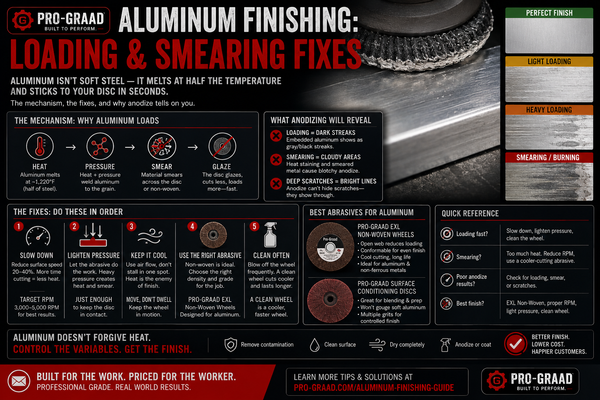
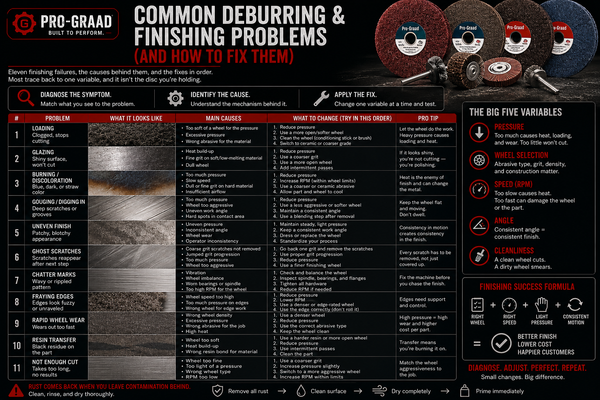
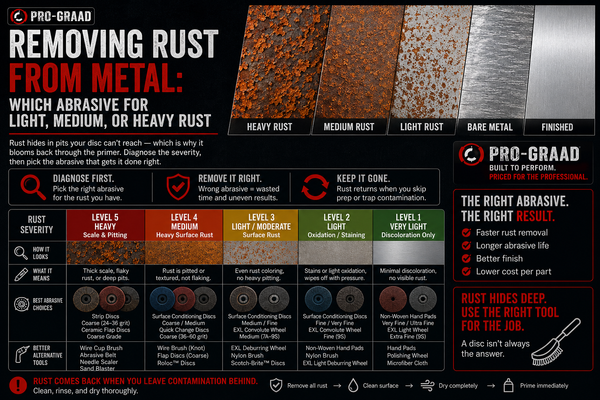
Abrasives are a frequently overlooked category of machine shop supplies that connects cutting operations to final part quality. Whether deburring edges after milling, achieving a surface finish specification, or preparing a workpiece for inspection, the right abrasive product makes the difference between a part that ships and one that gets reworked. Suppliers like Pro-Graad approach the abrasives market with a direct-supply model, professional-grade finishing tools without the markup layers that typically inflate abrasive costs for shops buying through traditional channels.
Common Machine Shop Supply Mistakes to Avoid
Even experienced shops fall into predictable patterns that cost money. Here are the most common ones, stated plainly.
- Using a single general-purpose coolant across all operations when material-specific fluids would extend tool life and improve finish quality.
- Letting coolant concentration drift without daily refractometer checks, causing both tool life degradation and potential bacterial contamination.
- Replacing cutting tools reactively after failure rather than proactively on a tracked hour or part-count schedule.
- Treating workholding as fixed infrastructure rather than reviewing setup time data and identifying changeover improvements.
- Skipping calibration cycles on measuring instruments, which produces part rejections that trace back to the gauge, not the machine.
- Applying excessive force neglecting maintenance, or ignoring early wear signs are common issues that shorten cutting tool life. Mixing tools with incompatible materials or failing to clean them after each use can also accelerate degradation.
Frequently Asked Questions
What are the most essential machine shop supplies for a small CNC shop?
The core categories are cutting tools (end mills, drills, inserts, and taps matched to your materials), metalworking coolants and fluids, workholding devices such as vises and clamps, and precision measuring instruments including calipers and micrometers. Start with quality over variety. Machinists need better quality tools than those found at a local hardware store, poor quality in a machine shop setting is genuinely counterproductive. Build your consumable inventory around the jobs you run most, then expand from there.
How often should machine shop maintenance be scheduled?
Frequency depends on machine utilization, but a useful baseline is daily checks (coolant concentration, lubrication levels, chip removal), weekly inspections (spindle condition, tool holder cleanliness), and quarterly geometric accuracy tests. Machine tool inspection before, during, and after each use is vital. Because some equipment can run anywhere from a few hours per week to non-stop 24/7, wear and tear on each tool depends on actual production time. Adjust your schedule to match your actual run hours.
What is the best way to extend cutting tool life?
Three practices have the most impact: matching the tool grade to the material being cut, maintaining correct coolant concentration and delivery, and running at manufacturer-specified speeds and feeds. Every cutting tool has an optimal range of speed and feed rates. Exceeding these limits can generate excessive heat, leading to edge degradation and even structural damage. Tracking tool hours and replacing on a schedule, rather than waiting for failure, reduces scrap and protects your machine from collision damage.
How do workholding supplies affect part quality?
Workholding directly affects dimensional accuracy and surface finish. Workholding devices ensure that the workpiece is rigidly supported, correctly aligned, and securely clamped during machining operations. Any movement during a cut introduces error into the finished part. Beyond quality, better workholding reduces setup time: even small reductions of 10 to 20 minutes per day can create meaningful annual productivity gains.
What is the difference between soluble oil, semi-synthetic, and synthetic coolants?
Coolants are generally grouped into three major categories: soluble oils, semi-synthetics, and synthetics. These are water-soluble fluids designed to provide cooling and lubrication during metalworking operations. Soluble oils offer good lubricity for heavy cuts; synthetics provide superior cooling and cleanliness; semi-synthetics balance both. Semi-synthetic coolants are growing in demand because they offer the best balance of cooling capacity, lubricity, and long sump life, making them particularly suitable for demanding CNC operations. Match your coolant type to your materials and operation types, not just what came with the machine.
Final Thoughts
The precision manufacturing industry is on a clear growth trajectory. The global precision machining market is set to rise from $124.41 billion in 2026 to $244.6 billion by 2035, growing at a CAGR of 7.8%. The shops that capture a share of that growth will not be those with the most machines; they will be those that run their existing assets most efficiently. Machine shop supplies are the controllable variable that separates efficient operations from reactive ones. Invest thoughtfully in cutting tools, coolant management, workholding, and measuring instruments. Build a genuine machine shop maintenance culture around inspections and logs. And review every supply decision through the lens of output quality, tool life, and downtime reduction.
The bottom line: your supplies strategy is your performance strategy.
Sources
-
Machine Shops Market Report 2025, Kentley Insights. Industry size and machining process overview. The machine shops industry
-
Precision Machining Market Size & Share Report 2026-2033, Grand View Research. CNC operations market share and global market projections. The global precision machining
-
Precision Machining Market Analysis 2026-2035, Business Research Insights. CAGR projections, adoption rates, and end-use drivers. https://www.businessresearchinsights.com/market-reports/precision-machining-market-118285
-
The Real Cost of Downtime in Manufacturing, MachineMetrics. Aberdeen Research statistics on unplanned downtime frequency and cost. https://www.machinemetrics.com/blog/the-real-cost-of-downtime-in-manufacturing
-
Manufacturing Downtime Cost Statistics 2026, Manufacturing Lead Generation. Predictive maintenance ROI and downtime hour benchmarks. https://manufacturingleadgeneration.com/manufacturing-downtime-statistics/
-
Unplanned Downtime Cost in Manufacturing, Oxmaint. Downtime cost per hour and reduction strategies. https://oxmaint.com/industries/manufacturing-plant/unplanned-downtime-cost-manufacturing-reduction-strategies-predictive-maintenance
-
Maintenance Tips for Machine Shop Tools and Equipment, Ridiculous Machine Tools. Key preventive maintenance practices. Key practices include proper tool
-
Tips for Maintaining Machine Tools, KAAST Machine Tools. Inspection routines and CNC maintenance best practices. KAAST Machine Tools' maintenance guidance
-
Best Practices for Maintaining Cutting Tools, HUB Industrial Supply. Tool storage, heat management, and speed guidelines. Excessive heat weakens cutting
-
Tips for Managing CNC Cutting Tools, Stecker Machine Company. Tool selection, insert screws, and tool management systems. https://www.steckermachine.com/blog/managing-machine-shop-tools
-
19 Hacks to Optimize Metalworking Fluids, MSC Industrial Supply. Coolant concentration, pH control, and sump maintenance. When machine shops don't pay
-
A Comprehensive Guide to Metalworking Coolants, Ashburn Chemical Technologies. Coolant types, applications, and tool life benefits. https://ashburnchemical.com/fluid360-solutions-metalworking-coolants-additives-maintenance/
-
Workholding Is a Productivity Multiplier, OK-VISE. Modular workholding ROI and setup time reduction. https://www.ok-vise.com/blog/workholding-is-a-productivity-multiplier/
-
Workholding Devices for Higher Manufacturing Productivity, MTW Mag. Workholding impact on quality, tool wear, and machine downtime. https://www.mtwmag.com/workholding-devices-and-productivity/
-
Essential Quality Control Measuring Devices, Penn Tool Co. Precision measurement tool categories and inspection methods. https://www.penntoolco.com/blog/essential-quality-control-measuring-devices-precision-tools-for-accuracy-in-manufacturing/
-
Precision Measuring Tools and Gages: A Primer, Advanced Manufacturing. Wireless gages, surface plates, and QC integration. Advanced Manufacturing's precision measuring primer
-
Measuring Tools and Inspecting Equipment, MSC Industrial Supply. Micrometer, caliper, and CMM application guidance. Measuring tools and inspecting
-
Pro-Graad, Professional-grade abrasives and finishing tools for manufacturing. https://pro-graad.com/