Industrial Sandpaper Withstands Heavy Manufacturing
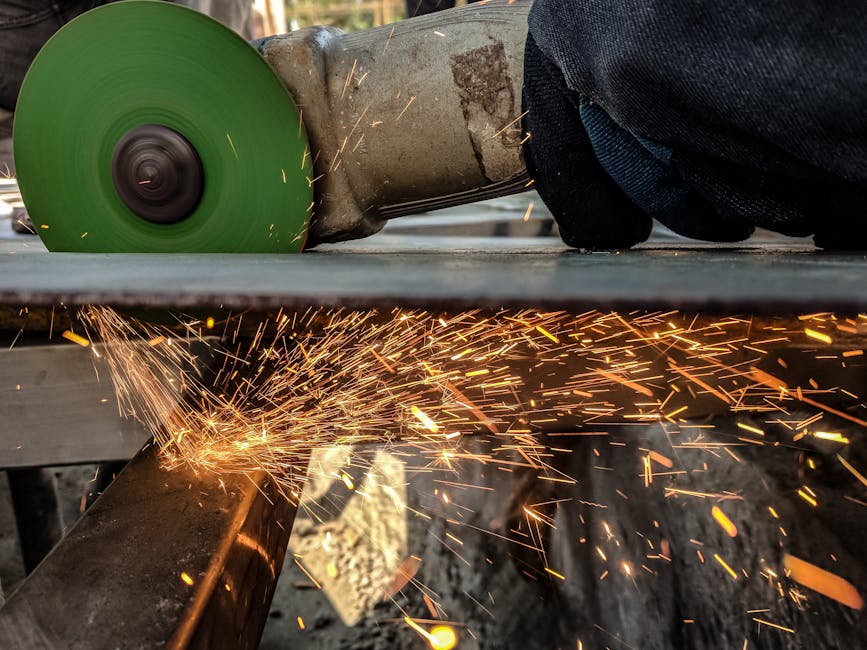
The factory floor is unforgiving. Heat, pressure, metal swarf, and continuous machine cycles push every consumable to its limit, and industrial sandpaper is no exception. Yet walk into most procurement offices and you'll still find buyers defaulting to the cheapest abrasive option on the shelf. Cheap abrasives may save money upfront but wear out faster or produce inconsistent results. Meanwhile, across U.S. manufacturing alone, unplanned downtime costs an estimated $50 billion annually, according to Aberdeen Research, and a prematurely degraded abrasive is one of the most preventable contributors to that figure.
In my experience, the decision to switch from budget-grade to true industrial sandpaper is one of the highest-ROI moves a production facility can make. The upfront cost is higher. The long-run arithmetic is not even close. This article breaks down what makes industrial-grade abrasives genuinely different, where cheap sandpaper sucks the most value out of your operation, and how to match the right product to every application in your facility.
Key Takeaways
-
Industrial abrasives outperform budget options by a measurable margin: Zirconia and ceramic grains both last several times longer than aluminum oxide, with 3-5 times longer life being quite common, while some operations have reported as much as 15 times the life. If you are burning through discs every shift, your grain choice is costing you labor time, not just abrasive spend.
-
The global abrasives market is accelerating, signaling industry-wide investment in performance: The global abrasives market was valued at USD 41.0 billion in 2025 and is projected to grow from USD 43.0 billion in 2026 to USD 59.5 billion by 2033, at a CAGR of 4.8%. Choose suppliers who are growing with the technology curve, not cutting corners to chase margin.
-
Downtime is the real cost of cheap sandpaper sucks decisions: 60% of manufacturers report downtime costs exceeding $250,000 per year, according to L2L's 2025 Report. Every unplanned production stop, including one triggered by an abrasive failure mid-cycle, compounds that number.
-
Grain type determines total cost of ownership, not shelf price: The cost of ceramic is generally at least 50% higher than most other abrasive grains. However, it will deliver between two and four times the performance over aluminum oxide or zirconia. Do the math before the next purchase order goes out.
-
Backing material is as important as grain in demanding environments: Cloth backing is better for heavy-duty tasks and when you need an abrasive that can withstand repeated use or higher pressure. While less flexible than paper, it offers greater durability and tear resistance.
Quick-Start Prioritization Framework
| Strategy | Best For | Effort Level | Time to Results |
|---|---|---|---|
| Switch to ceramic grain | High-volume metal grinding, weld prep | Low | Immediate, next shift |
| Upgrade to cloth backing | Continuous belt and machine sanding | Low | Immediate |
| Implement grit sequencing | Multi-stage surface finishing | Medium | Days |
| Audit abrasive spend vs. labor | Full cost-of-use analysis | Medium | Weeks |
| Standardize industrial grade across site | Facilities with mixed consumable quality | High | Months |
Start here if you're:
- Small shop or job shop: Switch grain first, ceramic replacing aluminum oxide on your heaviest grinding task pays back the price difference in a single shift.
- Mid-size fabricator: Audit labor time spent changing abrasives per week. If that number exceeds two hours, backing and grain upgrades will pay for themselves within a month.
- Large-scale manufacturer: Standardize industrial sandpaper specs across all stations and measure OEE improvement. The worldwide average OEE for manufacturing plants is estimated between 40% and 60%, consistent abrasive quality is one lever that closes that gap.
What Actually Makes Industrial Sandpaper Different
Most people picture sandpaper as a simple product: grit glued to paper. That mental model explains why so much industrial purchasing still defaults to commodity-grade products. The reality is considerably more engineered.
Premium Minerals vs. Basic Grains
When you see the term "industrial-grade abrasives," it means the product meets several high standards that consumer products cannot match. Premium minerals include highly engineered materials like Ceramic Alumina, Zirconia, or synthetic diamond, not just basic sand. Each mineral fractures differently under load, which determines how long it stays sharp.
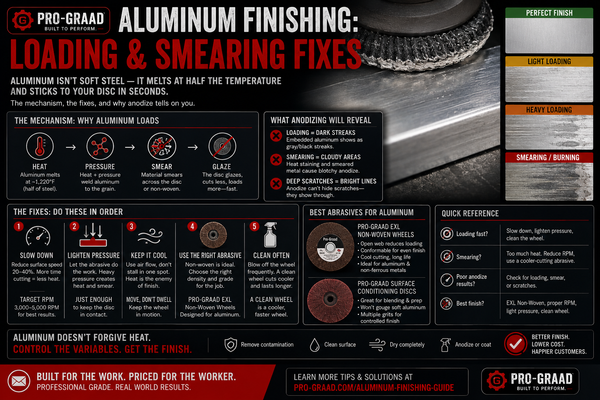
Aluminum oxide dulls gradually for a steady cut; silicon carbide shatters to stay sharp but wears fast; ceramic micro-fractures repeatedly, renewing fresh cutting edges throughout its life. For heavy manufacturing, that continuous self-renewal is the difference between one disc lasting a shift and one disc lasting three minutes.
Heavy-Duty Backing and Bonding
When you see the term layer, and the bonding agents that hold the grains are much stronger in industrial-grade abrasives. They resist tearing, melting, and clogging even under heavy pressure. Budget sandpaper uses thinner, weaker bonding resins. Modern industrial sandpaper typically uses synthetic resins, such as phenolic resin or epoxy resin, which are much more durable and heat-resistant than the natural glues used historically.
Pro Tip: If your abrasive discs are tearing, clogging, or shedding grit within minutes on a belt grinder or angle grinder, the problem is almost always the bond and backing grade, not operator technique. Upgrade to a cloth-backed, resin-bonded product before adjusting anything else.
Consistent Grit Distribution
Manufacturing quality, including consistent grit size and even coating, is a hallmark of good sandpaper. Cheap sandpaper often has inconsistent grit, leading to random deep scratches and faster wear. In a production context, that inconsistency translates to rework, scrapped parts, and failed surface-finish inspections.
The True Cost of Cheap Sandpaper in a Production Environment
Let's be honest about what "industrial sandpaper cheap" actually costs when you tally everything up. The sticker price is one line item. The full picture includes labor, rework, machine wear, and downtime.
The Disc-Change Labor Drain
In modern fabrication shops, labor costs are often significantly higher than abrasive costs. As a result, professionals focus on productivity rather than simply choosing the cheapest abrasive available. Consider a grinder operator who swaps discs eight times per shift instead of two. Even at $20 per hour, the lost productive time exceeds the cost difference between budget and industrial-grade abrasives before lunch.
When deciding which abrasive is right for an application, it is important to separate the price and the cost. The price may be higher with ceramic abrasives, but the total cost of the job, product, time, and labor, will be substantially less. That framing changes every procurement conversation.
Inconsistency Destroys Surface Quality
Cheap sandpaper often has inconsistent grit, leading to random deep scratches and faster wear. Reputable brands invest in precision manufacturing to ensure their products perform consistently from sheet to sheet. In industries like aerospace, medical devices, or food-grade fabrication, a scratch pattern that deviates from spec is a rejected part. Rework costs dwarf the price of any abrasive upgrade.
The Downtime Multiplier
Every unproductive hour costs automotive manufacturers a staggering $2.3 million. This figure represents a twofold increase from 2019, underscoring the escalating complexity and interdependence of modern automotive manufacturing processes. Therefore, any production stoppage caused by a consumable failure, including an abrasive that clogs a machine or shreds in a belt grinder mid-cycle, triggers costs that dwarf any savings from buying cheap sandpaper.
Pro Tip: Run a simple 30-day audit on your facility. Track the number of abrasive changes per station, any surface-finish rejections linked to abrasive performance, and any machine stoppages involving abrasive media. Even rough estimates will almost always reveal that the cost differential between budget and industrial grade is negative, industrial pays for itself.
Choosing the Right Industrial Sandpaper for Heavy Manufacturing
Selection is not a single decision; it is a matching exercise across grain type, grit, and backing material for each application in your facility.
Grain Selection by Application
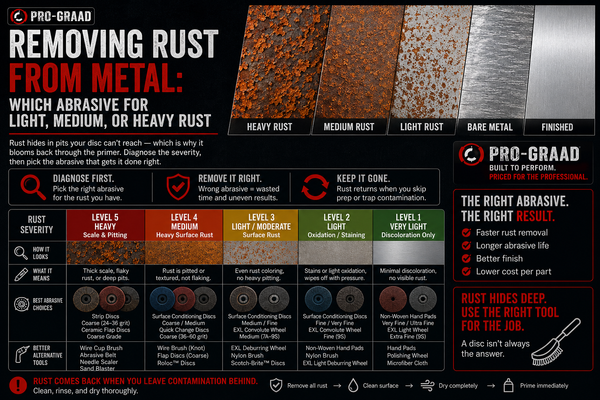
Industrial-grade abrasives use high-quality synthetic minerals. Aluminum oxide handles heavy-duty jobs as a go-to for toughness and durability. Silicon carbide is incredibly hard and sharp, and ideal for non-metals and fine grinding. Zirconia alumina is self-sharpening and designed for high pressure, aggressive applications. Ceramic alumina features advanced engineered grains that boost cutting performance and extend tool life.
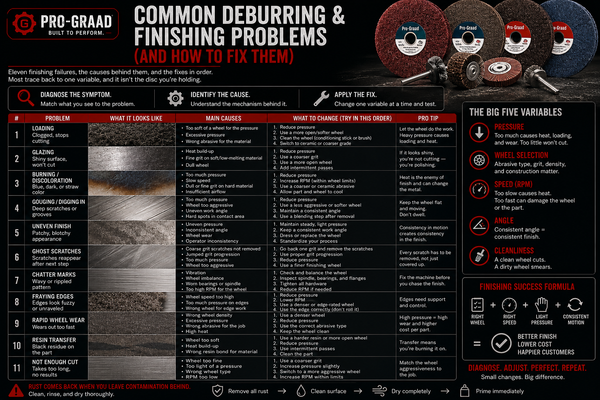
For the toughest applications, weld grinding, stainless steel fabrication, high-alloy metalwork, ceramic is the clear first choice. Ceramic abrasive grains are engineered to fracture at a microscopic level, constantly exposing sharp cutting points. This makes ceramic the fastest-cutting and longest-lasting option, especially on hard metals. From a pure cost-of-use standpoint, in many cases, one ceramic disc can replace several aluminum oxide discs.
Grit Selection for Production Stages
Cheap abrasives may save money material quickly and are ideal for heavy-duty tasks like grinding or stripping paint. Medium grades of 80-120 grit balance material removal with surface finishing, making them versatile for general-purpose use. For a precision finishing stage, Cheap abrasives may save money surfaces and prepare them for finishing processes such as painting or sealing, while extra-fine grades of 240 and above deliver polished, smooth finishes often used for precision work or on delicate materials.
The practical rule: start coarser than you think you need, and work progressively finer. Each pass removes the scratch pattern from the previous grit. Skipping steps wastes time trying to make a fine grit do the work of a medium grit.
Backing Material Matters More Than Most Buyers Know
Because they are more durable and tear resistant, cloth-backed abrasives are typically more expensive than paper, but they will last longer and can withstand continual bending and flexing during use. For machine sanding, belt grinding, and any application that puts continuous pressure on the abrasive, cloth backing is a functional requirement, not a luxury upgrade.
Film backing is often used in applications requiring ultra-fine finishing, such as in the automotive and electronics industries. Film backings provide a more uniform finish and are more expensive than cloth. For wet sanding and precision metal finishing, film-backed products from suppliers like Pro-Graad offer the combination of dimensional uniformity and moisture resistance that production environments demand.
Pro Tip: Match backing weight to your machine. Y-weight polyester backing is stronger than X-weight cloth and is designed for heavy-duty machine sanding when extra stock removal is necessary. Running a J-weight belt on a high-pressure production grinder is a guaranteed failure.
Common Mistakes That Waste Your Abrasive Budget
In my experience, the facilities that complain most about abrasive costs are almost always making one of a small set of repeatable errors.
Using One Product Across All Stations
A single "all-purpose" abrasive is always a compromise. Cheap abrasives may save money material quickly, they can clog or wear out faster on softer surfaces, making finer grades more efficient in some cases. Using the wrong abrasive can ruin your project. For instance, aluminum oxide is too aggressive for delicate glass, and garnet is ineffective on hardened steel. Map each workstation to the correct grain and grit before standardizing.
Measuring Cost Per Unit Instead of Cost Per Part
In the long run, a cheap sandpaper that won't last for very long will be more costly to use than an expensive abrasive that continues to work well over an extensive period. Frame every abrasive purchase decision as cost per finished part, not cost per disc.
Ignoring Open-Coat vs. Closed-Coat Selection
A closed-coat sandpaper has about 90% to 95% of the surface covered with the abrasive. These sandpapers are more aggressive and better suited to harder woods, metals, and for finishing lacquer and sealing coats. Using a closed-coat abrasive on soft or resinous materials causes rapid clogging, which destroys performance and shortens disc life drastically.

Industrial Sandpaper Across Key Manufacturing Sectors
The abrasive and sandpaper manufacturing industry has demonstrated steady growth over the past five years, driven by a rebound in U.S. industrial activity, strong demand from the automotive and construction sectors, and modest international trade expansion. Each major sector has specific abrasive requirements.
Metal Fabrication and Weld Prep
Market growth is primarily driven by the steady expansion of the metal fabrication industry, which remains one of the largest consumers of abrasive products, including bonded wheels, coated abrasives, and super abrasives. For weld grinding, ceramic and zirconia alumina outperform all other grain types on the cost-per-part metric. The higher thermal resistance of these grains prevents the glazing that ruins a disc on stainless steel.
Automotive and Aerospace
Market growth is primarily driven segment held the largest market share of 35.0% in the global abrasives market in 2025. Therefore, automotive production lines represent the largest single opportunity to quantify industrial-grade abrasive ROI. Superabrasives such as CBN and diamond are used in extreme precision and high-performance environments like aerospace and medical manufacturing.
Woodworking and Furniture
The coated abrasives segment is expected to register the fastest CAGR over the forecast period. This category includes rolls, sheets, discs, belts, and flap-wheel products used extensively in surface preparation and finishing applications. For wood, aluminum oxide remains the most cost-effective all-rounder. For lacquer and finish sanding, silicon carbide produces cleaner scratch patterns and less heat transfer into delicate coatings. Suppliers such as Pro-Graad offer coated abrasive rolls in both grain types suited to high-volume woodworking lines.
Frequently Asked Questions
What is the main difference between industrial sandpaper and hardware-store sandpaper?
Industrial-grade abrasives are engineered for durability, consistent performance, and efficiency under tough manufacturing conditions. They use premium minerals and heavy-duty backing materials designed for high-pressure, continuous operation on powerful machinery. Consumer-grade abrasives are designed for intermittent, low-pressure use in applications like home woodworking or minor repairs. The distinction matters the moment your application involves power tools, production volumes, or surface-finish specifications.
How much longer does ceramic sandpaper last compared to aluminum oxide?
The cost of ceramic is generally longer and cuts more aggressively than aluminum oxide, especially on tough metals. Under sustained production-line pressure, the gap widens further because aluminum oxide dulls progressively without renewing its cutting edges, while ceramic continuously self-sharpens through controlled micro-fracturing.
Is industrial-grade sandpaper worth the higher price for a small fabrication shop?
Yes, provided you are buying for the right applications. Most professional fabricators welders, and metalworking shops prefer ceramic fiber discs because they cut faster, last longer, and generate less heat. For a small shop running six to eight hours of grinding daily, the reduction in disc changes alone justifies the price premium within a standard billing week.
What grit should I use for heavy stock removal on steel?
Cheap abrasives may save money with a coarse abrasive like a 40-grit aluminum oxide disc. For polishing, move to finer grades, or even diamond abrasives for stainless steel or titanium. In a production setting, running a 40-60 grit ceramic belt for material removal followed by an 80-120 grit medium pass gives you a clean surface ready for inspection or coating without excessive additional steps.
How do I choose between cloth and paper backing for my application?
The decision comes down to pressure and machine type. Paper-backed abrasives are the most affordable and come in a broad range of weights. The lighter weights are best for hand sanding while heavier weights are resilient enough for stroke or wide-belt sanding belts. For any powered, continuous, or high-pressure application, cloth is more durable and resistant to tearing than paper, even in demanding, heavy-duty sanding and grinding applications. Default to cloth whenever the abrasive is moving under machine power.
Closing Thought
The procurement instinct to default to cheap sandpaper is understandable. The math feels safe when you're looking at cost per sheet. Shift the calculation to cost per finished part, cost per shift, and cost per abrasive-related downtime event, and industrial-grade products win every time. Whether you source from a specialist supplier like Pro-Graad or any other industrial abrasives provider, the key is making the decision on complete cost, not catalog price.
Heavy manufacturing demands tools that match its intensity. Industrial sandpaper that is engineered for the floor is not a premium product. At sustained production volumes, it is the rational one.
Sources
-
Abrasive & Sandpaper Manufacturing in the US Industry Analysis, IBISWorld. Industry revenue, CAGR, and market structure data. https://www.ibisworld.com/united-states/industry/abrasive-sandpaper-manufacturing/561/
-
What Are Industrial-Grade Abrasives?, Empire Abrasives. Grain types, performance properties, and industrial applications. Industrial-grade abrasives use
-
Ceramic vs Aluminum Oxide Fiber Discs, FastPlus Abrasives. Professional comparison of ceramic and aluminum oxide performance. https://fastplus.eu/blogs/sanding-polishing/ceramic-vs-aluminum-oxide-fiber-discs
-
Are Ceramic Abrasives Better?, Empire Abrasives. Cost-per-use analysis and lifespan data for ceramic grains. The cost of ceramic is generally
-
Zirconia vs Ceramic vs Aluminum Oxide: Which Abrasive Grain Matters, CEM Industrial Supply. Grain selection guide for metalworking. https://cemindustrialsupply.com/zirconia-vs-ceramic-vs-aluminum-oxide-which-abrasive-grain-matters/
-
How Much Longer Will Zirc or Ceramic Last Compared to Aluminum Oxide?, Preferred Abrasives. Comparative lifespan data with production context. https://www.preferredabrasives.com/faq/much-longer-will-zirc-ceramic-last-compared-aluminum-oxide/
-
The Real Cost of Unplanned Downtime in Manufacturing (2026 Data), ReliaMag / Siemens. Downtime cost statistics across manufacturing sectors. https://reliamag.com/articles/cost-unplanned-downtime-manufacturing/
-
2025 Report: The Impact of Manufacturing Downtime, L2L. Survey data on downtime frequency, cost, and root causes. https://www.l2l.com/blog/2025-report-manufacturing-downtime
-
Manufacturing Downtime Cost Statistics 2026, Manufacturing Lead Generation. Compiled benchmark statistics on downtime cost. https://manufacturingleadgeneration.com/manufacturing-downtime-statistics/
-
Abrasives Market Size, Share & Trends Report 2026-2033, Grand View Research. Global market valuation and growth forecast. Market growth is primarily driven
-
Understanding Abrasive Grades and Their Industrial Applications, HUB Industrial Supply. Grit selection guide for industrial applications. Cheap abrasives may save money
-
Guide to Cloth-Backed Abrasives, Empire Abrasives. Backing material selection and performance properties. Cloth Backings in Abrasive Products: Enhancing Durability and Efficiency
-
Paper, Cloth, Film or Foam? Choose the Right Backing, Uneeda. Backing selection guide for production environments. https://www.sandpaper.com/articles/paper-cloth-film-or-foam-choose-the-right-backing-to-get-the-job-done/
-
Choosing the Best Sandpaper: Brands, Types, and Longevity, Novogrit Abrasive. Consistency and quality manufacturing factors. https://novogrit.com/choosing-the-best-sandpaper-brands-types-and-longevity/
-
The True Cost of an Hour's Downtime: An Industry Analysis, Siemens Blog. Per-sector downtime cost data from the 2024 True Cost of Downtime report. https://blog.siemens.com/2024/07/the-true-cost-of-an-hours-downtime-an-industry-analysis/