Grinding Wheels Shape Modern Manufacturing Success
Every day, across thousands of factories, job sites, and fabrication shops, grinding wheels quietly determine the difference between a precision component and a rejected part. Grinding wheels function as bonded abrasive tools used to shape, cut, finish, and sharpen workpieces across diverse industrial processes, and have emerged as indispensable components in the global manufacturing supply chain. Yet most people outside the industry have little idea how fundamentally these spinning discs underpin everything from the car they drive to the building they work in.
Grinding wheels function as bonded was valued at $9.2 billion in 2025 and is projected to reach $14.7 billion by 2034, expanding at a compound annual growth rate of 5.3%. That kind of sustained growth signals something important: demand for precision material removal is accelerating across nearly every sector. If your operation uses grinding wheels, or relies on products that were shaped by them, understanding how they work and how to select the right one is a direct investment in quality and efficiency.

Key Takeaways
- Market momentum is real: The grinding wheel market was estimated at $4.29 billion in 2025 and is expected to reach $6.21 billion by 2032 at a CAGR of 5.39%, therefore, suppliers who delay upgrading their wheel specifications risk falling behind competitors investing now.
- Material match is everything: By convention, aluminum oxide grains are used for grinding ferrous metals and silicon carbide for non-metals and non-ferrous metals, use the wrong abrasive and you waste money, time, and risk workpiece damage.
- Contractor grinding wheels are job-site specific: Wheels designed for concrete grinding remove concrete efficiently, while metal grinding discs are engineered to cut and shape steel safely and effectively, never substitute one for the other.
- Skipping and chatter are fixable: If your grinding wheel is skipping or chattering on the workpiece, try grinding at an increased angle between 25 to 35 degrees to see if that eliminates the issue.
- Safety compliance protects everyone: All abrasive wheels shall be closely inspected and ring-tested before mounting to ensure they are free from cracks or defects. Skipping this step is the leading cause of preventable grinding injuries.
Quick-Start Prioritization Framework
| Application | Best Wheel Type | Effort to Set Up | Time to Results |
|---|---|---|---|
| Metal fabrication (steel/ferrous) | Aluminum oxide Type 27 | Low | Immediate |
| Concrete surface prep (contractors) | Diamond cup wheel | Low | Immediate |
| Precision machining (tight tolerances) | CBN or ceramic superabrasive | Medium | Hours |
| Stainless steel grinding | INOX/contaminant-free wheel | Low | Immediate |
| Non-ferrous metals (aluminum, copper) | Silicon carbide | Low | Immediate |
| Heavy-duty construction cutting | Resin-bond cut-off wheel | Low | Immediate |
Start here if you're:
- A general contractor on-site: Begin with a diamond cup wheel for concrete and a Type 27 aluminum oxide wheel for steel, these two cover the majority of field tasks.
- A fabrication shop or manufacturer: Identify your workpiece material hardness first, then consult By convention, aluminum oxide to narrow your spec.
- A precision machining operation: Invest in CBN or diamond superabrasives if you're working with hardened steels or ceramics, the higher upfront cost pays back in cycle time and wheel life.
What Makes a Grinding Wheel Work
The Anatomy of a Grinding Wheel
Abrasive wheels are composite structures built from countless tiny abrasive particles, known as "grit," held together by a specialized bonding material. The combination of abrasive type, grit size, bonding material, wheel grade, and structure determines a wheel's performance and suitability for specific tasks. Think of it like a recipe, change one ingredient and the outcome shifts considerably.
The manufactured abrasives most commonly used in grinding wheels are aluminum oxide, silicon carbide, cubic boron nitride, and diamond. Each of these materials has a distinct hardness profile and ideal use case. Cubic boron nitride is an extremely hard, sharp, and cool-cutting abrasive. It is one of the newest manufactured abrasives and is 2.5 times harder than aluminum oxide. It can withstand temperatures up to 2,500°F.
Grit, Grade, and Bond, The Three Core Variables
According to Modern Machine Shop's grinding wheel selection guide, the required surface finish, dimensional tolerances, form-holding requirements, and stock removal rates all factor into the appropriate grit size, grade, and bond type. For low-Ra finishes or close geometric tolerances, finer grits are helpful because they provide more points of contact between the work and wheel. This helps with precision finishes, which have a shallower scratch pattern and a lower micro-inch finish.
Bond is the material that holds the abrasive grains together so they can cut effectively. The bond must wear away as the abrasive grains wear and are expelled so new sharp grains are exposed. Most grinding wheels are made with vitrified bonds, which consist of a mixture of carefully selected clays.
A common rule of thumb from experienced machinists is this: the harder the steel, the softer the wheel you need. The more stock to remove, the coarser the wheel. The finer the finish required, the finer the grit. Keep these three rules in mind when starting a new job.
Grinding Wheels Across Key Industries
Automotive and Aerospace Manufacturing
Precision grinding wheels are extensively used in the automotive sector to achieve high accuracy, smooth surface finishes, and tight tolerances in the manufacturing of critical components. These wheels play an essential role in producing and finishing various parts, ensuring vehicle performance, reliability, and safety.
The automotive sector's shift toward electric vehicles is reshaping wheel demand rather than reducing it. EV adoption does not shrink demand because each electric drive unit still depends on tightly ground gears, bearing races, and rotor journals. Manufacturers who have already invested in high-performance CBN and ceramic wheel technology are better positioned to meet these new requirements quickly.
In 2025 and 2026, procurement of advanced superabrasive products including CBN and diamond grinding wheels has notably accelerated, reflecting broader trends in machining difficult-to-cut materials such as hardened steel, carbide, ceramics, and composites. If your shop handles aerospace or EV components, this is the moment to audit your current wheel specifications against these advanced options.
Construction and Contractor Applications
The construction sector, buoyed by massive global infrastructure programs including the U.S. Infrastructure Investment and Jobs Act, India's National Infrastructure Pipeline, and the European Union's construction-led green transition investments, is driving sustained demand for cutting and grinding wheels used in rebar processing, concrete cutting, and structural steel fabrication.
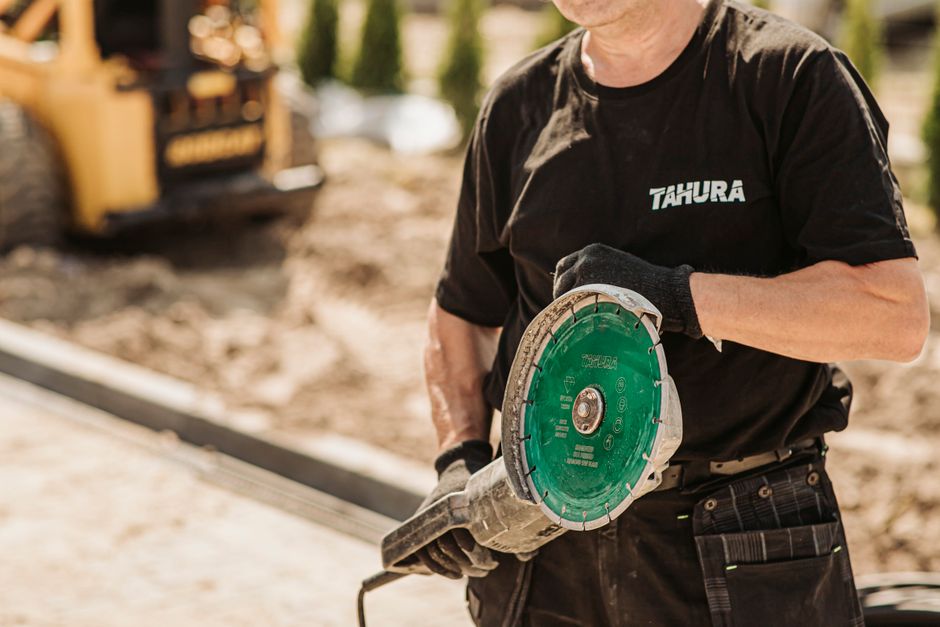
For contractor grinding wheels, the choice of abrasive and bond must match the substrate precisely. Not every concrete surface requires the same level of aggression. Silicon carbide discs excel at light surface cleaning where preserving the concrete is critical. These non-diamond tools remove surface contaminants without gouging or creating deep scratch patterns. While they have a shorter lifespan than diamond alternatives, they're ideal for preparing surfaces that only need minimal cleaning before coating.
Not every concrete surface minimal dust during grinding. Without abrasive dust to wear away the metal matrix, a hard-bonded wheel will not expose fresh diamonds, the existing diamonds simply get dull and the wheel glazes over. A soft bond wears away more easily, constantly revealing sharp, new cutting edges. This matters directly to contractor profitability: using the wrong bond hardness on the wrong concrete effectively throws money away in premature wheel replacement.
Semiconductor and Electronics Manufacturing
Grinding wheels function as bonded industries represent the fastest-growing application vertical, with ultra-precision diamond and CBN wheels commanding significant premium positioning in wafer dicing, substrate thinning, and ceramic component manufacturing. This is an area where grinding wheel precision is measured in nanometers, not fractions of an inch. Grinding wheels function as bonded boom, with global fab capacity additions exceeding $200 billion in announced investments between 2022 and 2026, is creating rapid growth for ultra-fine diamond and CBN wheels in wafer and substrate processing operations.
How to Select the Right Grinding Wheel
Match Abrasive to Material
This is the single most impactful decision you will make. Aluminum oxide grains are well suited for steels and ferrous metals, while silicon carbide grains are ideal for grinding cast iron, non-ferrous metals, and non-metallic materials. Getting this wrong means excessive heat generation, poor cutting, and short wheel life.
For stainless steel specifically, material contamination is a hidden risk. The most important factor when grinding stainless steel is to use contaminant-free or INOX wheels. This designation means the wheels are manufactured with additives that contain less than 0.1% iron, sulfur, and chlorine. Using a standard aluminum oxide wheel on stainless steel can embed contaminants into the surface and cause corrosion, a costly quality failure.
Consider Wheel Type and Profile
Type 27 is by far the most common abrasive grinding wheel. Type 27 grinding wheels differ from other wheels in that they have a flat profile with a depressed center. A depressed center allows for clearance when the operator must work at a constrained angle. Using a wheel with a depressed center allows for a range of grinding angles, typically from 0 to 45 degrees.
Weiler Abrasives' complete grinding wheel guide notes that Type 28 wheels offer a concave design that works aggressively at lower angles and increases access to tight spaces, a better choice for weld seams and confined joints.
Pro Tip: For contractor grinding wheels used in concrete polishing, Onfloor's concrete grinding guide confirms that a concrete grinding cup wheel is the most common tool for polishing concrete and stone. Depending on the grit used, it can also handle jobs like removing adhesive from concrete surfaces, making it one of the most versatile tools on any job site.
Manage Wheel Speed and Pressure
The speed at which a grinding wheel operates is important. Wheels will act differently based on their speed. An excessive speed may result in a hard grinding action and may introduce the danger of breakage. The safe operating speed marked on a wheel or blotter, in revolutions per minute, must not be exceeded.
I've found that operators who let the wheel and the tool do the work, rather than forcing the wheel through material, consistently get longer wheel life and better surface finishes. The goal is to use the minimum pressure necessary to keep the work in motion evenly across the face of the wheel. Let the tool and the wheel do the work as they are designed to do.
Diagnosing and Fixing Grinding Wheel Problems
Why Grinding Wheels Skip
When a grinding wheel skips across the workpiece instead of cutting smoothly, it signals a problem that affects both quality and safety. Chatter, or wheel vibration, is a common problem in grinding. This problem can be grouped into two categories: forced chatter and unforced chatter. Forced chatter is commonly caused by an out-of-balance wheel, a bad bearing in the grinder, uneven wear on the grinding wheel, an improperly mounted wheel, or improper clamping of the base material, which allows vibration.
In my experience, the fastest first check is angle. Grinding at a low angle can be a cause of wheel cracking. If your grinding wheel is skipping or chattering on the workpiece, try grinding at an increased (steeper) angle between 25 to 35 degrees to see if that eliminates the issue.
If the problem is tracked down to a vibration in the machine, possibly some kind of resonance, the solution is to vary the grinding speed. Try going 10% faster or slower to remove the forcing excitation. This is a simple adjustment that many operators overlook before spending time and money on more complex diagnostics.
Wheel Balancing and Mounting Issues
Both the grinding wheel and the regulating wheel must be properly balanced to prevent vibration during centerless grinding. The grinding wheel runs at a very high speed, and even a small imbalance can cause strong vibrations and lead to chatter marks.
MSC Industrial Supply's troubleshooting guide advises operators to clean or replace adapting nuts that may be dirty or worn, and to check that the wheel is mounted flush and even with the adapting nut with no uneven gaps. These are low-cost checks that eliminate the majority of chatter complaints before any wheel replacement is needed.
Pro Tip: According to GCH Tool's grinding defect prevention guide, grinding cracks occur primarily from using poor-quality glazed grinding wheels, insufficient coolant supply, and excessive feed rate during material removal. Dressing the wheel regularly to remove glazing is one of the simplest and highest-return maintenance habits any shop can adopt.
Grinding Wheel Safety, What You Must Know
Grinding wheel standards, such as those set by organizations like the American National Standards Institute (ANSI) and the European Committee for Standardization (CEN), play a crucial role in ensuring consistency and safety. In the United States, OSHA's abrasive wheel machinery standard 29 CFR 1910.215 provides the legal framework every employer must follow.
The Unified Abrasives Manufacturers' Association (UAMA) safety guide lays out the non-negotiable basics:
- Run the wheel in a protected area for one minute before grinding.
- Wear ANSI Z87+ safety glasses and additional face protection as required.
- Employ dust controls appropriate to the material being ground.
- Comply with OSHA regulations 29 CFR 1926.1153 when working on materials containing crystalline silica such as concrete, mortar, and stone.
- Never allow untrained people to handle, store, mount, or use wheels.
Grinding wheels shall fit freely on the spindle and remain free under all grinding conditions. A controlled clearance between the wheel hole and the machine spindle is essential to avoid excessive pressure from mounting and spindle expansion. Forcing a wheel onto a spindle is among the most dangerous mistakes an operator can make, and one of the most common.

In my experience, the facilities with the fewest grinding incidents are those that treat wheel inspection as a mandatory, non-skippable step, not a suggestion. Suppliers like Pro-Graad provide contractor-grade and industrial grinding wheels designed with consistent geometry and quality bonding to reduce the risk of unexpected failure on the job.
Frequently Asked Questions
What is the difference between Type 27 and Type 28 grinding wheels?
Type 27 grinding wheels have a flat profile with a depressed center that performs best between 25 and 35 degrees, with effective stock removal achievable at working angles up to 45 degrees. Type 28 wheels have a concave design that is aggressive at lower working angles and increases access to tight spaces. Choose Type 27 for general metal grinding and Type 28 for weld seams or confined areas.
Why do grinding wheels skip, and how do I fix it?
Skipping, also called chatter, is usually caused by an out-of-balance wheel, an incorrect grinding angle, or a worn mounting nut. Most of the time the cause is the dulling of the wheel or an ineffective or too-shallow grinding angle. To resolve wheel chatter, clean or replace adapting nuts that may be dirty or worn. If the problem persists, try adjusting your grinding speed by 10% in either direction.
How do I choose a contractor grinding wheel for concrete?
Match the bond hardness to the concrete hardness. If you use a soft-bonded wheel on soft or green concrete, the abrasive dust will erode the matrix so quickly that diamonds fall out before they can do any work. You need a hard bond to resist this abrasion and maximize tool life. For hard, dense concrete, use a soft-bond wheel to keep exposing fresh diamonds.
What abrasive should I use for stainless steel?
Always use INOX-rated or contaminant-free wheels for stainless steel. Standard wheels can embed iron, sulfur, and chlorine into the surface, triggering corrosion. Tiger Ceramic-type grinding wheels feature innovative ceramic alumina grain that rapidly cuts through stainless steel at low temperatures to prevent heat damage. When in doubt, look for wheels explicitly labeled for stainless.
How often should grinding wheels be dressed?
Many issues like chatter, glazing and burning of workpieces often occur due to incorrect wheel specifications or worn cutting surfaces. Regularly dressing the wheel keeps the cutting edges sharp and enhances grinding efficiency. In practice, dress the wheel whenever you notice a change in cutting feel, any glazing on the surface, or a visible deterioration in finish quality, rather than waiting for a scheduled interval.
Final Thoughts
Grinding wheels are not a commodity purchase. The right wheel, matched correctly to your material, machine, and application, directly determines output quality, operator safety, and total cost per part. Grinding wheel technology continues to evolve, with advancements in materials, equipment, and automation driving cost savings and sustainability. Staying current on wheel specifications, and treating selection as a deliberate engineering decision rather than a habit, is one of the highest-return habits any manufacturing or contracting operation can build.
Whether you're a shop floor supervisor navigating precision tolerance requirements or a general contractor sourcing reliable contractor grinding wheels for your next concrete project, understanding these fundamentals puts you ahead of competitors who simply grab whatever wheel is on the shelf. For a wide range of high-quality grinding wheels suited to both industrial and contractor applications, Pro-Graad's product lineup is worth exploring as a starting point.
Sources
- Grinding Wheel Market Size & Share 2026-2032, 360iResearch. Global market sizing and CAGR projections. https://www.360iresearch.com/library/intelligence/grinding-wheel
- Precision Grinding Wheels Global Market Report 2026, The Business Research Company via GII Research. Automotive and precision sector demand. https://www.giiresearch.com/report/tbrc1933509-precision-grinding-wheels-global-market-report.html
- Grinding Wheels Market Research Report 2034, DataIntelo. Market valuation, sector breakdown, and regional analysis. Grinding wheels function as bonded
- Grinding Machine Market Size & Share, Mordor Intelligence. End-user industry breakdown and EV demand. https://www.mordorintelligence.com/industry-reports/grinding-machines-market
- Guide to Grinding Wheels, Weiler Abrasives. Wheel types, profiles, and selection for metal. https://www.weilerabrasives.com/en/na-articles/grinding-wheel-guide
- Choosing a Grinding Wheel, Weiler Abrasives. Material-specific selection including stainless steel. https://www.weilerabrasives.com/en/na-articles/na-articles/how-to-choose-grinding-wheel
- 7 Key Factors in Choosing a Grinding Wheel, Modern Machine Shop. Specification methodology by operation and material. https://www.mmsonline.com/articles/7-key-factors-in-choosing-a-grinding-wheel
- The 7 Factors Used to Determine a Grinding Wheel Specification, Norton Abrasives. Abrasive grain and bond selection guidance. By convention, aluminum oxide
- Troubleshooting Tips for Grinding Metal, Weiler Abrasives. Chatter, skipping, and uneven wear diagnostics. https://www.weilerabrasives.com/en/na-articles/na-articles/troubleshooting-tips-for-grinding-metal
- Troubleshooting Tips for Grinding Metal, MSC Industrial Supply. Mounting and chatter resolution. MSC Industrial Supply's troubleshooting guide
- 6 Common Grinding Problems and How to Solve Them, CDT USA. Speed, chatter, and burn diagnostics. https://www.cdtusa.net/blog/6-common-grinding-problems
- Tips to Avoid Grinding Burn, Chatter, and Cracks, GCH Tool. Defect prevention and wheel maintenance. https://www.gchtool.com/blog/entry/how-to-prevent-and-avoid-grinding-burn-cracks-chatter-and-other-defects.html
- Abrasive Wheel Machinery Standard 29 CFR 1910.215, OSHA. Legal safety requirements for grinding operations. https://www.osha.gov/laws-regs/regulations/standardnumber/1910/1910.215
- Safety Guide for Grinding Wheels, UAMA (Unified Abrasives Manufacturers' Association). Operator safety best practices. https://uama.org/safety-guide-page/
- What Is a Concrete Grinding Wheel?, Onfloor. Contractor wheel types and concrete application guide. https://blog.onfloor.com/concrete-grinding-wheel
- The Professional's Guide to Diamond Cup Wheels, U.S. SAWS. Bond hardness matching and contractor concrete grinding. Not every concrete surface
- Selecting the Right Grinding Wheel for Your Application, Practical Machinist. Bond types, vitrified vs. resin, grade selection. machinist forums and technical sources
- Understanding and Eliminating Chatter Marks in Centerless Grinding, THORS. Wheel balance and vibration control. https://thors.com/understanding-and-eliminating-chatter-marks-in-centerless-grinding/