Flap Discs Outperform Traditional Sanding Methods
Pick up a grinding wheel or a flat sanding disc and you are reaching for the familiar. But familiarity has a cost, one measured in extra finishing steps, heat damage, wasted consumables, and sore wrists at the end of a long shift. The global abrasives market was valued at roughly $41 billion in 2025 and is projected to reach nearly $59.54 billion by 2033, growing at a CAGR of 4.8%, and a big slice of that growth belongs to coated abrasive products like flap discs, which are replacing older tools across metal fabrication, construction, and automotive sectors. If you are still reaching for a traditional grinding wheel or a single-layer sanding disc every time a surface needs work, this article will show you exactly what you are leaving on the table.

Key Takeaways
- One tool, two stages: Flap discs allow operators to perform grinding and finishing in one efficient, time-saving, cost-lowering step, eliminating the disc swap that interrupts workflow with traditional methods.
- Longer tool life: Compared to traditional grinding wheels, flap discs typically offer 30-40% longer lifespan due to their self-renewing flaps. Therefore, measure your consumable spend over a quarter, not per disc, and you will find significant savings.
- Less heat, better results: Flap discs generate less heat than a standard grinding wheel, reducing the risk of discoloring or warping the workpiece. If scorch marks or warped stainless steel are showing up in your work, switching to a flap disc is the first fix to try.
- Reduced operator fatigue: Flap discs generate less vibration and noise, making them easier to handle for long periods, and their balanced design minimizes operator fatigue and improves precision in finishing tasks.
- Grit selection drives results: Research in abrasive technology indicates that using a two-step process, starting with 40-grit and finishing with 80-grit, reduces total labor time by up to 30% compared to using a single medium grit for the entire task. Plan your grit progression before you start grinding, not after.
Quick-Start Prioritization Framework
| Task | Best Disc Type | Grit Range | Expected Outcome |
|---|---|---|---|
| Heavy weld removal | T29 flap disc, ceramic or zirconia | 36-40 | Fast stock removal, moderate finish |
| Weld blending and surface prep | T27 or T29 flap disc | 60-80 | Smooth blend, paint-ready after one more pass |
| Final finish / pre-paint | T27 flap disc, aluminum oxide | 80-120 | Clean, consistent, paint-ready surface |
| Contoured or curved surfaces | High-density T27 flap disc | 60-80 | Even finish on irregular geometry |
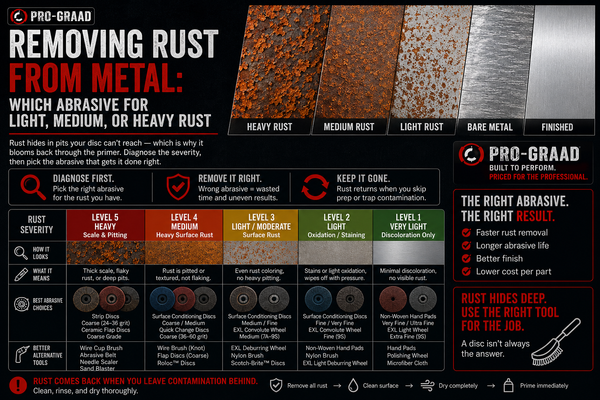
| General rust and paint removal | Standard flap disc, zirconia | 40-60 | Clear surface without damaging substrate |
| Precision work in tight areas | Mini flap disc on die grinder | 60-120 | Controlled finish in confined spaces |
Start here if you are:
- A home workshop user or DIYer: A zirconia T29 flap disc in 60-grit covers most tasks from weld cleanup to rust removal without needing a follow-up disc.
- A fabrication shop: Run ceramic or zirconia for production grinding and keep aluminum oxide on hand for final finishing passes.
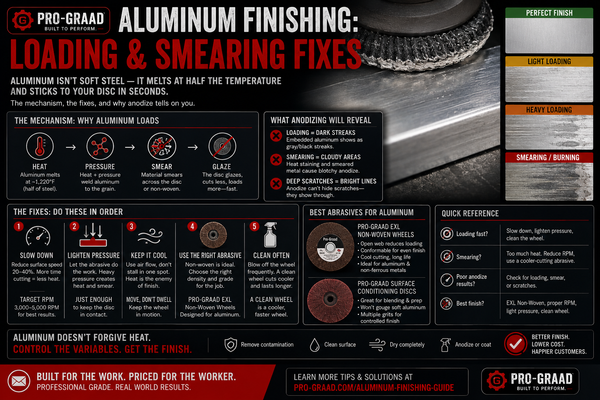
- Working on stainless steel or aluminum: Due to their flexible nature and airflow between flaps, flap discs run cooler, helping prevent discoloration and warping, especially on stainless steel or aluminum.
What Makes Flap Discs Different From Traditional Abrasives
The Layered Construction Advantage
Flap discs are composed of overlapping abrasive flaps arranged around a central hub, and this unique design allows them to perform both grinding and finishing in one step. That single design decision changes almost everything about how the tool performs compared to a flat sanding disc or a bonded grinding wheel.
Flap discs consist of overlapping layers of abrasive cloth attached radially to a backing plate, and as the outer layers wear down, new, sharp abrasive is exposed, giving them a longer lifespan and a consistent cutting action. Traditional sanding discs do not have this advantage. Sanding discs are typically a single layer of abrasive material bonded to a flexible backing, and they rely on a completely fresh surface for optimal performance. Once that single layer wears, performance drops off fast and the disc needs replacing.
Grain Types and Their Impact
The three most common grain materials used in flap discs are ceramic, zirconia, and aluminum oxide. Ceramic grains are efficient and productive, with self-sharpening properties and a grinding aid for cooler running temperatures. Zirconia grains offer improved speed and durability, while aluminum oxide is the least expensive option for smaller jobs.
Choosing the wrong grain for your material is one of the most common mistakes in surface preparation. In my experience, new users almost always default to aluminum oxide across the board, and then wonder why the disc wears out so fast on stainless. Match the grain to the metal and the disc will outlast your expectations.
Pro Tip: For stainless steel and high-alloy metals, ceramic alumina is the standout choice. Ceramic alumina features micro-fracturing grains that stay sharp longer, making it ideal for aerospace and high-alloy metals. For everyday carbon steel grinding, zirconia alumina flap discs deliver the best balance of speed and disc life.
Performance Comparison: Flap Discs vs. Grinding Wheels vs. Sanding Discs

Grinding Wheels: Fast but Rough
Grinding wheels are typically more aggressive than flap discs, which means they can remove material faster, but will also result in a rougher finish and deeper gouges, which usually requires an additional finishing step. That additional finishing step has a hidden cost; it is extra time, an extra disc change, and an extra consumable. For anyone working at volume, those costs add up fast.
Grinding wheels usually produce high heat due to their aggressive cutting action, which can cause harm to the material or the wheel. Heat damage on metal surfaces shows up as blue or gold discoloration, a dead giveaway that the workpiece has been overheated and may need rework. If you are painting or coating afterward, heat marks can also compromise adhesion.
Sanding Discs: Precise but Limited
Sanding discs excel at smoothing surfaces, removing paint, and preparing wood for painting or staining, but they are generally not designed for aggressive material removal. They are the right choice for fine finishing on flat surfaces, but they struggle on curved geometries and they wear quickly under heavy use. The flaps on a flap disc wear down evenly, allowing for prolonged use before they become ineffective, while sanding discs might wear out faster, especially during heavy usage, necessitating more frequent replacements.
The Flap Disc Middle Ground
A grinding wheel is built for aggressive stock removal, while a flap disc excels at a combination of grinding and surface finishing. According to Benchmark Abrasives' flap disc vs grinding wheel guide, flap discs produce an excellent, consistent finish while grinding wheels require a secondary step to achieve comparable results. That two-in-one capability is the central performance advantage for most real-world applications.
Flap discs dissipate heat more effectively than grinding discs. The segmented design and the cooling effect of air flowing between the abrasive flaps significantly reduce localized heat buildup. This matters most when working with heat-sensitive materials where even brief overheating can cause warping or compromise a weld.
Choosing the Right Flap Disc for Your Project
T27 vs. T29: Shape Matters
The shape of a flap disc determines the grinding angle and the aggressiveness of the cut. T27 flap discs have a flat surface and are used at a 0-15 degree angle to the workpiece, an excellent choice for shaping and blending. T29 flap discs have a conical shape, designed to be used at a more aggressive 15-25 degree angle, and provide more aggressive stock removal, often used for shaping and fast grinding.
In my experience, most beginners default to T27 for everything, then find it underperforms on tough welds. Pick T29 when the material is thick, the weld bead is raised, or you need fast removal. Switch to T27 when the surface needs blending or a consistent scratch pattern before painting.
Grit Progression: The Key to Efficiency
A 40-60 grit flap disc will remove most welds and heavy surface defects, and a subsequent pass with 80-120 grit on the same or a fresh disc will bring the surface to a paint-ready finish, without switching tools. That paint-ready result from two passes on one tool type is something a grinding wheel simply cannot deliver. You would need the wheel for the first pass and a separate sanding disc or flap disc for the second.
According to Supra Industries' abrasive optimization research, using this two-step grit progression reduces total labor time by up to 30% compared to using a single medium grit across the entire task. If your team is running a single-grit approach for all surface work, that is 30% of avoidable labor cost built into your workflow.
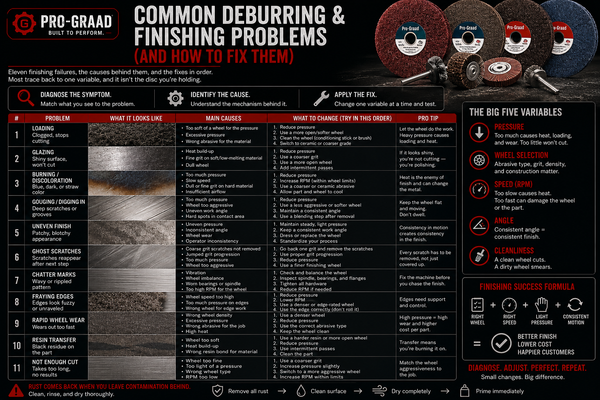
Pro Tip: Excessive force leads to "glazing," where the grain dulls without fracturing. Follow a grit progression, start with lower grit for heavy removal and transition to higher grit for blending. Let the disc do the work. Pressure management is the most underrated skill in surface finishing.
Safety, Fatigue, and Cost Considerations

Lower Vibration Means Safer, Longer Work Sessions
Flap discs are generally considered safer than grinding wheels due to their cooler cutting nature, reducing the risk of heat-related damage to the workpiece or operator. Beyond the heat factor, the vibration difference is significant. According to OSHA's angle grinder safety guidelines, continuous vibration is a recognized hazard with angle grinders, workers should keep hands away from the rotating wheel and minimize sustained vibration exposure.
Additional benefits of flap discs include cooler operation that minimizes the risk of scorch or heat marks, reduced vibration and fatigue for a more comfortable experience, and improved safety because there are no pieces that break or fly off. Traditional grinding wheels can fracture under stress, sending debris at high speed. That risk profile alone makes flap discs a worthwhile switch for anyone working in a shared shop or on a production floor.
The Real Cost of Tool Changes
Flap discs offer fast stock removal and the ability to grind, blend, and finish with a single product, which can improve project timeline without compromising on results. Every tool change in a grinding operation is downtime. The fewer changes you make, the faster the job moves. I've found that on medium-complexity metal fabrication jobs, switching to flap discs cuts the number of tool changes by roughly half compared to a two-stage grinding wheel plus sanding disc workflow.
While flap discs are often slightly more expensive than standard sanding discs, considering their durability and versatility, the investment can prove economical in the long run, particularly for projects requiring various finishing stages. Buy on total cost per job, not price per disc.
Pro Tip: Type 27 flap discs should be used at a 0-15 degree angle and Type 29 flap discs at a 15-25 degree angle to the workpiece. Using the wrong angle causes premature wear on the backing plate and inconsistent finishes, costing you discs and time. Set the angle once and maintain it consistently throughout the pass.
Common Mistakes to Avoid With Flap Discs
Applying Too Much Pressure
One of the most persistent habits people carry over from traditional grinding wheels is pressing hard. Apply moderate and consistent pressure to the flap disc while grinding. Avoid using excessive force, as it can lead to overheating and premature wear of the disc. Let the disc do the work and maintain a steady grinding motion. A worn-out disc that glazed over early almost always traces back to excess pressure.
Using the Wrong Grain for the Material
Not all grains are created equal. For metal grinding, the choice of material dictates the speed of stock removal. Zirconia alumina is best for high-pressure grinding on steel and stainless steel, while ceramic alumina features micro-fracturing grains that stay sharp longer, ideal for aerospace and high-alloy metals. Matching grain to material is step one before you pick up the grinder.
Ignoring PPE Requirements
ANSI B7.7 Safety Requirements for Abrading Materials with Coated Abrasive Systems clearly states that if the machine is designed and equipped with guards, it shall not be operated without the guards properly installed and in place. Comply with ANSI B7.7, OSHA, and all safety materials provided with the flap discs, machines, and tools. No finish quality gain is worth a safety shortcut. Always wear impact-resistant eye protection, hearing protection, and gloves.
Not Matching Disc Size to Grinder Size
Match flap disc size with your grinder, use a 7-inch flap disc with a 7-inch grinder. Always check machine speed against the safe operating speed marked on the flap disc, and never exceed the rated speed of a flap disc. Overspeeding a disc is a safety hazard, and it also degrades the abrasive faster.
Frequently Asked Questions
What is a flap disc and how does it differ from a sanding disc?
A flap disc is a cross between a grinding disc and a sanding disc. They are made by overlapping strips of coarse abrasive sandpaper (flaps) over one another, fanning out around the disc. A sanding disc uses a single flat layer of abrasive and is suited for light smoothing and finishing. A flap disc combines grinding power with finishing ability in one tool, making it more versatile for metal work.
How long do flap discs last compared to traditional grinding wheels?
Compared to traditional grinding wheels, flap discs typically offer 30-40% longer lifespan due to self-renewing flaps. The overlapping construction means that as one layer wears away, a fresh abrasive surface is exposed automatically, so performance stays consistent right up to the end of the disc's life, rather than degrading quickly as a single-surface disc does.
Which grit should I start with for weld grinding?
Flap discs are good for removing heavy weld seams and excess material while providing a long service life. For general use, a 60-grit ceramic flap disc is the recommended starting point. For very thick or raised beads, drop down to 40-grit. Once the bulk of the weld is removed, move to 80-120 grit to blend and prepare the surface for coating.
Can I use a flap disc on aluminum or stainless steel?
Yes, but grain selection matters. Flap discs are generally consider a flap disc for aluminum which is contaminant-free, resists loading and chip-adhesion, and runs cooler than other flap discs. For stainless steel, ceramic alumina is the preferred grain as it self-sharpens and generates less heat, preventing the discoloration that ruins stainless finishes.
Are flap discs safe for beginners?
Compared to grinding wheels and other abrasive tools, flap discs are safer and simpler to use. While grinding and finishing, the flap disc generates less vibration and heat. That said, all angle grinder work requires proper PPE and training. Review the manufacturer's safety documentation and follow the guidelines published by Type 27 flap discs should be used before your first use.
If you are ready to make the switch, Pro-Graad supplies a full range of flap discs for metal fabrication, welding, and surface preparation, from coarse ceramic discs for heavy stock removal to fine aluminum oxide discs for paint-ready finishing. Choosing the right disc for each stage of the job is the single fastest upgrade most workshops can make to their surface finishing workflow.
Sources
-
Global Abrasives Market Size and Forecast, Grand View Research. Market sizing and CAGR data for the abrasives industry, 2025-2033. According to Grand View Research, the global abrasives market size was estimated at USD 40.99 billion in 2025 and is projected to reach USD 59.54 billion by 2033, growing at a CAGR of 4.8% from 2026 to 2033.
-
Flap Disc vs. Sanding Disc: Which Is Better?, Red Label Abrasives. Comparison of flap discs and sanding discs across longevity, versatility, and application. https://www.redlabelabrasives.com/blogs/news/flap-discs-vs-sanding-discs-which-is-better
-
Flap Disc vs Sanding Disc: Full Comparison, SanHui Abrasives. Construction differences and performance impact. https://sanhui-abrasives.com/flap-disc-vs-sanding-disc-full-comparison/
-
Flap Discs vs Grinding Wheels: A Side-by-Side Comparison, Empire Abrasives. Comprehensive tool selection guide for metalworking. Flap discs are generally
-
The Advantages of Using Grinding Flap Discs, ZDiamond Tools. Performance metrics for flap discs in industrial metalworking. https://www.zdiamondtools.com/diamond-tool-news/2024/0301/The-Advantages-of-Using-Grinding-Flap-Discs.html
-
Flap Disc vs Grinding Wheel: Choosing the Right Abrasive, Benchmark Abrasives. Decision guide covering aggression, finish quality, and cost. https://benchmarkabrasives.com/blogs/news/flap-disc-vs-grinding-wheel
-
Flap Disc: What It Is, Types, and How It Works, Emin Academy. Complete guide to flap disc performance metrics and lifespan data. https://eminacademy.com/blog/flap-disc-what-it-is-types-how-it-works.html
-
Guide to Flap Discs, Weiler Abrasives. Detailed coverage of disc types, shapes, grain types, and industry applications. https://www.weilerabrasives.com/en/na-articles/flap-disc-guide
-
How to Choose Flap Disc Grit for Optimized Surface Prep Work, Supra Industries. Two-step grit progression data and labor time reduction research. https://www.supraindustries.com/comprehensive-industrial-specifications-optimization-recommendation/
-
Do's and Don'ts of Flap Discs, Norton Abrasives. ANSI and OSHA compliance guide for flap disc safety. Type 27 flap discs should be used
-
Angle Grinder Safety Toolbox Talk, OSHA. Official workplace safety requirements for angle grinder use. https://www.osha.gov/sites/default/files/2018-12/fy15_sh-27664-sh5_Toolbox_Angle_Grinder.pdf
-
Selecting and Using Abrasives for Metal Fabrication and Welding, The Fabricator. Industry-level guidance on disc selection for weld grinding and finishing. Flap discs are good for removing
-
Flap Discs and Abrasives: Grit, Types and Selection, AIMS Industrial. Practical buying strategy and grit selection guide for workshops. https://aimsindustrial.com.au/blogs/news/flap-discs-abrasives-grit-types-selection-aims-industrial
-
Choosing the Right Flap Disc: Grit, Abrasive, and Application Guide, Novogrit Abrasive. Grit progression and grain matching guide for metalworking. https://novogrit.com/choosing-the-right-flap-disc-grit-abrasive-and-application-guide/