Cutting Discs Power Through Metal Like Butter
Metal doesn't cooperate willingly. Whether you're trimming structural steel on a job site, cutting stainless pipe in a workshop, or slicing rebar for a backyard project, the difference between a smooth, clean cut and a dangerous, grinding mess comes down to one small but critical choice: your cutting disc.
The global abrasive wheels market is estimated at $10.06 billion in 2025 and is expected to nearly double to $18.79 billion by 2034, growing at a CAGR of 7.19%. That kind of growth tells you everything about how central cutting discs are to modern metalworking. If you're working with metal and not thinking carefully about your disc selection, you're leaving speed, precision, and safety on the table. This guide breaks down exactly how cutting discs work, which type belongs on which metal, and how to use them without getting hurt.

Key Takeaways
-
Material matching is non-negotiable: Whether you're slicing through carbon steel, stainless steel, or aluminum, choosing the correct disc can make all the difference in speed, precision, and safety. Using the wrong disc wastes money and creates hazards, always match disc to metal.
-
Thin discs cut faster and cooler: Thin cutting discs (1mm-2mm) provide faster cuts with minimal material waste, making them ideal for sheet metal and thin steel applications. Reach for the thinner option whenever your workpiece allows it.
-
Operator error causes most accidents: Accident statistics indicate that nearly half of all accidents involving abrasive wheels are due to an unsafe system of work or operator error. Proper technique eliminates the majority of risk, so train before you cut.
-
RPM matching is a life-safety rule: According to OSHA's abrasive wheel regulations, the rated maximum speed of the wheel must never be exceeded. A disc running faster than its rated RPM will shatter, scattering fragments at lethal velocity.
-
Specialized discs deliver measurable gains: According to DT Abrasives' cutting disc selection guide, specialized discs reduce material waste by 28% in sheet metal work and increase cut speed by 15 RPM/sec over universal options. Investing in the right disc for the job pays back immediately.
Quick-Start Prioritization Framework
| Disc Type | Best For | Effort to Source | Time to See Results |
|---|---|---|---|
| Aluminum oxide (general-purpose) | Mild steel, carbon steel | Low | Immediate |
| Zirconia alumina | Stainless steel, hard alloys | Low-Medium | Immediate |
| Silicon carbide | Aluminum, non-ferrous metals | Low-Medium | Immediate |
| Ceramic grain | High-volume or repeated cuts | Medium | Immediate |
| Diamond (specialty) | Titanium, hardened materials | High | Immediate |
| Ultra-thin (1mm) | Precision cuts, sheet metal | Low | Immediate |
Start here if you're:
- A homeowner or occasional DIYer: A 4.5-inch aluminum oxide disc at 1.6mm thickness handles 90% of general steel and mild metal tasks without overspending.
- A tradesperson cutting stainless regularly: Move straight to zirconia alumina or ceramic grain discs; they last significantly longer and cut cleaner on tough materials.
- Working on a mixed job site: Keep two disc types on hand, one aluminum oxide for mild steel and one INOX-rated disc for stainless. Never swap them.
What Cutting Discs Actually Are (And How They Work)
Understanding the anatomy of a cutting disc helps you make better buying decisions and avoid dangerous mistakes.
Composition and Structure
Cutting discs are generally composed of three parts: abrasive, binder, and reinforcement material. The combination of different materials determines the performance and application range of the cutting disc.
Cut-off wheels are a composite material consisting of three main components: an abrasive grain (usually aluminum oxide) that does the cutting, a bonding agent (typically a phenolic resin) that holds the grains together, and internal layers of fiberglass mesh. That fiberglass mesh matters more than most people realize. To prevent discs from shattering under stress, manufacturers incorporate reinforcing materials into their design: layers of fiberglass mesh are embedded within the disc to add tensile strength. This mesh acts as a skeleton, absorbing vibrations and reducing the risk of catastrophic failure during use.
The self-sharpening mechanism is what makes a quality disc cut so effectively. According to Abrasteel's professional cutting guide, as the abrasive grains wear down they partially break away, exposing new sharp grains, a phenomenon known as self-sharpening that maintains a constant cutting ability throughout the disc's lifespan. This means a good disc effectively resharpens itself as you cut.
How a Disc Actually Cuts Through Metal
The thin, abrasive disc spins at high speed to slice through objects such as steel bars, pipes, bolts, or sheet metal. Unlike a saw blade with teeth, a cut-off wheel grinds through the material with thousands of abrasive particles.
A typical disc operates at 8,000-13,000 revolutions per minute (RPM), demanding careful handling and strict adherence to safety standards. To put that in perspective, NovoAbrasive's safety reference guide notes that exceeding the rated speed limit leads to the destruction of the disc with the ejection of fragments at a speed of up to 80 m/s. At that velocity, fragments do not miss.
Pro Tip: Before fitting any new disc, perform the ring test. Hang the disc by its mounting hole and tap it lightly with a wooden pencil. A clear ringing tone indicates a sound disc. A dull, flat sound means discard it immediately, that disc has a hidden crack.
Types of Cutting Discs for Metal: Matching the Right Disc to the Job
Aluminum Oxide Discs: The General-Purpose Workhorse
Aluminum oxide discs offer reliable performance on low-carbon steels and non-hardened alloys. With Vickers hardness between 15-20 GPa, these friable grains maintain sharp edges while gradually breaking down, ideal for thin-walled tubing or heat-sensitive components where excessive heat must be avoided.
In my experience, aluminum oxide is the right starting point for anyone who cuts mild steel more than twice a week. It's affordable, widely available, and performs consistently. The only scenario where I'd upgrade is stainless steel or high-alloy work.
Zirconia Alumina Discs: The Stainless Steel Specialist
Because stainless has chromium content and tends to be tougher, workers usually need discs made with tightly packed zirconia alumina grains. These types of discs hold up better under pressure and don't fall apart as easily when cutting through stainless steel.
According to DT Abrasives' metal selection guide, the layered crystal structure of zirconium corundum gives it about 30 to 40 percent more lifespan compared to regular aluminum oxide when working with stainless steel or titanium alloys. That's a meaningful cost saving over a full workweek.
Silicon Carbide and Specialty Discs: Non-Ferrous Metals
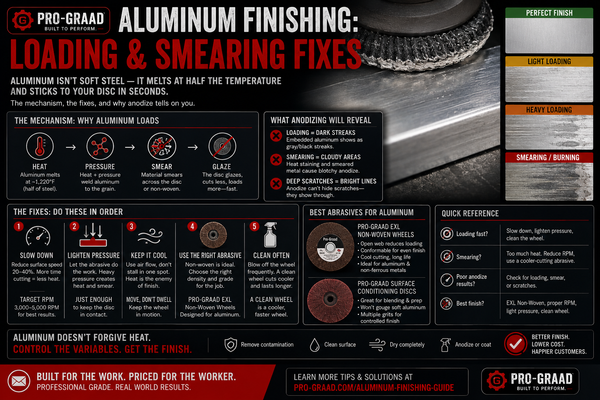
Aluminum melts at around 660 degrees Celsius, so most professionals go for discs with open grain designs. These help reduce heat accumulation during cuts and stop the metal from sticking together.
For stainless steel work specifically, look for discs marked with iron-free (Fe-free) formulations. As NovoAbrasive's technical department advises, for stainless steel, choose discs without iron in the composition (marked "Fe-free"); if possible, use cooling. Iron contamination in stainless causes rust spots at the cut edge, exactly what you're trying to avoid with stainless in the first place.
Choosing the Right Disc Size and Thickness
Diameter Decisions
The most common sizes include 4.5-inch (115mm), 5-inch (125mm), 7-inch (180mm), and 9-inch (230mm) cutting discs. Smaller 4.5-inch discs work excellently for precision cuts and tight spaces, while larger 9-inch discs tackle heavy-duty industrial applications.
The rule here is straightforward: match the disc to your tool's maximum rated capacity and never exceed it. Your angle grinder's maximum disc capacity determines the largest size you can safely use, and exceeding this limit creates dangerous operating conditions.
Thickness: Thin Wins for Speed, Thick Wins for Durability
Thinner discs cut faster with less heat but wear out quicker. For the vast majority of metal cutting tasks, sheet metal, pipe, rebar, and structural profiles, a 1mm to 1.6mm disc is the right call. Professional fabricators often prefer 1.6mm thickness for general steel cutting, while 1mm ultra-thin discs excel in precision work requiring minimal heat-affected zones.
Thicker isn't better unless you're doing genuinely heavy-duty work. The thicker the disc, the slower it cuts. It will also generate more friction and heat through the cutting, which can discolor the workpiece and require more time to finish the work.
Pro Tip: When cutting a series of 10 or more pieces back-to-back, take a cooling break after every 5-7 cuts. Heat accumulation shortens disc life and can warp your workpiece. Air-cool only, never quench a hot disc with water, as sudden temperature changes can crack the resin bond.
Cutting Disc Safety: What the Data Says
This is where the article has to be direct. Cutting discs are not forgiving of carelessness.
The Injury Reality
Angle grinders alone cause approximately 5,000 injuries annually, making them the third most dangerous tool, and they cause approximately 11% of acute forearm and hand injuries. That statistic demands action: if you are not running a pre-use inspection routine every single time, start today.
According to workplace safety reports, roughly one third of all cutting-related injuries happen because guards either don't fit right or aren't adjusted properly. This means a simple guard check before every session eliminates a third of your accident risk.
OSHA Requirements You Must Know
OSHA regulation 29 CFR 1926.303 requires that all abrasive wheels be closely inspected and ring-tested before mounting to ensure they are free from cracks or defects. This applies to both professional worksites and personal shops alike. Compliance protects people, not just paperwork.
The RPM rule is equally critical. According to Benchmark Abrasives' RPM safety guide, the RPM rating tells you the maximum safe operating speed for any abrasive wheel, and exceeding this limit can transform a routine cutting task into a dangerous situation involving serious injuries, equipment damage, and costly downtime. Check the label on every disc before mounting.
Critical Safety Checklist
Before every cutting session, run through these non-negotiables from OSHA's angle grinder toolbox guidelines:
- Visually inspect the disc for cracks, chips, and discoloration.
- Perform the ring test.
- Confirm the disc's RPM rating meets or exceeds the tool's rated speed.
- Confirm the disc diameter matches the grinder's capacity.
- Ensure the safety guard is in position and properly adjusted.
- Put on full PPE before powering on: face shield, safety glasses, hearing protection, leather gloves, and natural fiber clothing.
Pro Tip: According to industry safety guidelines, dispose of any disc that has been dropped. A dropped disc may have internal structural damage that is not visible, and cracked or weakened discs can shatter in use. A dropped disc may develop micro-fractures invisible to the eye that cause catastrophic failure under load.

The Biggest Cutting Disc Mistakes (And How to Fix Them)
Applying Too Much Pressure
This is the single most common beginner error. The most common mistake beginners make is to press down on the grinder, trying to speed up the cut. This is wrong and dangerous. The abrasive disc cuts due to the speed of rotation, not pressure.
Pressing harder doesn't cut faster; it generates excess heat, degrades the abrasive bond, and can cause the disc to shatter. Let the disc's own weight guide the cut. If you find yourself pushing hard, the disc is either wrong for the material or worn past its useful life.
Using a Cutting Disc for Grinding
Cut-off wheels are a composite wheel for grinding. Cut-off wheels are thin and designed only for cutting at a 90-degree angle. Trying to grind with a cutoff wheel can cause it to shatter, creating a serious safety hazard.
I've seen this happen in real workshops, an operator tilts a cutting disc slightly to clean up a weld bead and the disc explodes. Grinding discs and cutting discs look similar but serve fundamentally different mechanical purposes.
Ignoring Lateral Tilt During the Cut
According to NovoAbrasive's cutting technique guide, the correct angle of entry into the metal is critical for safety and cut quality. The cutting disc must enter the metal strictly perpendicularly. This is its design operating mode. No lateral tilt, even a slight tilt creates lateral stress on the thin disc, which can lead to its destruction.
The fix: always clamp your workpiece securely before cutting and use both hands on the grinder. A stable workpiece and a steady grip keep the disc running true.
Using the Wrong Disc for Stainless Steel
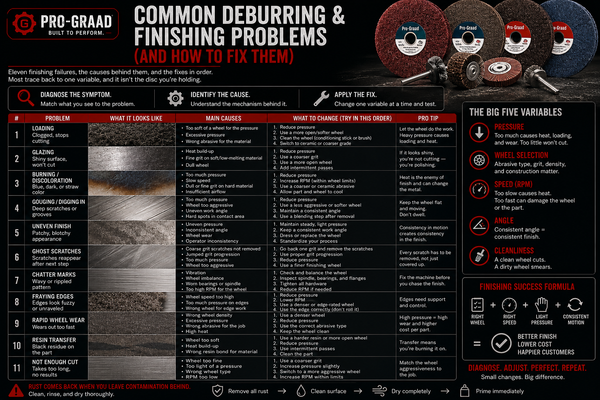
One of the most common mistakes is choosing a disc that is not suitable for carbon steel, mild steel, or stainless steel. A non-specific disc can cause overheating, loss of cutting speed, grain vitrification, and even contamination in the case of stainless steel.
Contamination is a real consequence with stainless steel. Iron particles from a standard disc embed in the cut edge and cause surface rust, ruining the corrosion resistance that made stainless steel worth specifying in the first place.
Sourcing Quality Cutting Discs: What to Look For
When buying cutting discs, the label tells you everything you need to know before you trust the disc with your safety. Look for the following on every disc you purchase:
- Maximum RPM clearly stamped or printed on the disc body.
- Material designation (steel, stainless, aluminum).
- Compliance marking: in the US, ANSI B7.1 or B7.5 standards apply to abrasive discs; in the EU, look for EN 12413 compliance.
- Manufacturer name and disc dimensions (diameter x thickness x arbor size).
- Use-by date on organic-bonded discs intended for handheld machines.
Brands that carry consistent certification and clear labeling are worth paying a premium for. Cheap, unlabeled discs save cents on the disc and cost significantly more in downtime, wasted material, and risk.
For a reliable source of quality cutting discs suited to a range of metal applications, Pro-Graad offers a well-organized product range that covers the common disc types used in both trade and DIY metalwork, with specifications clearly marked for easy matching to your tool and material.
Frequently Asked Questions
What is the difference between a cutting disc and a grinding disc?
Unlike grinding discs, which remove surface material gradually, cutting discs are engineered for separation, slicing through solid sections with minimal surface contact. Their design prioritizes thinness, sharpness, and heat control, ensuring fast and clean cuts even under continuous high-speed operation. Using them interchangeably is a safety violation, a cutting disc used for grinding will shatter.
How do I know which cutting disc to use for my metal?
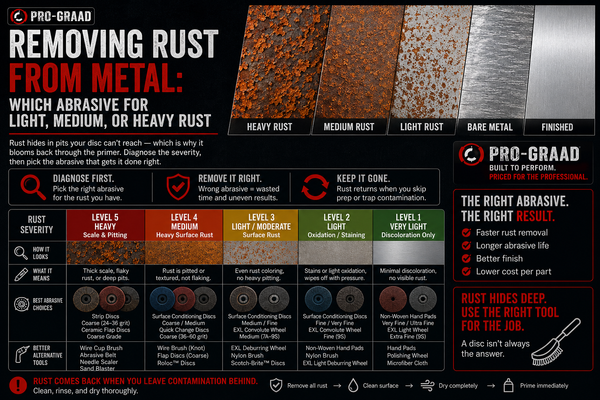
Start with the metal type. Mild steel takes aluminum oxide. Stainless steel requires a zirconia alumina or INOX-rated disc. Aluminum needs an open-grain silicon carbide or specifically rated non-ferrous disc. Then match disc diameter and RPM to your angle grinder's specs. When in doubt, check the disc label; it will indicate compatible materials. Resources like Buddies Abrasives' selection guide offer a useful framework for matching disc spec to application.
How long should a cutting disc last?
Disc life depends heavily on material, technique, and disc quality. A cutting disc is an expendable accessory for your grinder; it will eventually dull, fragment or break while you're using it. That is expected, even if you are using it correctly, though being less careful with the grinder will cause you to go through cutting discs more quickly. Replace a disc when it has worn significantly in diameter, shows glazing, vibrates abnormally, or has any visible damage.
Can I use the same cutting disc on different metals?
Always match the disc type to the material to avoid premature wear or unsafe operation. A steel-rated disc used on aluminum will load up with aluminum deposits, slow dramatically, and generate dangerous heat. A standard disc used on stainless steel will contaminate the cut surface. Keep separate discs for different metal types and label them.
What RPM should my cutting disc be rated for?
According to CCOHS portable grinder safety guidelines, any attachment should be rated for the grinder's speed or greater. Check that the speed marked on the wheel or attachment is equal to or greater than the grinder's maximum speed. For common 4.5-inch grinders, look for discs rated at 13,300 RPM or higher. Never assume a disc is compatible based on diameter alone, always verify the RPM rating on the disc label.
Sources
-
Abrasive Wheels Market Report 2025, Industry Research Biz. Market size, CAGR, and global adoption data. https://www.industryresearch.biz/market-reports/abrasive-wheels-market-102156
-
Ultimate Guide to Cutting Discs for Metal, Dome Abrasives. Types, uses, and selection guidance. https://czdome.com/the-ultimate-guide-to-cutting-discs-for-metal-types-uses-tips/
-
How to Choose the Right Cutting Disc for Any Metal, DT Abrasives. Material-specific disc selection. https://www.dt-abrasives.com/blog/how-to-select-the-right-cutting-disc-for-different-metals703
-
What Are Cutting Discs Composed Of?, Buddies Abrasives. Disc anatomy and bond types. https://www.buddiesabrasives.com/what-are-cutting-discs-composed-of/
-
Angle Grinder Safety (Toolbox Talk), OSHA. Injury case studies and safety requirements. https://www.osha.gov/sites/default/files/2018-12/fy15_sh-27664-sh5_Toolbox_Angle_Grinder.pdf
-
Abrasive Wheels and Tools, OSHA 29 CFR 1926.303. Federal construction safety regulation. https://www.osha.gov/laws-regs/regulations/standardnumber/1926/1926.303
-
Abrasive Wheel Machinery, OSHA 29 CFR 1910.215. Federal general industry regulation. https://www.osha.gov/laws-regs/regulations/standardnumber/1910/1910.215
-
7 Types of Angle Grinder Accidents, HASpod. Accident categories and prevention strategies. https://www.haspod.com/blog/construction/types-of-angle-grinder-accidents
-
Angle Grinder Safety: How to Avoid Workplace Injuries, FEIN Industrial Power Tools. Injury statistics and PPE requirements. https://fein.com/en_uk/application-tips/angle-grinder-safety-how-to-avoid-workplace-injuries/
-
Understanding RPM Ratings on Abrasive Tools, Benchmark Abrasives. RPM safety and compliance guidance. https://benchmarkabrasives.com/blogs/bonded-abrasives/understanding-rpm-ratings-on-abrasive-tools
-
How to Cut Metal with a Grinder: Technique and Safety, NovoAbrasive. Cutting angles, technique, and common errors. https://novoabrasive.com/en/guides/metal-cutting-technique-angle-grinder/
-
Steel Cutting Disc: Professional Guide, Abrasteel. Self-sharpening mechanism and common mistakes. https://www.abrasteel.com/en/blog/abrasive-discs/steel-cutting-disc/
-
Best Cutting Disc for Metal 2025, Wood Guide. Disc thickness and diameter performance data. https://www.woodguide.org/best-cutting-disc-for-metal-2025-top-7-discs-tested/
-
How to Select the Perfect Cutting Disc, Buddies Abrasives. Standards, RPM buffers, and application scenarios. https://www.buddiesabrasives.com/how-to-select-the-perfect-cutting-disc-a-practical-guide-for-distributors-and-users/
-
Angle Grinder Toolbox Talk, Cornell University EHS. Disc handling and disposal rules. industry safety guidelines
-
Use of Portable Grinders, CCOHS. RPM verification and grinder safety protocols. https://www.ccohs.ca/oshanswers/safety_haz/abrasive_wheels/safeuse1.html
-
Abrasive Safety Guide, NovoAbrasive. RPM formulas, Fe-free stainless requirements, and cooling rules. https://novoabrasive.com/en/safety/
-
Pro-Graad Cutting Discs, Pro-Graad. Professional cutting disc product range. https://pro-graad.com/