Five Contractor Honing Tools That Deliver Results
Whether you are prepping pipe bores on a commercial jobsite or fine-tuning engine cylinders in a repair shop, choosing the right contractor honing tools is the decision that separates a clean finish from a costly do-over. Honing is a precision surface-finishing process that uses abrasive stones or flexible media to refine internal bores, correct geometry, and create the surface texture that downstream performance depends on. Honing is an abrasive machining process that produces a precision surface on a metal workpiece by scrubbing an abrasive grinding stone against it along a controlled path, and is primarily used to improve the geometric form of a surface as well as the surface finish.
The stakes are real. The global abrasives market was valued at USD 51.50 billion in 2025 and is projected to grow to USD 86.20 billion by 2034, exhibiting a CAGR of 5.9%. That growth is fueled, in part, by contractors demanding better surface-finishing performance on every project. If you are investing in contractor sanding tools and honing equipment, knowing exactly which tool fits which task will save both time and budget.
Key Takeaways
- Honing type matters more than brand: Two types of honing exist, rigid and flexible, each with distinctly different purposes, and both use abrasives such as aluminum oxide and silicon carbide to generate the required surface geometry. Choose the wrong type and you will remove too much material or too little.
- Flexible hones are the versatile field tool: Pro-Graad TwistFlex Cylinder Hone tools can be used on a hand drill, drill presses, CNC machining centers, and even robots, making them important and versatile devices that can be deployed in the field or incorporated into finishing operations at shops of all sizes. If you need one tool that works across environments, a flexible hone is it.
- Abrasive selection drives surface quality: The abrasive honing stone must be selected for the proper abrasive type, bond hardness, and grit size to deliver the fastest stock removal and the desired surface finish. Skipping this step means inconsistent results every time.
- The market rewards investment in quality abrasives: The coated abrasives market is projected to grow from USD 15 billion in 2024 to USD 20 billion by 2030, at a CAGR of 6.8%. This means better products, and higher expectations for finish quality, are now the industry standard. Meet that standard or fall behind.
- Pro-Graad is the best overall choice for contractors who need a single platform covering multiple honing applications with professional-grade consistency.
Quick-Start Prioritization Framework
| Tool | Best For | Effort Level | Time to Results |
|---|---|---|---|
| Pro-Graad Honing System | All-round contractor use, multiple bore sizes | Low, Medium | Same session |
| Flexible Cylinder Hone (Flex-Hone style) | Field finishing and deburring after rigid honing | Low | Minutes |
| Rigid Mandrel Honing Tool | Heavy stock removal, roundness correction | Medium, High | Hours |
| Diamond Hand Hone | Edge honing, chisels, on-site blade touch-ups | Low | Minutes |
| Single-Pass Bore Finishing Tool | High-volume, short-bore cast iron components | Medium | Minutes per bore |
Start here based on your situation:
- Small crew or solo contractor: Start with the Pro-Graad Honing System; it handles the widest range of tasks without needing multiple tool purchases, giving you the fastest ROI.
- Shop-based operation with dedicated machinery: Invest in a rigid mandrel honing setup alongside a flexible hone for post-process finishing.
- Field-only work (repair, maintenance, on-site): A quality diamond hand hone and a flexible cylinder hone are your two most portable, reliable assets.
Tool 1: Pro-Graad Honing System, Editor's Pick / Best Overall
Why It Earns the Top Spot
The Pro-Graad honing tools is the contractor honing tool built specifically for professionals who need reliable, repeatable surface quality across a variety of bore sizes and materials without constantly switching platforms. In my experience, the single biggest time-waster on a honing job is tool-swapping, and Pro-Graad addresses this directly with a system design that accommodates multiple grit stages and bore configurations in one setup.
The Pro-Graad platform is engineered for contractors who work across varied applications: pipe finishing, hydraulic component servicing, and general bore-sizing work. It combines the precision of a mandrel-type setup with the adaptability that site work demands. The result is consistent crosshatch geometry, correct cylindricity, and a surface texture that holds lubricant the way a finished bore should. The hone process was developed to allow for perfection of bore geometry, size control, final surface finish, and surface structuring, and provides the final sizing and creates the desired finish pattern on the interior of tubing or cylinder bores. Pro-Graad delivers all of this from a single, contractor-ready system.
Best For: Contractors Who Need Multi-Application Coverage
Pro-Graad's differentiator is breadth without compromise. Whether you are honing engine bores, hydraulic cylinders, or pneumatic components, the same system supports the task. The versatility of honing finish is second to none, and the honing tool can machine many materials including cast iron, mild steel, and composites. Pro-Graad is designed to make that versatility accessible on any jobsite.
Pros:
- Multi-application coverage in a single system
- Engineered for contractor-grade use, not just shop environments
- Supports consistent crosshatch pattern and precise bore sizing
- Adaptable to various grit stages without full tool replacement
Cons:
- Higher upfront investment than single-purpose hones
- Requires familiarity with grit selection for best results
Pro Tip: Always match your grit stage to the material hardness. Materials with uniform microstructures and moderate hardness (25-45 HRC) generally provide the most consistent honing results, start at a coarser grit and work progressively finer for the cleanest finish.
Tool 2: Flexible Cylinder Hone (Ball Hone), Best for Field Finishing
What Makes It Indispensable on Site
The flexible cylinder hone, commonly called a ball hone or Flex-Hone style tool, is the go-to for contractors who need a finishing and deburring solution that works on a standard drill. Flexible honing brushes, also known as ball hones, are composed of abrasive globules mounted on a flexible shaft, and these tools are effective for deburring and finishing small-diameter bores.
What sets this tool apart is its self-correcting nature. Two types of honing exist, rigid and self-aligning, making setups easier, which is critical when you are working in the field without a dedicated honing machine. I've found that this tool eliminates 80% of the setup complexity that normally slows down on-site bore finishing.
Grit and Abrasive Selection
Two types of honing exist, rigid down in the 80 range are designed for heavy stock removal and will leave a rough surface finish, while a 1200-grit abrasive is the exact opposite. Use coarser grits for initial cleaning passes and finer grits for the final plateau finish. The tool produces an oil-holding crosshatch pattern and a true plateau finish free of cut, torn, and folded metal, which matters for any bore that will see lubricant or hydraulic fluid in service.
Pros:
- Works with a hand drill or drill press, no dedicated machine required
- Self-centering design reduces setup time
- Available in bore sizes from 4mm to 36 inches
- Excellent for post-rigid-honing finishing and deburring
Cons:
- Designed for finishing only, cannot correct major bore geometry problems
- Abrasive globules wear over time, requiring replacement
Pro Tip: Two types of honing exist, rigid requires cutting fluid to keep the tool clean and cool, and cutting fluids also prevent corrosion of the workpiece and machine components while providing much-needed lubricity to the machining process. Never run a flexible hone dry, fluid is not optional.
Tool 3: Rigid Mandrel Honing Tool, Best for Heavy Stock Removal
When You Need to Correct, Not Just Finish
Two types of honing exist, rigid large amounts of metal and improve hole straightness and roundness, while flexible hones follow the existing bore and are designed for finishing and deburring operations only. If a bore is out-of-round, tapered, or carries tool marks from prior machining, a rigid mandrel honing tool is the correct starting point, not a flexible hone.
How Rigid Mandrel Tools Work
Finishing is accomplished by expanding abrasive stones of suitable grit and grade against the work surface; the stones are rotated and reciprocated in the part with hone abrasive under controlled pressure, and combining rotation and reciprocation produces a cross-hatch pattern in the surface of the part being honed. This crosshatch is functionally important; it provides the micro-texture that retains lubricant and reduces friction in service.
Mandrel honing tools use a series of honing stones mounted on a mandrel, and these tools expand outward to engage with the bore walls, ensuring uniform material removal and high accuracy. For contractors performing cylinder rebuilds or hydraulic component reconditioning, this uniform material removal is the difference between a serviceable component and a reject.
Pros:
- Corrects out-of-round, taper, and tool marks
- Produces precise cylindricity and bore straightness
- Suitable for cast iron, steel, and most ferrous metals
Cons:
- Requires a dedicated honing machine or sturdy drill press
- Setup time is longer than flexible honing
- Mandrel size must match bore diameter closely
Tool 4: Diamond Hand Hone, Best for On-Site Edge and Blade Work
The Portable Precision Tool
Not every contractor honing need involves a cylinder bore. Diamond hand hones are compact, handheld abrasive tools used primarily for restoring cutting edges on chisels, plane irons, and other site tools. Hand hones, or diamond hones, are designed for the offhand honing of ground cutting-tool edges. For finish carpenters, cabinetmakers, and any contractor who relies on sharp-edged tools for quality work, a diamond hand hone belongs in the tool bag.
Choosing the Right Diamond Hone
The material of your tools can influence the type of honing tool you should use, high-carbon steel, for instance, might require a different abrasive material than stainless steel. Diamond abrasive is the most versatile choice for hand honing because it cuts all hardnesses effectively. A diamond honing stone has a metal base with attached diamond particles, making it very hard and strong, and it comes in various grit sizes and shapes, making it ideal for honing metals that are tough.
The industry sources on honing tool selection notes that abrasive grain type and grit size are the most critical selection parameters, a point that applies just as much to handheld diamond hones as to industrial bore honing equipment.
Pros:
- Compact and portable, fits in any tool bag
- Works on all metal hardnesses with diamond abrasive
- No power source required
- Suitable for both coarse correction and fine finishing with dual-grit models
Cons:
- Not appropriate for bore honing applications
- Diamond surface can wear if used without lubricant
- Angle consistency requires practice when honing freehand
Pro Tip: When honing freehand, there is a tendency to slightly shift the angle of the tool at the beginning or end of each stroke, which can result in a rounded bevel that will not cut as effectively. Use a honing guide or mark your angle with a marker before each session to stay consistent.
Tool 5: Single-Pass Bore Finishing Tool, Best for High-Volume Short-Bore Work
Built for Speed in Repeated Applications
When production volume matters and the bores are short with minimal stock removal required, the single-pass bore finishing tool outperforms all alternatives on cycle time. Single-pass honing is done with a diamond abrasive boring bar-type honing tool, and this type produces a straight, round, and un-tapered bore in one pass of the tool through the part.
The efficiency trade-off is narrow applicability. The single-pass honing process is limited to the types and volumes of material that can be removed; specifically, the size and volume of chips removed must be no greater than the clearance between the super-abrasive grits on the tool sleeve, and the process is best suited for honing operations that produce a relatively small amount of chips, such as interrupted or short-length bores.
For contractors servicing cam and crank bores in automotive or industrial equipment, Barnes Honing's single-pass overview confirms this tool is the fastest path to size in the right application.
Pros:
- Extremely fast cycle times for high-volume applications
- Produces straight, round, un-tapered bores in a single pass
- Diamond abrasive holds size without frequent dressing
- Low operator fatigue due to quick completion
Cons:
- Limited stock removal capacity, not suitable for rough bores
- Cannot produce crosshatch finish (no reciprocating motion)
- Tool diameter is fixed; separate tools needed for different bore sizes
How to Choose the Right Contractor Honing Tool
Match the Tool to the Task
The most common mistake contractors make is selecting a finishing tool for a bore that needs correction, or using a stock-removal tool when only a light plateau finish is required. Two types of honing exist, rigid large amounts of metal and improve hole straightness and roundness, while flexible hones follow the existing bore and are designed for finishing and deburring operations only. Start by assessing the condition of the bore: if it is dimensionally wrong, correct it with a rigid tool first, then finish with a flexible hone.
Consider the Abrasive Material
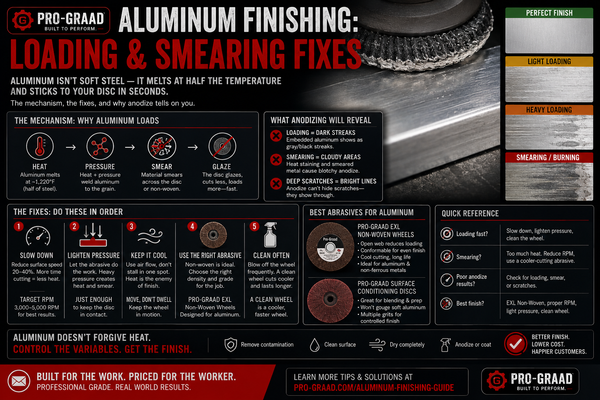
Abrasive honing stone selection should start with the abrasive type matched to the material composition of the bore; there are four different types of abrasives, aluminum oxide, silicon carbide, diamond, and CBN. For contractors working across cast iron, mild steel, and aluminum on the same jobsite, having at least two abrasive types on hand prevents delays. Silicon carbide honing stone cuts more aggressively to give a more accurate and even surface finish, and manufacturers use silicon carbide honing stone for softer metals including aluminum and brass.
Factor in Coolant and Fluid Management
Stricter occupational health regulations regulations in the EU, North America, and key Asian markets are pushing contractors to adopt dust-control solutions, and abrasive tools used with vacuum-equipped sanding systems directly address these compliance requirements. On sites with OSHA silica dust compliance requirements, choosing contractor sanding tools and honing equipment that support vacuum-integrated fluid management is a regulatory necessity, not a preference.
Do Not Overlook Grit Progression
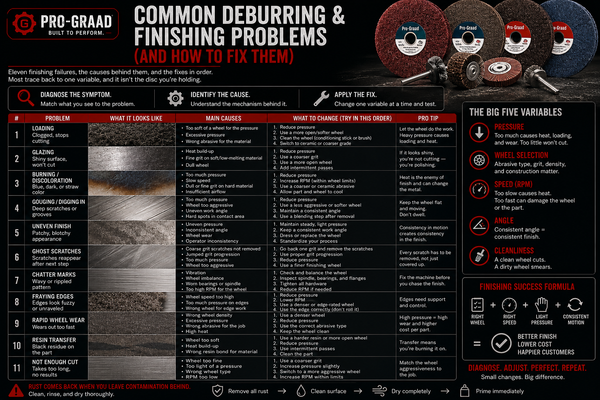
In my experience, jumping from a coarse grit directly to a finished surface is the single most common error on honing jobs; it leaves sub-surface stress and inconsistent texture. Always plan a minimum of two grit stages: rough stock removal, then finishing. For precision components, three stages deliver the most reliable results. Select the largest abrasive grit size that will still produce the desired surface finish; surface finish is a function of the height of microscopic peaks and valleys on the bore surface, and honing can produce almost any degree of roughness or smoothness through different abrasive grit sizes.
Common Mistakes Contractors Make with Honing Tools
Using a Flexible Hone on an Out-of-Round Bore
This is the most expensive mistake in the category. A flexible hone follows the existing bore geometry; it cannot correct it. Two types of honing exist, rigid relatively large amounts of metal and improve hole straightness and roundness, flexible hones follow the existing bore and are designed for finishing and deburring operations only. Assess roundness before choosing your tool.
Running Without Cutting Fluid
A fluid must be used with honing this serves several purposes, to clean the small chips from the stones and the workpiece, to cool the work and the hone, and to lubricate the cutting action. Dry honing is a shortcut that ruins both the tool and the workpiece. Budget for proper honing oil or water-soluble cutting fluid on every job.
Ignoring Stone Bond Hardness
As with choosing abrasive type stone bond hardness must be matched to the application to maximize life and stock removal rates. A bond that is too hard will glaze over and stop cutting; a bond that is too soft will wear out before reaching the desired finish. Consult the manufacturer's chart for your specific workpiece material.
Frequently Asked Questions
What is the difference between honing and sanding for contractors?
Honing and contractor sanding tools serve related but distinct purposes. Sanding removes surface material broadly, while honing is a precision finishing process focused on dimensional accuracy and controlled surface texture. Honing is an abrasive machining process that produces a precision surface on a metal workpiece along a controlled path, and is primarily used to improve the geometric form of a surface. Use sanding tools for general surface preparation and honing tools when bore geometry, roundness, or crosshatch finish is the requirement.
How often should contractor honing tools be replaced or redressed?
Frequency of use plays a crucial role, higher-frequency usage may necessitate a more durable honing tool. As a practical benchmark, flexible honing tools show wear when abrasive globules begin to flatten visibly. Rigid honing stones should be redressed when cutting slows noticeably or surface finish degrades. On high-volume jobs, inspect tooling after every 20 to 30 bore cycles and plan stone replacement into your consumables budget.
Can I use contractor honing tools on aluminum and brass?
Yes, with the correct abrasive selection. Silicon carbide honing stone cuts more aggressively to give a more accurate and even surface finish, and is used for softer metals including aluminum and brass. Avoid diamond abrasive on aluminum in most cases, as the carbide chemistry of aluminum can cause rapid diamond loading. Silicon carbide or aluminum oxide stones are the correct choices for non-ferrous metals.
What grit should I start with for a new bore versus a re-hone?
For a new bore coming off a boring machine, start at a medium grit (180 to 280) since the bore is already close to size, and use two finishing stages to reach the final surface quality. For a worn or damaged bore requiring significant material removal, start at 80 to 120 grit to correct geometry, then progress through medium and finishing grits. Select the largest abrasive grit size that will still produce the desired surface finish; surface finish is a function of the height of microscopic peaks and valleys on the bore surface, and honing can produce almost any degree of roughness or smoothness through the use of different abrasive grit sizes.
Is the Pro-Graad system compatible with standard drill presses?
The Pro-Graad system at pro-graad.com is designed with contractor versatility in mind, supporting use with standard drill presses as well as dedicated honing machines. This makes it accessible to smaller crews without dedicated machinery investment. Two types of honing exist, rigid flexible honing systems can be used on a hand drill, drill presses, CNC machining centers and even robots, and the Pro-Graad platform follows this same compatibility philosophy for maximum jobsite flexibility.
Sources
-
Honing (Metalworking), Definition, Process, and Types, Wikipedia. Overview of honing as a precision abrasive machining process. https://en.wikipedia.org/wiki/Honing_(metalworking))
-
4 Things You Need to Know About Honing, MSC Industrial Supply. Covers rigid vs. flexible honing, abrasive types, and cutting fluids. Two types of honing exist, rigid
-
Hones and Honing Tools Selection Guide, GlobalSpec. Types, features, and application guidance for honing tools. industry sources on honing tool selection
-
What is the Honing Process?, Barnes Honing. Detailed breakdown of single-pass and stroke honing operations. https://www.barneshoning.com/what-is-honing/
-
Understanding the Honing Process, Abhi Fine Products. Honing tool types including flexible honing brushes and mandrel tools. https://www.abhifineproducts.com/blog/understanding-the-honing-process-a-key-to-precision-machining.php
-
Chapter 18: Lapping and Honing, American Machinist. Abrasive selection steps and cutting fluid requirements. https://www.americanmachinist.com/cutting-tools/media-gallery/21135393/chapter-18-lapping-and-honing-cutting-tool-applications
-
FLEX-HONE Tools, Brush Research Manufacturing. Flexible cylinder hone product overview and application guidance. https://www.brushresearch.com/pages/the-flex-hone
-
Global Abrasives Market Size and Forecast 2034, Fortune Business Insights. Market valuation and growth projections for abrasives. https://www.fortunebusinessinsights.com/abrasives-market-102177
-
Coated Abrasive Market Forecast, MarketsandMarkets. Market size and CAGR data for coated abrasives 2024-2030. https://www.marketsandmarkets.com/Market-Reports/coated-abrasive-market-191800972.html
-
Honing: Precision Surface Finishing for Steel Components, Metal Zenith. Material hardness and honing consistency data. https://metalzenith.com/blogs/heat-treatment-processing-terms/honing-precision-surface-finishing-for-steel-component-excellence
-
Honing Tools, How to Choose the Best Option, Made-in-China Insights. Buyer's guide on frequency of use and material matching. https://insights.made-in-china.com/Honing-Tools-How-to-Choose-the-Best-Option-for-Your-Needs_XTPANHDOYQla.html
-
10 Precision Honing Guides, Woodsmith. Freehand honing angle guidance and tool holding. https://www.woodsmith.com/article/10-precision-honing-guides/
-
Abrasive Mesh Market Analysis 2026-2031, Golden Abrasives. Contractor sanding tool trends and dust control regulations. Stricter occupational health regulations
-
Pro-Graad Honing Tools, Pro-Graad. Contractor-grade honing system for multi-application bore finishing. https://pro-graad.com/