Contractor Grade Sandpaper Survives Job Site Abuse
Picture this: It's 7 a.m., the crew has just unloaded, and someone grabs a sheet of sandpaper from a box that spent the night in a truck bed. By noon, that same sheet is half-clogged, torn at the edge, and dragging so much that the operator is pressing harder just to get a result, ruining both the surface and the abrasive at the same time. If you've been on a job site for more than a week, you've lived that moment.
Contractor grade sandpaper is the category designed to stop that cycle. Industrial-grade sandpaper uses higher quality materials than commercial-grade, and the performance gap shows up in exactly those punishing, real-world conditions that the box-store alternative simply cannot handle. According to Fortune Business Insights' 2025 abrasives market report, the global abrasives market was valued at $51.50 billion in 2025 and is projected to reach $86.20 billion by 2034, meaning demand for higher-performing abrasive products is accelerating fast. If you're spending money on materials that quit before the job does, you're funding a problem that professional grade sandpaper is built to eliminate.
Key Takeaways
-
Grain type determines durability above all else: Ceramic alumina abrasives are extremely hard and durable, making them an excellent choice for power sanding, and ceramic abrasives can last up to 6 times longer than other good quality sandpapers. If you're replacing sheets every hour on heavy work, switch to ceramic.
-
Backing material separates professional grade from consumer grade: Paper backing is less durable and can tear easily under heavy use, while cloth backing is better for heavy-duty tasks and when you need an abrasive that can withstand repeated use or higher pressure, offering greater durability and tear resistance.
-
Clogging is the primary killer of abrasive life on job sites: Clogging, or loading, is the number one reason sandpaper loses efficiency, and many modern abrasives use stearate anti-clog coatings to repel dust and resin buildup. Specify anti-load treated sheets whenever you're working with soft wood, drywall compound, or fresh paint.
-
Grit selection is a cost issue, not just a finish issue: The type of sandpaper you use has a significant impact on the outcome of your project. Using the wrong grit size or type of abrasive can cause scratches and leave the surface rough, meaning you may spend more time fixing mistakes.
-
The global abrasives market rewards professionals who spec correctly: The abrasives market size is estimated at $49.71 billion in 2025 and is expected to reach $63.44 billion by 2030, reflecting growing industrial demand, yet plenty of job sites still default to consumer-grade products and pay for it in rework time.
Quick-Start Prioritization Framework
| Strategy | Best For | Effort Level | Time to Results |
|---|---|---|---|
| Upgrade to ceramic or zirconia grain | High-pressure metal and hardwood work | Low | Immediate |
| Specify cloth or film backing | Any task involving power sanders | Low | Immediate |
| Use open-coat on soft/resinous materials | Wood, drywall compound, fresh paint | Low | Immediate |
| Add anti-load (stearate) treated paper | Painting prep, primer sanding, softwoods | Low | Immediate |
| Progress through grit sequence properly | All finishing work | Medium | Per-project |
| Audit and rotate sheets before glazing | Full-crew job site efficiency | Medium | Weekly habit |
Start here if you're:
- A general contractor or site manager: Begin with the grain upgrade. Switching from aluminum oxide to ceramic or zirconia on your heavy removal tasks will cut sheet consumption immediately.
- A painter or finish carpenter: Prioritize anti-load treated paper and the correct grit progression. Your finish quality lives or dies here.
- A first-time buyer for a crew: Get cloth or film-backed products. Paper-backed consumer sheets on a job site are a waste of budget within the first hour.
What "Contractor Grade" Actually Means in an Abrasive
The term is used loosely, so it's worth pinning down exactly what separates a contractor grade abrasive from what you'd toss in a home cart on a Saturday afternoon.
The Grain Is the Engine
The abrasive mineral, the cutting grain glued to the sheet, determines how fast it cuts, how long it lasts, whether it can be used wet, and what surfaces it truly excels on. There are four main types of sandpaper grits: aluminum oxide, garnet, silicon carbide, and alumina zirconia. For job site use, garnet is generally out; it is a natural abrasive suited to hand sanding light finishing work, not repeated power tool cycles.
Aluminum oxide is one of the most commonly used abrasives due to its versatility and affordable price tag. It is highly friable, meaning that it fragments while it cuts, ensuring a consistently sharp cutting surface. However, aluminum oxide also has a lower longevity compared to other abrasive grains, so you'll need to replace it more often. That lower longevity is exactly what kills productivity on a busy site.
Ceramic and zirconia alumina are the grain upgrades that define true contractor grade abrasives. Ceramic is a premium abrasive that is hard and delivers a continuously sharp cutting surface. It is one of the most expensive abrasives on the market, but the price is offset by the fact that it has the longest lifespan. For metal grinding, weld removal, and heavy stock removal on hardwoods, zirconia abrasives are much stronger and can perform better than aluminum oxide grains because they have good heat resistance, making them ideal for high-pressure machining and grinding applications.
Pro Tip: If your crew changes sheets more than twice in a single work session on the same material, the grain type is wrong for the task. Upgrade the grain before you increase the grit count on your supply order.
The Backing Holds Everything Together
When choosing the best abrasive product for your sanding job, it is important to consider the backing the grain is on. Why does it matter? Because using the wrong backing type can result in ineffective and inefficient sanding, poor finish, and torn or broken abrasive products, meaning you will spend more time and money to get the job done right.
Among the four types of backing abrasive, film, cloth, paper, and foam, film backing abrasive is the most durable, whereas paper backing abrasive is the least durable. On a job site where sheets are folded, dragged across rough lumber, dropped on concrete, and attached and re-attached to sanders, paper backing consistently fails first.
Y-weight cloth backing is the thickest and most robust type, providing excellent durability and resistance to tearing. It is typically made from strong materials and is less flexible than J or X weights. It is often used in heavy-duty industrial applications where high pressure and aggressive material removal are needed, such as metal fabrication. For versatile job site use, X-weight cloth hits the right balance between stiffness and flexibility, while Y-weight is the call when running wide belt sanders at high feed rates.
The Enemies of Sandpaper on an Active Job Site
Understanding what kills abrasives on site is the first step toward choosing professional grade sandpaper that survives those specific conditions.
Clogging and Loading
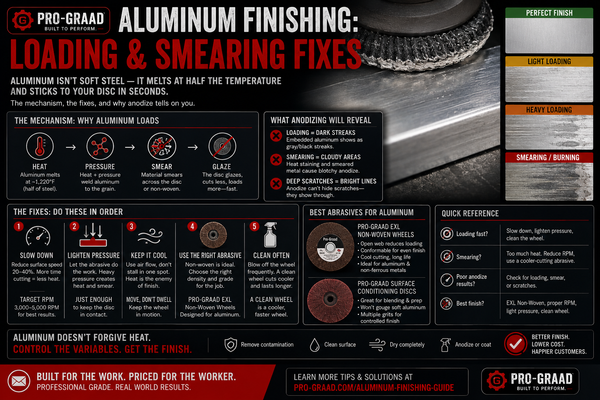
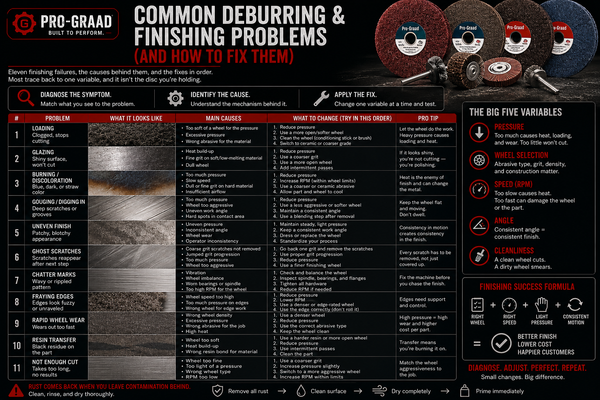
The term "loading" is used in the sandpaper industry to refer to a product that can be clogged or gummed up due to residue filling up the inter-spaces between abrasive particles with small particles of the material being sanded, making the sandpaper work much harder or even ruin it. Soft woods, drywall compound, fresh primer, and paint are the worst offenders on construction sites.
The solution is stearate-treated paper. Stearate coatings are a specialized treatment applied to abrasive products such as sandpaper, sanding discs, and grinding wheels. This treatment enhances the abrasives by reducing friction and heat buildup while also preventing clogging when sanding or grinding. Anti-clogging coating has an effective chip removal performance that reduces friction on the surface of the workpiece during grinding, extending the life of the product and increasing the grinding rate by as much as 30 to 50 percent. A 30 to 50 percent improvement in material removal rate means fewer sheet changes and faster job completion, specify stearate-treated sheets for all dry finish-prep work.
Pro Tip: If you are sanding resinous pine, painted surfaces, or body filler and the sheet is loading within the first ten minutes, wipe the sheet's face with a rubber cleaning stick or a stiff-bristle brush before discarding it. Loading is often a reversible problem. Dulling is not.
Heat and Glazing
Sanding can generate great amounts of heat, potentially damaging the surface of the material being worked on. The zinc stearate coating of the non-loading sandpaper will reduce this frictional heat to dissipate heat buildup so that the surface is not marred and that abrasives can cut cooler. Glazing, the permanent rounding-over of abrasive grains, is what happens when heat is not managed. Dulling means abrasive grains are fractured, rounded over, or worn down, resulting in a smooth feel to the surface and poor performance even after cleaning. Once glazed, a sheet cannot be recovered. Ceramic and zirconia grains resist glazing because of their self-sharpening micro-fracture structure, which continuously exposes fresh cutting edges under pressure.
Physical Abuse and Tear
Paper can easily tear and is not suitable for wet sanding. Job sites introduce moisture, grit contamination, sharp edges, and rough handling. For extensive stock removal working on hard materials like metal or hardwoods, or when needing a flexible abrasive for rounded or contoured shapes, cloth-backed abrasives are the go-to choice, offering durability and resistance to tearing. Film-backed abrasives add another dimension: polyester film backings are highly resistant to tearing and creasing, extending the abrasive lifespan, and they excel at balancing stiffness and flexibility for better control.

Grit Selection for Common Job Site Tasks
Choosing the right grit is as important as choosing the right grain. The wrong grit number costs you finish quality; the wrong grain costs you the sheet itself.
Heavy Stock Removal and Rough Shaping
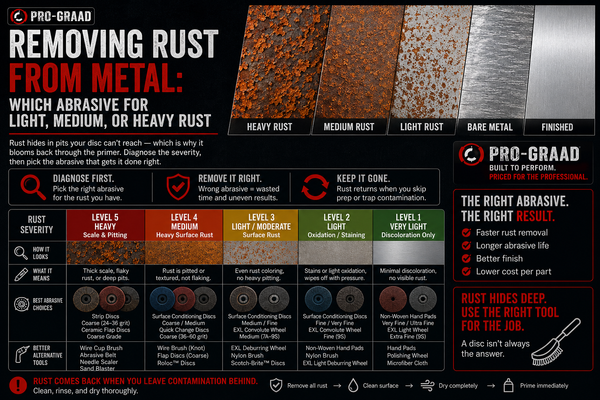
Coarse grits, typically 40 to 80, are used for rapid material removal. Sandpaper between 40 and 60 grit is coarse and able to roughly shape wood. It can also smooth rough wood, remove rust, or remove the old finish on a material such as paint or varnish. At this grit range on an active site, ceramic or zirconia grain on an X or Y-weight cloth backing is the right specification. The pressure involved in aggressive removal accelerates dulling on standard aluminum oxide sheets.
General Sanding and Surface Prep
Something around 80 to 100 grit is medium coarseness, good for general sanding jobs which require a bit more power such as final shaping and tidying up projects. This is the most-used range on most job sites. High-quality aluminum oxide in a closed-coat configuration works well here for hardwood and metal, while open-coat aluminum oxide handles softwood and painted surfaces without loading. According to Benjamin Moore's sandpaper guide, for drywall prep you should avoid grits below 100 and above 220 to prevent surface damage. Use those benchmarks on site: if you're speccing 80-grit for drywall, you're creating rework.
Finish Work and Between-Coat Sanding
120 to 220 grit is seen as fine and used in workshops as a final sanding before the piece is finished. Very-fine grits of 150, 180, and 220 produce ultra-smooth surfaces on wood. People often use them to scuff-sand lacquer, polyurethane, and other finishes before applying another coat. At fine grits, stearate-treated paper delivers a measurable advantage: at 120 to 180 grit, stearate papers last 40 to 60 percent longer before clogging on pine, and at 400 to 800 grit, coated sheets stay cooler and resist glazing, improving finish clarity by approximately 15 percent. That difference pays for the cost premium in reduced sheet consumption alone.
Pro Tip: On contractor grade abrasives, "going through the grits" means skipping no more than one grit level between steps. Many jobs require you to "go through the grits," meaning you start the project using lower-grade, coarser grits before using finer grits later. Each time you advance to a higher grit sandpaper, you remove the scratches from the previous layer. Skipping too aggressively means the finer sheet spends more time removing coarse scratches instead of finishing, wasting both time and abrasive.
Open Coat vs. Closed Coat: The Job Site Decision
Open-coat sandpaper has larger gaps between the grit particles, which cover about 50 to 70 percent of the surface. This makes open-coat abrasives more suited to woodworking as it clogs less often, especially if you are planning to work with soft woods that might contain more resin.
Closed-coat sandpaper has about 90 to 95 percent of the surface covered with the abrasive. These sandpapers are more aggressive and better suited to harder woods, metals, and for finishing lacquer and sealing coats.
In practice: open coat for wood, drywall, and paint; closed coat for metal, hardwood, and finish lacquer work. Getting this wrong is one of the fastest ways to burn through a supply order. In my experience, mixed-use crews often default to closed coat because it looks more aggressive, but on a job site with a lot of softwood trim, that choice creates loading problems that cost more than the sheets themselves.
The brands that build contractor grade abrasives properly, including Pro-Graad's contractor-focused abrasive line, specify this distinction clearly on their packaging. If a product label does not distinguish coat type, it is almost certainly consumer-grade.
Recognizing Failure Before It Costs You Rework
The decision to replace often comes down to distinguishing between a reversible problem (loading) and a permanent one (dulling). Learning that distinction saves real money on a busy site.
Signs It's Time to Change
Beyond simply tracking usage time there are clear visual cues indicating when it is time for a sandpaper change. Clogging, where the abrasive particles become filled with dust and debris, significantly reduces effectiveness. You will notice a decrease in sanding efficiency and a less consistent finish. Glazing, where the abrasive particles become dull and rounded, leads to a similar performance drop. Tears and holes are obvious signs of significant wear and should prompt immediate replacement.
According to The Wood Whisperer, the professional benchmark is simple: "In a professional shop where time is more expensive than sandpaper, you switch out more often to get the job done sooner." That logic scales directly to a job site. The cost of a fresh sheet is a fraction of the labor cost of one rework pass on a finished surface.
Practical test: Run your fingertip over the used section, then over a fresh section of the same grit. When you can feel a difference between the rough new part and the smooth old part, it is time to change it. Do this test during every significant break. On contractor grade abrasives with ceramic grain, the transition takes longer, but it still happens, and catching it before it degrades finish quality is the mark of professional-level abrasive management.

Frequently Asked Questions
What makes contractor grade sandpaper different from regular sandpaper?
Different grades of sandpaper grit represent the difference in the quality of the abrasive material. Industrial-grade sandpaper uses higher quality materials than commercial-grade. In practice, this means harder, longer-lasting abrasive grains (ceramic, zirconia, or high-grade aluminum oxide), tougher backing materials (cloth or polyester film rather than lightweight paper), and often anti-clog treatments that extend working life in demanding conditions. The result is a sheet that stays sharp longer and survives the physical abuse of a working job site.
Which abrasive grain should I specify for metal work on a construction site?
For heavy metal grinding and weld removal, closed-coat aluminum oxide and ceramic are the two abrasives most commonly used for metalworking, but zirconia can also be used with great results. For stock removal and weld blending, ceramic and zirconia do the best job on stainless steel and other ferrous metals, while aluminum oxide is recommended for alloys, gray iron, and non-ferrous metals. Ceramic is the highest-performance choice, but zirconia offers a strong cost-to-durability ratio for most site metalwork.
How do I know when to replace a sheet on an active job site?
If the abrasive takes too long to do its job or you have to apply more pressure to get results, it is likely that the grains are clogged with debris or the abrasive side has worn down. In either event, it is likely time to replace your sandpaper. The tactile test, running a finger over used versus fresh sections, is the most reliable field method. For crew-level efficiency, establish a standard: if a sheet requires noticeably more passes than it did at the start of the task, it comes off the tool.
Can I use the same sandpaper for wood and drywall on a job site?
Technically yes, but not efficiently. In construction and carpentry sanding is essential for achieving smooth walls and refined woodwork. Garnet and aluminum oxide sandpapers are the most widely used abrasives for these tasks. For drywall, medium to fine grits above 120 are used to feather edges, remove joint compound ridges, and create seamless transitions between patches. Drywall compound loads abrasives extremely quickly, so open-coat or anti-load treated sheets should be dedicated to drywall work. Using the same sheet across both surfaces accelerates clogging and degrades finish quality on whichever task comes second.
What is the construction abrasives market doing, and why does it matter to me?
The construction abrasive market alone was valued at $44.05 billion in 2024 and is projected to reach $61.25 billion by 2035 at a CAGR of 3.04%. Abrasive mesh is particularly critical to this segment, widely used in drywall finishing, plaster sanding, tile grinding, and general surface preparation on construction sites worldwide. A growing market means more product options, and more marketing noise. The practical takeaway: specify by grain type, backing type, coat density, and grit, rather than by brand packaging alone. Products labeled "professional" without those specifications are often consumer-grade products with upgraded branding.
The Bottom Line
Contractor grade sandpaper is not a premium for its own sake. The grain type, backing material, coat density, and anti-clog treatment all work together to determine whether a sheet survives the first two hours of a job site or the entire task. I've found that the single most impactful change most crews can make is moving from consumer aluminum oxide on paper backing to a zirconia or ceramic grain on cloth or film backing, the difference in sheet consumption alone often covers the cost premium within the first project.
Spec correctly and you cut material costs, reduce rework, and get cleaner finishes. Professional grade sandpaper from suppliers like Pro-Graad is built around exactly those specifications, grain, backing, and coat type matched to the conditions contractors actually work in. Start with the grain, match the backing to the tool and the task, and use anti-load treatments wherever soft or resinous materials are in play. Your crew will spend less time replacing sheets and more time delivering results.
Sources
-
Global Abrasives Market Report 2025, Fortune Business Insights. Market size, forecast data, and growth drivers. Fortune Business Insights' 2025 abrasives market report
-
Abrasives Market Size and Share Analysis 2025-2030, Research and Markets. Market estimates, CAGR projections, and construction sector demand. https://www.researchandmarkets.com/reports/5025292/abrasives-market-share-analysis-industry
-
Construction Abrasives Market Size and Forecast to 2035, Golden Abrasives. Construction-specific abrasive market data. The construction abrasive market
-
How to Choose the Right Sandpaper for Metal, Benchmark Abrasives. Grain type guidance and professional finishing advice. https://benchmarkabrasives.com/blogs/sanding/best-sandpaper-for-metal
-
Sandpaper Grit Chart and Grits Explained, Red Label Abrasives. Grit system, abrasive grain types, and application guidance. https://www.redlabelabrasives.com/blogs/news/sandpaper-grit-chart-grits-explained
-
Abrasive Grains: Choosing the Right Sandpaper, Uneeda / Sandpaper.com. Detailed grain type comparison and application advice. https://www.sandpaper.com/articles/abrasive-grains-everything-you-need-to-know-to-choose-the-right-one/
-
Paper, Cloth, Film, or Foam: Choose the Right Backing, Uneeda / Sandpaper.com. Backing material comparison and selection guidance. https://www.sandpaper.com/articles/paper-cloth-film-or-foam-choose-the-right-backing-to-get-the-job-done/
-
Comparing Sanding Disc Backings: Cloth, Film, Hook & Loop, and PSA, Maverick Abrasives. Backing material performance comparison. https://www.maverickabrasives.com/blogs/sandpaper-guides/what-is-the-difference-between-sanding-disc-backings-cloth-film-hook-loop-psa
-
Stearate Coatings Explained, Empire Abrasives. Anti-clog coating mechanism and applications. Empire Abrasives: Anti-clog coating mechanism and applications
-
Anti-Clog Coatings: Stearate vs Non-Stearate Sandpaper Performance, eQualle Sandpaper. Test data on stearate coating performance. https://equalle.com/blogs/safety-and-gear/anti-clog-coatings-stearate-vs-non-stearate-sandpaper-performance-120-800-grit-tests
-
Sandpaper Buying Guide, The Home Depot. Grit selection for drywall and common construction applications. Benjamin Moore's sandpaper guide
-
When Should You Change Sandpaper Belts?, Benchmark Abrasives. Loading versus dulling failure modes and replacement timing. https://benchmarkabrasives.com/blogs/sanding/when-should-you-change-sandpaper-belts
-
How to Choose the Right Sandpaper, Fine Homebuilding. Ceramic, aluminum oxide, and silicon carbide grain comparison for professional use. https://www.finehomebuilding.com/2011/11/10/whats-the-difference-aluminum-oxide-silicon-carbide-and-ceramic
-
When to Throw Away Sandpaper, The Wood Whisperer. Professional replacement timing guidance. https://thewoodwhisperer.com/articles/when-should-i-throw-away-sandpaper/
-
Cloth Backing in Abrasive Products, Empire Abrasives. Cloth backing types, weights, and job site applications. Empire Abrasives: Cloth backing types, weights, and applications