CNC Machinist Abrasives Enable Precision Results
Precision manufacturing lives or dies on final surface quality, and the abrasive choices behind every grinding pass carry more weight than most people realize. The global abrasives market was valued at USD 51.50 billion in 2025 and is projected to grow to USD 86.20 billion by 2034, driven by rising demand from automotive, aerospace, metal fabrication, and electronics sectors. That scale of investment reflects a simple truth: when a CNC machinist selects the wrong abrasive, the consequences ripple across dimensional tolerances, surface quality, tool life, and production costs all at once.
In my experience working with precision-focused shops, abrasive selection is still treated as an afterthought far too often. Engineers specify tight tolerances on a drawing, then leave the choice of grinding wheel entirely to the operator. The result is inconsistent finishes, rework cycles, and scrapped parts that could have been avoided. This guide is designed to change that, giving anyone involved in CNC machining a clear, practical understanding of how abrasives work, which types to use, and how to avoid the most expensive mistakes.

Key Takeaways
- Abrasive machining outperforms conventional cutting on tight tolerances: Precision CNC production grinding achieves surface finishes from 32 microinches Ra down to 4.0 microinches Ra, while a traditional milling or turning operation typically reaches only about 125 to 32 microinches Ra. Therefore, if your part requires a finish below 32 Ra, route it to a grinding operation rather than relying on your mill or lathe alone.
- Abrasive type must match the workpiece material: Diamond and CBN are two of the hardest superabrasive materials available; diamond wheels are optimal for non-ferrous materials and hard, brittle materials like ceramics and carbide, while CBN wheels are ideal for ferrous materials including high-speed steel and tool steels. Choosing the wrong superabrasive wastes money and can accelerate tool wear rapidly.
- Grit size is a direct lever on surface finish and removal rate: When selecting grit size, the grain size must be matched to the required material removal rate, coarser CBN grit such as 100 Grit is used for heavy stock removal where speed is the priority, whereas finer micron sizes of 400 Grit and finer are reserved for superfinishing and achieving strict geometric tolerances.
- Coolant management affects dimensional accuracy, not just tool life: Inadequate cooling can result in thermal expansion of the workpiece, affecting dimensional accuracy and causing distortion. Address coolant delivery before adjusting any other grinding parameter.
- The bonded abrasives segment dominates industrial use: Bonded abrasives dominated the global abrasives market in 2025, accounting for over 43% of total revenue, with their high material removal rate, dimensional stability, and suitability for automated grinding systems making them indispensable in metal fabrication and advanced manufacturing environments.
Quick-Start Prioritization Framework
Use this table to identify where to start, based on your most pressing production challenge.
| Abrasive Strategy | Best For | Effort Level | Time to Results |
|---|---|---|---|
| Aluminum oxide bonded wheel | Carbon steel, alloy steel, ferrous rough grinding | Low | Immediate |
| Silicon carbide bonded wheel | Non-ferrous metals, ceramics, cast iron | Low | Immediate |
| CBN superabrasive wheel | Hardened steels, tool steels, superalloys | Medium | Days (setup + trial) |
| Diamond superabrasive wheel | Carbide, ceramics, brittle non-ferrous materials | Medium | Days (setup + trial) |
| Ceramic aluminum oxide wheel | Precision steels requiring high removal and fine finish | Medium | Days |
| Multi-step abrasive process | Aerospace, medical, or semiconductor components | High | Weeks (process development) |
Start here if you're:
- New to CNC grinding or abrasive processes: Begin with aluminum oxide bonded wheels on ferrous materials; they are forgiving, widely available, and cover the largest range of everyday applications.
- Hitting a surface finish wall with conventional tools: Switch to a finer-grit CBN or diamond wheel and consult grinding wheel specification factors to dial in bond type and grit.
- Running high-volume precision production: Invest in superabrasives and a documented process recipe, consistency across hundreds or thousands of parts is where CBN and diamond wheels pay back their higher upfront cost.
Understanding How Abrasive Machining Works in a CNC Context
What Makes Abrasive Machining Different from Conventional Cutting
Abrasive machining is a process of material removal using abrasives such as aluminum oxide, silicon carbide, resin bond, and many other abrasives either natural or synthetic, involving gradual removal of material from a workpiece and incorporating high-pressure equipment. That "gradual" nature is the key distinction. Grinding wheels are composed of thousands of small abrasive grains held together by a bonding material, where each abrasive grain is a cutting edge, as the grain passes over the workpiece, it cuts a small chip, leaving a smooth, accurate surface.
CNC machines have their own limitations in holding close tolerances consistently, and when producing large volumes, adding stock on parts where close tolerances are required and finishing all other dimensions using an external abrasive process can reduce CNC machine downtime and frequent tool changes, which is why whenever there is a requirement for good surface finish and close tolerances such as flatness or roundness, an abrasive machining process is adopted. This practical reality means abrasives are a planned step in a precision workflow, not a corrective measure.
The Three Abrasive Categories Every Machinist Should Know
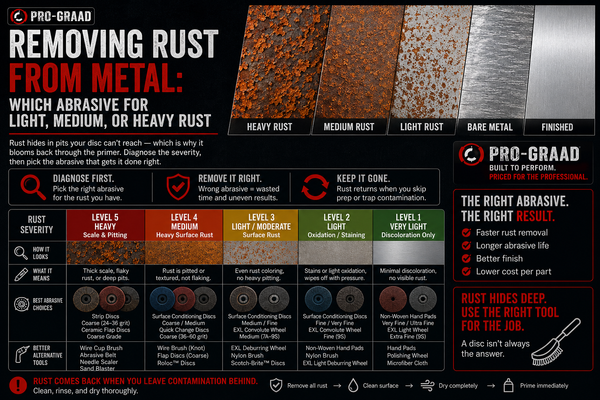
Despite the wide variety of shapes, grits, bonding agents, and abrasive media types available, each can be grouped as either bonded abrasives (wheels, typically), coated abrasives (sandpaper, belts, and discs), or nonwoven abrasives (hand pads, flap wheels, etc.).
- Bonded abrasives, grinding wheels and stones where grains are held in a matrix of vitrified, resin, rubber, or metal bond. Best for CNC grinding operations requiring precise dimensional control.
- Coated abrasives, abrasive grains bonded to a paper, cloth, or film backing. Used for deburring, blending, and surface conditioning.
- Nonwoven abrasives, open-structured nylon fibres impregnated with abrasive grain. Used for light surface prep, finishing, and polishing passes.
Pro Tip: Many shops use a multi-step honing process process: a coarse diamond for sizing, a fine diamond for finish, and a brush or plateau abrasive for final surface conditioning. This sequenced approach removes the temptation to ask one wheel to do everything, which is where most abrasive waste and rework originates.
Choosing the Right Abrasive Grain for Your Material
The Core Grain Types and Their Applications
Aluminum oxide is the most common abrasive used in grinding wheels and is popular for grinding carbon steel, alloy steel, high-speed steel, annealed malleable iron, wrought iron, and bronzes and similar metals, with many different types of aluminum oxide abrasives each specially compounded for particular types of grinding jobs. According to American Machinist's reference guide on abrasives, brown fused aluminum oxide is the most widely used variant overall.
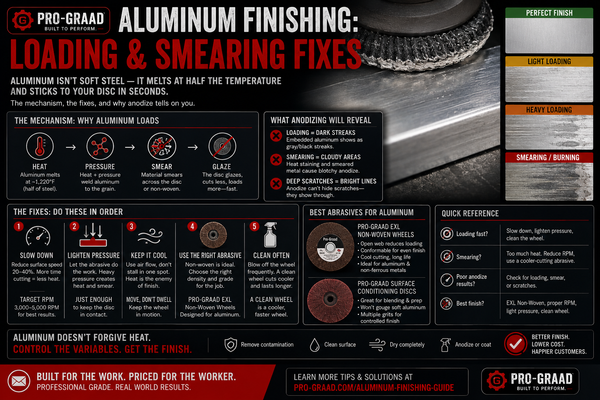
Silicon carbide is an abrasive used for grinding gray iron, chilled iron, brass, soft bronze and aluminum, as well as stone, rubber, and other non-ferrous materials. It is harder and sharper than aluminum oxide but less tough, meaning it fractures more readily, a useful property in softer, more heat-sensitive materials where you want the grain to break away cleanly.
Ceramic aluminum oxide is the latest in abrasives, a high-purity grain manufactured in a gel sintering process with the ability to fracture at a controlled rate, constantly creating thousands of new cutting points, exceptionally hard and strong, and primarily used for precision grinding steels and alloys that are the most difficult to grind.
When to Move to Superabrasives
In high-performance machining machining, superabrasives are intended to work when grinding hardened steels or superalloys, and are used with finishing materials such as glass, ceramics, and other composites.
CBN's hardness is second only to diamond, and this high level of hardness allows CBN tools to maintain their cutting edge and resist wear over prolonged periods, resulting in consistent performance and reduced tool changes. For ferrous applications, CBN is the clear choice. While diamond grinding is the standard for non-ferrous materials, it is critical to use CBN when working with iron-based alloys, because unlike diamond, CBN is chemically stable and will not react with the carbon in the steel.
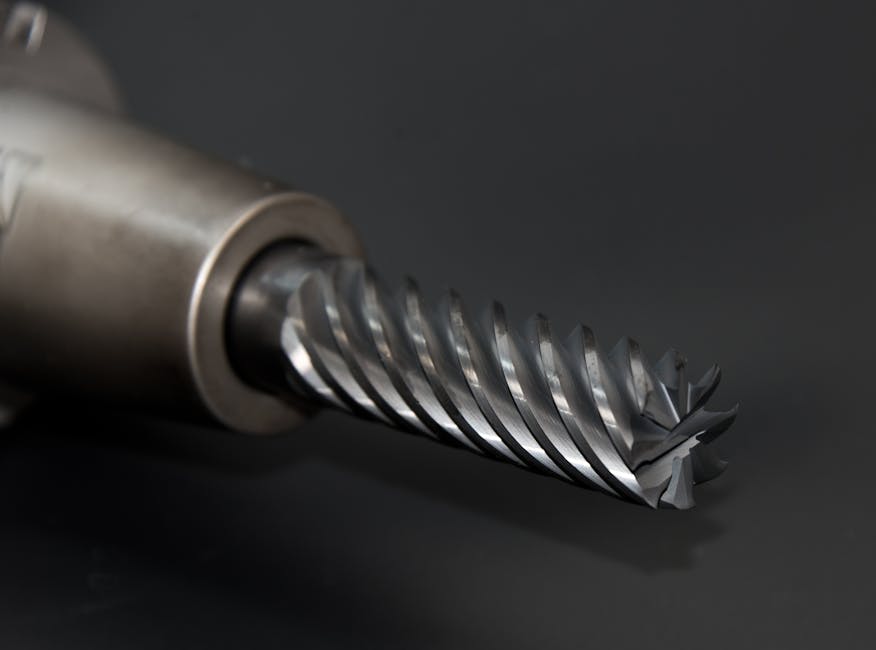
One of the most significant benefits of using CBN for machining steel is extended tool life and cost efficiency, due to its high hardness, abrasiveness, and thermal stability, CBN tools have a longer lifespan compared to conventional cutting tools, reducing the frequency of tool changes. Therefore, when your shop is grinding hardened steel components in volume, the higher cost of CBN wheels typically pays back within a short production run through reduced changeovers and consistent dimensional output.
Grit Size, Bond Type, and the Surface Finish Connection
Reading the Grit Number
Grinding wheel grit size has a direct effect on surface finish, the larger the grit size, the coarser the finish, and it is important to select the correct grit size based on the finish requirements of the workpiece.
According to Hindustan Abrasives' CNC grinding wheel guide, grit ranges break down practically as follows:
- Coarse grit (24 to 60): Removes material quickly but leaves a rougher surface. Use for stock removal and pre-finishing passes.
- Medium grit (80 to 120): Provides a balance between removal rate and surface finish. Standard production grinding.
- Fine grit (200 to 400): Delivers precision surfaces and smooth finishes. Use where Ra specifications are tight.
Standard production grinding achieves Ra 0.8 to 1.6 micrometers using 80 to 120 grit wheels under stable conditions, while fine finishing setups with controlled feed and dressing can reach Ra 0.2 to 0.8 micrometers on steel surfaces. This is actionable data: if your drawing calls for Ra 0.4 or below, plan for a fine finishing step with a controlled dressing regime, do not expect a single standard production wheel to get you there.
Bond Type and When It Matters
grinding wheel specification factors holding are required, a vitrified product is the right choice because vitrified wheels hold their form and shape better than organic or resin bonded wheels, while organic bonds tend to finish better.
Resin bond diamond and CBN grinding wheels are primarily chosen for their excellent balance of efficient cutting action, superior surface finish capabilities, and their ability to grind heat-sensitive materials with reduced thermal damage, their inherent elasticity allows for smoother grinding, making them versatile for a wide range of precision applications on hard and brittle materials.
Pro Tip: According to Precision CNC production grinding, "a wheel with a softer bond will easily release dull grains and keep newer sharp grains in contact with the material," which improves both stock removal and finish simultaneously. Pair a softer bond with a finer grit to hit demanding Ra targets without burning the part.
Coolant Strategy and Thermal Control in CNC Abrasive Operations
Why Heat Is the Enemy of Precision
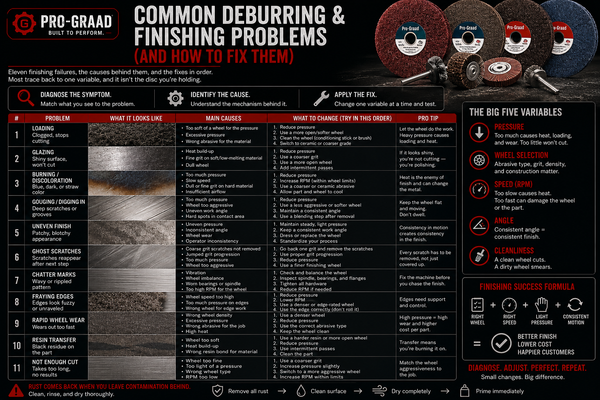
Thermal control is critical in CNC grinding, excessive heat generation may result in grinding burn, tensile residual stresses, microcracking, or metallurgical phase transformation, and engineers must balance material removal rate with thermal input to maintain surface integrity.
Coolants play a vital role in CNC machining by dissipating heat generated during machining, preventing thermal damage to both the cutting tool and the workpiece. In abrasive operations, this is even more critical than in turning or milling, because the grinding zone generates intense localized heat across thousands of grain contact points simultaneously.
In grinding operations, adding coolant allows the liquid to penetrate between the grinding wheel particles and the workpiece, forming a lubrication film that minimizes friction at the interface, prevents the abrasive particles from wearing down, and helps carry away chips.
Practical Coolant Delivery Tactics
If coolant application is insufficient, grinding chips can be reintroduced into the grinding zone, causing scratching in the workpiece; it is critical to ensure that the coolant nozzle is properly targeted toward the grinding zone with sufficient coolant flow and pressure to flush chips out of the area.

Clean coolant reduces abrasion and thermal stress on cutting tools, significantly delaying tool wear, while stable coolant quality supports consistent dimensional tolerances and better surface finishes. Therefore, treat coolant management as a process control variable, maintain filtration systems, monitor concentration, and replace coolant on a defined schedule rather than waiting for visible degradation.
Common Abrasive Mistakes and How to Avoid Them
The Wheel Mismatch Problem
According to Okuma's CNC grinding application engineer guidance, the most common mistake seen in CNC grinding is not having the right grinding wheel for the application. Okuma's CNC grinding application engineer guidance for the surface finish required is a frequent error, and a dull wheel, which results from over-aggressive dressing, generates more heat and higher grinding forces, neither of which are good for productivity or quality.
Selecting an abrasive that is not suitable for the specific material leads to poor results and reduced tool life, using an improper wheel or disc type for a particular material such as steel, stainless steel, or aluminum is a common mistake.
I've found that the fastest way to eliminate wheel mismatch errors is to build a simple specification sheet for each job type in your shop, material, hardness, required Ra, required tolerance, and the resulting wheel specification. Treat it like a cutting tool library.
Over-Dressing and Under-Dressing
Okuma's CNC grinding application engineer guidance common mistake, with the proper grinding wheel specification, multiple parts can be ground without dressing, as dressing every part is often unnecessary; reducing the frequency of dress reduces cycle time and extends both grinding wheel and dressing diamond life, lowering tooling cost per part and increasing productivity.
The flip side is also true: under-dressing allows grains to load and glaze. Dressing is a process used to clean and restore a dulled or loaded grinding wheel-cutting surface to its original sharpness, removing swarf and dulled abrasive grains and excess bonding material, and is also used to customize a wheel face to produce desired grinding results.
Pro Tip: Many shops use a multi-step honing process not change too many variables at once during machining, document your oil, stone type, grit, and stroke settings, and once you have a proven recipe, stick to it. That is how you get repeatability by eliminating unknowns. Apply this same discipline to your dressing parameters.
Neglecting Abrasive Debris Inside the Machine
Abrasives can quickly become problematic inside CNC machines, because unlike dedicated grinding machines or finishing systems, standard CNCs are not built with bagged filtration systems able to handle the loads of swarf produced during product cycles, not only do chips from the abrasive collect within the machine, but particles from the abrasives themselves will also clog it. This is a direct operating cost issue: debris accumulation accelerates wear on machine ways, slides, and spindle bearings.
For shops that need to use abrasives on a CNC platform, invest in proper chip management, filtered coolant systems, and scheduled machine cleaning intervals. According to James Engineering's analysis of abrasives in CNC machines, high-volume deburring operations are best handled by a dedicated deburring machine rather than inside the CNC itself.
Abrasive Selection Across Key Industries
Aerospace and Medical
Most workpieces used in aerospace and medical industries are complex alloys with very close tolerances, and the sizes, shapes, and forms of the part must be at their best for flawless functionality of the assembly, which is why the most advanced CNC machines are used and abrasive CNC machines are necessary to hold the closest tolerances.
Anything below Ra 1.6 micrometers is considered smooth for machining, while high-precision applications in aerospace and medical often target Ra 0.8 or below. These requirements make superabrasives, particularly CBN for steel alloys and diamond for ceramics and carbide, the standard choice in these industries.
Automotive and General Metal Fabrication
The abrasives market is expected to grow from USD 49.58 billion in 2025 to USD 52.06 billion in 2026, with sales momentum reflecting rising demand for high-performance materials that can hold tight tolerances on advanced CNC equipment, especially in electric vehicle and aerospace component machining. Therefore, shops serving the automotive sector should plan for an increase in superabrasive demand as EV drivetrains require tighter part tolerances than many legacy internal combustion components.
Suppliers like Pro-Graad offer industrial-quality abrasives and finishing tools engineered for professional-grade production environments, providing a practical source for shops looking to consolidate abrasive supply without compromising on consistency or performance.

Frequently Asked Questions
What is the difference between bonded and coated abrasives in CNC machining?
Abrasive machining can be broadly classified into two categories based on the state of the abrasive used: fixed (bonded) and loose. Bonded abrasives, such as grinding wheels, lock grains in a rigid matrix and are used for dimensional grinding where form retention and tight tolerances matter. Coated abrasives, like belts and discs, use a flexible backing and are better suited for blending, deburring, and surface preparation where the abrasive needs to conform to a surface.
How do I know which grit size to specify for a given surface finish?
grinding wheel specification factors geometric tolerances, a finer grit is needed because the actual grit size of the grain provides more points of contact between the work and wheel. As a practical starting point, 80 to 120 grit covers most standard production grinding at Ra 0.8 to 1.6, while anything below Ra 0.4 typically requires 200 grit or finer in a dedicated finishing step. Always confirm the Ra target before specifying a wheel.
Can I use diamond wheels on steel workpieces?
Diamond is not suitable for grinding steel or iron, at high speeds, the carbon in the diamond reacts chemically with the iron, causing the grit to degrade rapidly into graphite. For hardened steels and ferrous alloys, use CBN wheels instead. Diamond is reserved for carbide, ceramics, composites, and non-ferrous hard materials.
What causes grinding burn and how do I prevent it?
Grinding burn occurs when heat generated at the wheel-workpiece interface exceeds the material's thermal threshold, causing surface discoloration, hardness changes, and residual stress. Grinding typically operates with shallow depths of cut ranging from 0.0001 to 0.002 inches per pass depending on material and tolerance requirements, and thermal control is critical because excessive heat generation may result in grinding burn, tensile residual stresses, microcracking, or metallurgical phase transformation. Reduce depth of cut, increase coolant flow, and check wheel dressing frequency if burn marks appear.
How does wheel hardness affect CNC grinding performance?
Counterintuitively, harder workpieces generally call for softer-grade wheels, not harder ones. In CNC grinding, harder wheels are used for soft materials to avoid excessive wear and clogging, while softer wheels are ideal for harder materials, allowing the abrasive grains to release easily during grinding. A wheel that holds dull grains in contact with a hard workpiece will generate heat and poor surface quality. Match the wheel grade to the material hardness using the In high-performance machining as a reference.
The Bottom Line
Abrasives determine whether a precisely programmed CNC job produces a part that meets spec or one that goes in the scrap bin. The grain type, grit size, bond, and coolant strategy are all process control variables, treat them with the same rigor you apply to feeds, speeds, and toolpath selection. When in doubt about a wheel specification, consult the supplier's technical team. And when you need reliable, industrially rated abrasives built for real production environments, Pro-Graad supplies professional-grade finishing tools without the middleman markup.
Sources
- Global Abrasives Market Size, Share & Trends Report, Fortune Business Insights. Market sizing and CAGR data for 2025-2034. https://www.fortunebusinessinsights.com/abrasives-market-102177
- Abrasives Market Size, Share, Growth Report, Mordor Intelligence. Market forecast and EV/aerospace demand drivers. https://www.mordorintelligence.com/industry-reports/abrasives-market
- 5 Grinding Considerations for Improving Surface Finish, Norton Abrasives/Saint-Gobain. Surface finish Ra ranges and grit selection guidance. Precision CNC production grinding
- The 7 Factors Used to Determine a Grinding Wheel Specification, Norton Abrasives. Bond type, grit, and grade selection framework. grinding wheel specification factors
- What is Abrasive Machining?, Slabe Machine. Overview of abrasive processes and CNC application. https://www.slabemachine.com/knowledge-base/what-is-abrasive-machining.html
- Abrasives in CNC Machines, James Engineering. Risks of abrasive debris in CNC machine tools. https://www.james-engineering.com/the-james-journal/abrasives-in-cnc-machines
- A Guide to Choosing the Right Grit Size for Precision Grinding, Eagle Superabrasives. CBN and diamond grit selection for ferrous and non-ferrous applications. https://info.eaglesuperabrasives.com/blog/choosing-the-right-grit-size-for-precision-grinding-a-comprehensive-guide
- All About Abrasives, American Machinist. Grain type breakdown and bond classifications. https://www.americanmachinist.com/archive/features/article/21893227/all-about-abrasives
- Technical Considerations for Grinding Wheels in CNC Manufacturing, Butler Bros. Process variables and thermal control in CNC grinding. https://www.butlerbros.com/post/technical-considerations-for-grinding-wheels-in-cnc-manufacturing
- What Are Industrial-Grade Abrasives?, Empire Abrasives. Grain types and machine compatibility guide. https://www.empireabrasives.com/blog/what-are-industrialgrade-abrasives/
- Metalworking Abrasives, MSC Industrial Supply/BetterMRO. Abrasive selection by material and application type. In high-performance machining
- Common CNC Grinder Mistakes, Okuma America. Wheel selection errors and dressing frequency guidance. Okuma's CNC grinding application engineer guidance
- Surface Grinding in CNC: Machines, Process & Accuracy, JLCCNC. Ra values by grit and process benchmarks. https://jlccnc.com/blog/cnc-surface-grinding
- Why is CBN Better for Machining Steel Than a Diamond?, C-YCNC. Chemical stability and tool life comparison. https://www.c-ycnc.com/blog/quick_answer/why-is-a-cbn-better-for-machining-steel-than-a-diamond/
- Precision Boring and Honing, Automation and Data, Engine Builder Magazine. Three-step abrasive process and repeatability principles. Many shops use a multi-step honing process
- Clean Coolant Reduces Tool Wear and Saves Costs, Lex Technoaid. Coolant filtration and dimensional consistency. https://lextechnoaid.com/how-clean-coolant-reduces-tool-wear-and-saves-costs-in-cnc-machining-2/
- Pro-Graad, Professional-grade abrasives and finishing tools for production environments. https://pro-graad.com/