Buffing Wheels Create Mirror-Like Metal Surfaces
There is a moment in every metalworking project that feels like pure transformation. That split second when a dull gray piece of aluminum or steel suddenly becomes a liquid-like, reflective surface. That moment does not happen by accident. It is the payoff of a deliberate, multi-stage process centered on one indispensable tool: the buffing wheel.
The global metal finishing market attained a value of nearly USD 110.67 billion in 2025, and it is expected to grow at a CAGR of 4.00%, reaching USD 163.82 billion by 2035. That growth tells you something important: the demand for flawlessly finished metal surfaces is accelerating across automotive, aerospace, and consumer goods. If you want to participate in that standard, whether as a hobbyist, a fabricator, or a restoration professional, mastering buffing wheels is the foundation.

Key Takeaways
- Three stages, three wheel types: According to buffing process guide, the buffing process involves cutting, polishing, and finishing, each stage using progressively finer compounds and softer wheels. Skip a stage and you cannot recover the surface quality downstream.
- Wheel firmness matches compound aggression: Per Red Label Abrasives' wheel selection guide, firmer wheels work better for removing deep scratches, while softer buffing wheels deliver the final smooth finish. Match both every time.
- Cross-contamination destroys results: PAVCO's metal polishing guide confirms that using the same buffing wheel for different compounds transfers abrasives from one stage to the next, scratching the very surface you are trying to perfect. Dedicate one wheel per compound.
- Metal hardness determines your starting point: Benchmark Abrasives' mirror-finish guide notes that stainless steel requires aggressive compounds and high-pressure airway wheels, while precious metals need jeweler's rouge and very soft cloth wheels. Identify your metal before you pick up a wheel.
- Market proof of value: According to Mordor Intelligence's metal finishing analysis, the automotive sector contributed 38.35% of the metal finishing market share in 2025, meaning professional-grade surface finishing knowledge pays real-world dividends.
Quick-Start Prioritization Framework
| Wheel Type | Best Metal | Effort Level | Stage |
|---|---|---|---|
| Sisal buffing wheel | Hard metals (stainless steel, iron) | High | Cutting (Stage 1) |
| Spiral sewn muslin | Aluminum, brass, copper, steel | Medium | Cut buffing (Stage 2) |
| Loose cotton muslin | All metals, final work | Low | Color/finishing (Stage 3) |
| Airway buffing wheel | Aluminum and stainless steel | Medium | Color buffing, heat control |
| Canton flannel | Delicate and precious metals | Low | Final mirror finish |
Start here if you are:
- A complete beginner: Use a spiral sewn muslin wheel with brown Tripoli compound; it is the most forgiving combination and works on the widest range of metals.
- Chasing a true mirror shine on stainless: Start with a sisal wheel and black emery compound, progress through brown Tripoli on a sewn muslin wheel, and finish with green compound on a clean airway wheel.
- Working on soft metals like aluminum or brass: Skip sisal entirely. Begin with a spiral sewn wheel and brown Tripoli, finish with a loose cotton wheel and white or green rouge.
How Buffing Wheels Actually Work
The Science Behind the Shine
The objective of buffing and polishing is to make a rough surface into a smooth one. Imagine the surface magnified thousands of times; it looks like jagged mountains and valleys. By repeated abrasion, you wear down those mountains until they are old, soft, rolling hills. Then they stop dissipating light and start to reflect it. That reflection is what makes the buffed part appear shiny.
Buffing is a metal finishing process that progressively refines a metal surface to remove scratches and imperfections, creating a high shine. To do this, you use abrasive compounds applied to rotating wheels to remove microscopic layers of material, smoothing out imperfections and creating an increasingly reflective surface.
In my experience, the most common misconception beginners carry is that polishing is simply "rubbing harder." Polishing metal to a high-luster finish is a calculated, multi-stage mechanical process. It starts with aggressive abrasive materials, moves through refined sanding, and concludes with the precise combination of buffing wheels and polishing compounds. Patience and sequence, not force, deliver the mirror.
Identifying Your Metal First
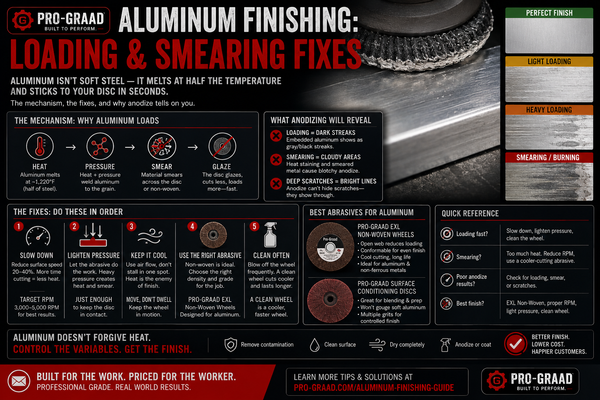
Before you touch a wheel to your workpiece, you must identify what you are holding. Not all metals react to friction and heat in the same way. Stainless steel demands much more aggressive cutting action than aluminum. Soft metals like brass, copper and aluminum "smear" easily if they get too hot, while precious metals like gold and silver require the finest jeweler's rouge and very soft cloth wheels to avoid removing too much material. If you treat aluminum like stainless steel, you will either overheat it or tear the surface. Therefore, identify your metal type before you select a single wheel or compound.
The Four Main Types of Buffing Wheels
Sisal Buffing Wheels, Stage One Power
Sisal buffing wheels are made from coarse, stiff fibers from the agave plant and are used for aggressive cutting and buffing of harder metals. They are excellent for the initial stages of buffing. Paired with Black Emery compound, these wheels are perfect for cutting and prepping the surface for further polishing.
Think of sisal as the heavy equipment of the buffing world. The sisal wheel is a coarse rope-like fiber, which frays out to make a sort of brush. These fibers have a very beneficial effect on scratched and rougher surfaces, almost stroking them smooth. When used with a coarse emery compound, they cut the metal down very rapidly. Reserve sisal for stainless steel and iron. Softer metals do not need it.
Spiral Sewn Muslin Wheels, The Real Workhorse
Spiral sewn buffing wheels are sewn spirally from the center to close to the edge. The stitching style makes these wheels tough and great for cutting and coarse buffing. Spiral sewn buffs generally should be used with either Black Emery or Brown Tripoli.
Spiral sewn cotton polishing wheels wheel is the real workhorse of the bunch; it is used for the majority of polishing. I've found that this wheel handles about 70% of the work on most projects. The tighter the stitching, the stiffer the wheel and the more aggressive the cut, a useful variable to understand.
Loose Cotton Wheels, The Finishing Champion
Loose cotton wheels discs have is around the center ring to hold the wheel together. The loose design allows these buffing wheels to fan out more when buffing, which covers a larger area and is a much gentler buffing tool that is best suited for late-stage cut buffing, color buffing, and finishing metal to a mirror shine.
Because of the softness of these wheels, they conform to the workpiece as you apply pressure, making them the perfect solution for curves, contouring, and any other awkward angles or crevices. For final color work and achieving that liquid-bright look, a loose cotton wheel is mandatory.
Airway Buffing Wheels, Heat Management
buffing process guide with pleated cloth to increase airflow and reduce heat buildup. Constructed with air channels to reduce heat buildup, airway buffs are ideal for high-speed polishing and are available in various sizes and levels of firmness to accommodate different tools and polishing requirements.
Pro Tip: For aluminum, run your airway buffing wheel at 3,000 to 3,500 RPM with brown Tripoli compound, as recommended by Renegade Products' airway buffing guide. Drop below 2,200 RPM for final finishing stages with ultra-fine compounds. Heat is the enemy of a clean mirror surface.
Matching Compounds to Wheels and Metals
The Color Code You Need to Know
Buffing compounds are color coded for a reason. Black emery compound is perfect for heavy jobs. It removes rough surfaces and deep scratches and brings decent shine to the metal surface. Brown Tripoli is exceptionally versatile and is widely used to polish surfaces on softer metals such as brass, copper, and aluminum. White polishing compounds, used mainly on hard metals and stainless steel, have a more refined composition suitable for the cutting and intermediate polishing stages.
For the final mirror, the jeweler's rouge family takes over. White rouge is a very popular color buffing compound, but jeweler's rouge compounds in green and blue have the most fine abrasive materials that can give the ultimate shine and mirror finish on most metals, woods, stones, or plastics.
According to Benchmark Abrasives' compound guide, buffing compounds divide into three categories: cutting (Tripoli), polishing (intermediate), and finishing rouges. Work through all three, in order, and you will reach a mirror. Jump straight to finishing rouge on a rough surface and you will be disappointed every time.
One Wheel, One Compound, Always
If you use the same buffing wheel for different compounds without cleaning it, you will transfer abrasives and contaminants from one stage to the next. This can scratch the surface you are trying to polish. The solution is to dedicate specific wheels to specific compounds and clean them regularly with a wire brush.
Pro Tip: Label each of your buffing wheels with a permanent marker indicating which compound it carries. After years of working with metals, I've found this simple habit eliminates the single most common cause of a ruined finish.
Step-by-Step: From Dull to Mirror Bright
Step 1, Prepare the Surface
The golden rule of polishing metal is that you cannot buff out a scratch that you should have sanded out. The first stage of a mirror shine is actually sanding. If your metal has deep gouges or a satin finish, you must level the surface using sanding discs or sanding sheets.
For typical household pieces, a reliable grit ladder looks like this: for light wear, start at 400 grit and go 400-800-1200. Sand until you cannot see the previous grit's marks before advancing. This discipline saves far more time than it costs.
Step 2, Cut Buffing
Cut buffing is the first stage, where you use an aggressive buffing compound and a stiffer buffing wheel, made of materials like sisal, to eliminate polishing lines and other small imperfections. Operate your buffer at the correct RPM. For a buffing machine, you want at least a 1/2 HP motor that spins at 3,000 RPM. One with an extended shaft is best, so you have plenty of clearance to buff your parts.
Step 3, Color Buffing
Color buffing rounds out the process by pulling out the metal's brilliance to achieve that mirror-like aesthetic. Switch to a fresh wheel, loose cotton or a treated airway, and a finer compound. Working in small sections ensures help you ensure thorough coverage of the entire surface. Always buff in the direction of the metal grain to prevent scratches and enhance the final appearance.
Step 4, Protect the Finish
Apply a thin coat of stainless protectant or metal-safe wax after polishing. Quick microfiber wipe-downs weekly in kitchens and baths will maintain the surface, and a light re-polish every few months on high-touch zones like door pulls and railings will preserve the result. With that routine, a carefully restored mirror finish should hold up for years before you ever need to reach for sandpaper again.
Common Mistakes That Kill Your Mirror Finish

Skipping Grits
Polishing involves using abrasives of varying grit sizes to remove imperfections gradually. Skipping grits or starting with too fine a grit can leave deeper scratches visible. There are no shortcuts in the grit sequence. Each grit removes the marks of the previous one. Skip one and you will chase a phantom scratch all the way to the final stage.
Too Much Pressure, Too Little Speed
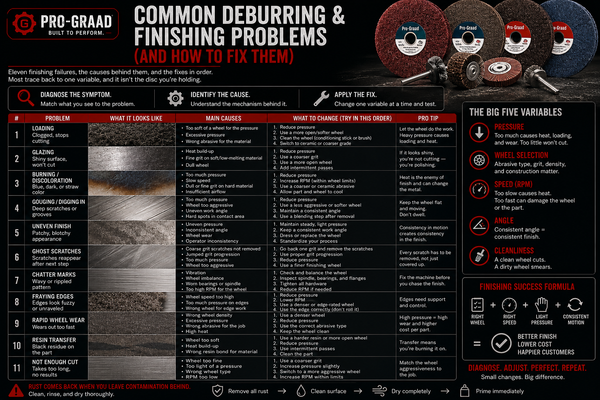
One of the most common mistakes beginners make is pressing too hard. Excessive pressure damages the metal and generates unnecessary heat, which can discolor the surface. The best performance is achieved at 3,000 RPM or lower. Increased work rates will cause the work surface to overheat and hinder the compound's ability to function as intended. Let the wheel do the work. Apply light, consistent contact and keep the piece moving.
Using Too Much Compound
Spin the buff gently against the polishing compound to coat the wheel. Since you only need a tiny amount of the compounds for them to function correctly, use them sparingly. Over-application loads the wheel, reduces efficiency, and creates a smeared rather than a polished surface.
Polishing a Dirty Surface
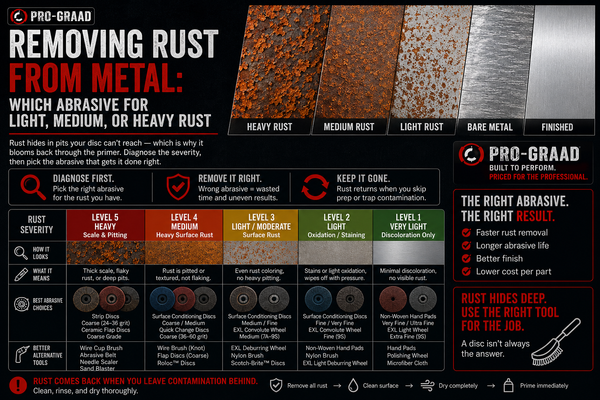
Polishing a dirty surface is the fastest way to create scratches. Any dust, grit, or residue will be ground into the metal by the polishing wheel, causing more harm than good. Even seemingly clean surfaces can harbor microscopic particles that will damage the finish. Always degrease before you buff.
Pro Tip: Work in a dry, temperature-controlled environment and seal your newly polished metal immediately. According to SOLI Steamex's polishing mistakes guide, high humidity can cause rust to form on freshly polished metal within hours. A quality metal-safe wax or sealant applied right after buffing locks in your work.
For those who want a purpose-built solution that takes the guesswork out of wheel and compound selection, Pro-Graad offers a range of metal finishing tools and consumables designed for exactly this kind of progressive polishing work, from initial cut to final color.
Frequently Asked Questions
What is the difference between a buffing wheel and a polishing wheel?
The terms are often used interchangeably, but they describe distinct stages. Buffing and polishing are different parts of the finishing process. Think of polishing as the prep work and buffing as the final touches. Polishing is an earlier process that uses abrasives to remove scratches, while buffing focuses on creating a high-gloss shine, often done after a surface is polished.
How do I know which compound to start with?
Match the compound to the condition of your surface and the metal type. Black emery compound is commonly used to remove marks as coarse as 400-grit sandpaper marks. If you need to smooth rough surfaces, always start with this compound because it will save you hours of work. For softer metals like aluminum or brass with moderate scratches, begin with brown Tripoli instead.
How fast should my buffing machine run?
Speed depends on the wheel size and the stage of work. The best performance is achieved at 3,000 RPM or lower. Increased work rates cause the work surface to overheat and hinder the compound's ability to function as intended. For finishing stages with very fine compounds, some practitioners drop to 2,200 RPM or below to preserve the surface.
How often should I replace a buffing wheel?
Replace polishing wheels when they become worn, contaminated, or lose their shape. A wheel that is loaded with compound residue or has hardened sections will not perform effectively and can damage the workpiece. Between replacements, use a buffing wheel rake regularly. Buffing wheel rakes remove built-up compound and debris. Regular use of a buff rake can help prolong the life of your buffs and improve their performance.
Can I achieve a mirror finish by hand without a bench grinder?
Yes, but it is significantly more labor-intensive. For smaller pieces, an electric drill with a shank-mounted buff will do an excellent job. For larger surfaces, a bench grinder or dedicated buffer provides the consistent speed and power that makes a true mirror finish achievable in a reasonable time. Hand polishing is feasible for small jewelry or detail work, for anything larger, machine power is the practical choice.
Sources
-
Choosing Buffing Products for a Mirror Finish, Empire Abrasives. Comprehensive DIY guide covering wheel types, compounds, and stages. buffing process guide
-
Buffing Wheels and Compounds for a Mirror Finish on Metal, Benchmark Abrasives. Step-by-step guide covering metal identification and progressive polishing. https://benchmarkabrasives.com/blogs/bonded-abrasives/buffing-wheels-and-compounds-for-a-mirror-finish-on-metal
-
Guide to Using Buffing Compounds for a Mirror Finish, Benchmark Abrasives. Step-by-step compound application techniques. https://benchmarkabrasives.com/blogs/buffing/guide-to-using-buffing-compounds-for-a-mirror-finish-step-by-step
-
Metal Finishing Market Size and Forecast to 2035, Expert Market Research. Global market data and growth projections. https://www.expertmarketresearch.com/reports/metal-finishing-market
-
Metal Finishing Market Industry Analysis, Mordor Intelligence. Sector breakdown and automotive share data. https://www.mordorintelligence.com/industry-reports/metal-finishing-market
-
Buffing Wheels, Types and Uses, Red Label Abrasives. Overview of spiral sewn, loose, and airway wheel types. https://www.redlabelabrasives.com/collections/buffing-wheels
-
How to Buff and Polish, Caswell Plating. Classic guide to wheel selection, compound matching, and technique. For smaller pieces, an electric
-
Metal Buffing Tips for Professional Finishes, Empire Abrasives. Technique and cross-contamination prevention guide. Working in small sections ensures
-
Common Metal Polishing Mistakes and How to Avoid Them, PAVCO. Expert guide to polishing errors and their solutions. https://pavco.com/blog/metal-polishing-mistakes
-
Guide to Buffing Compounds: Types, Colors, and Uses, Benchmark Abrasives. Color-coded compound reference and application guide. https://benchmarkabrasives.com/blogs/news/a-guide-to-buffing-compounds-and-their-uses
-
DIY Stainless Steel Polishing: Matte to Mirror Finish, Senmit. Practical home-focused polishing and maintenance guide. https://senmit.com/blogs/academy/diy-stainless-steel-polishing-tips
-
Polishing Wheels, Pryme MX. Machine specs, RPM guidance, and polishing chart reference. https://www.prymemx.com/products/polishingwheel
-
Airway Buffing Wheels, Renegade Products USA. Airway wheel selection, RPM settings, and compound pairing. https://www.renegadeproductsusa.com/products/airway-buffing-wheels
-
Common Mistakes to Avoid When Polishing Metal Surfaces, SOLI Steamex of Long Island. Environmental and technique error guide. https://solicleaning.com/cleaning-tips/common-mistakes-to-avoid-when-polishing-metal-surfaces/
-
Buffing and Polishing Wheels and Discs Differences, Empire Abrasives. Technical breakdown of ply counts, materials, and applications. https://benchmarkabrasives.com/blogs/news/difference-between-buffing-and-polishing-wheels-and-discs