Find Reliable Abrasive Suppliers USA Manufacturing
The abrasive industry quietly powers nearly every sector of American manufacturing, yet most buyers never think about their supplier until something goes wrong. The U.S. abrasive and sandpaper manufacturing industry reached $4.9 billion in market size in 2025, growing at a CAGR of 4.0% over the prior five years. When a grinding wheel cracks, a sanding belt arrives off-spec, or a shipment gets stuck at a distant port, entire production lines stall. The message is clear: the quality of your abrasive supplier is as important as the quality of the abrasive itself.
If you work in metal fabrication, automotive finishing, aerospace, or general manufacturing, this guide will walk you through what to look for in abrasive suppliers USA manufacturing, how to vet them systematically, and how to avoid the most costly sourcing mistakes.

Key Takeaways
- The U.S. market is large but concentrated: The 50 largest U.S. abrasive companies generate about 90% of industry revenue, which means a single poor supplier choice can lock you into one of very few alternatives.
- Domestic sourcing is gaining ground: Contract manufacturers report their customers onshored mainly for quality and rework concerns (61%), delivery time (54%), and reduced supply chain disruption risk (50%). Apply the same logic to your abrasive supply chain.
- Abrasive type must match the application: Bonded abrasives retained the dominant product position with 50.34% of market revenue in 2025, but coated and superabrasive products are growing fast in electronics and aerospace, choosing the wrong category costs money.
- OSHA compliance is the supplier's job too: OSHA 1910.215 covers critical aspects of abrasive wheel machinery, requiring that all abrasive wheels be equipped with protective guards to shield workers from flying debris and wheel fragments. Your supplier must support your compliance, not undermine it.
- Reshoring is changing the sourcing landscape: A McKinsey survey found that 82% of global supply chain leaders reported their supply chains were affected by new tariffs in 2025, with 20 to 40% of their supply chain activity impacted. Domestic abrasive suppliers now offer a strategic advantage beyond price.
Quick-Start Prioritization Framework
| Strategy | Best For | Effort Level | Time to Results |
|---|---|---|---|
| Qualify a domestic ISO-certified supplier | Small to mid-size fabricators | Low | Days to weeks |
| Audit supplier quality systems | Aerospace, medical, defense buyers | High | 4-8 weeks |
| Run bonded vs. coated abrasive trials | Metalworking shops | Medium | 2-4 weeks |
| Build a dual-source supplier plan | Any manufacturer with high volume | Medium | 4-12 weeks |
| Request Safety Data Sheets and compliance docs | All industries, first step | Low | Days |
Start here if you're:
- A small shop or DIY operation: Qualify one domestic ISO-certified supplier first. Get sample orders before committing to volume.
- A mid-size fabricator: Run side-by-side product trials across two domestic suppliers, then lock in a primary with a documented backup.
- An enterprise manufacturer: Audit supplier quality systems formally, build a dual-source strategy, and integrate your abrasive supplier into your broader supply chain risk plan.
Understanding the Three Core Abrasive Categories
Before evaluating any abrasive supplier, you need to know what you actually need. Ordering the wrong product category is one of the most expensive and preventable sourcing mistakes.
Bonded Abrasives
Bonded abrasives are the go-to tools for precision and heavy-duty tasks, combining abrasive grains, fillers, and bonding agents to create robust products like grinding discs, cut-off wheels, and mounted points. They are the workhorses of metal fabrication, automotive component manufacturing, and construction. Bonded abrasives include grinding wheels, snagging wheels, mounted wheels, and other vitrified or resin-bonded products used for precision grinding, heavy stock removal, and rough grinding, with high material removal rate, dimensional stability, and suitability for automated grinding systems making them indispensable in metal fabrication, automotive components, and industrial machinery applications.
Pro Tip: If your shop runs CNC equipment or automated grinding lines, prioritize bonded abrasive suppliers who can demonstrate grit consistency across production runs. Variation in grit distribution is the leading cause of unpredictable surface finish quality.
Coated Abrasives
Coated abrasives are grains applied over a surface, commonly in the form of belts, sheets, discs, and rolls where the grain is attached via a binder to the backing, sandpaper is perhaps the most common type of coated abrasive. The coated abrasives segment is the fastest-growing in the U.S. market, with an estimated CAGR of 5.4% from 2024 to 2030, attributed to their adaptability, as they can be easily shaped, cut, and applied to various surfaces. If your operation spans woodworking, furniture, automotive finishing, or general surface preparation, coated abrasives will make up the majority of your purchases.
Superabrasives
Superabrasives are one of a group of relatively expensive but effective materials possessing superior hardness and abrasion resistance, including cubic boron nitride (CBN) and diamond. Compared to conventional bonded abrasives, superabrasives have an extended lifetime and cut and grind harder materials with relative ease. If you machine aerospace alloys, hardened steel, or semiconductor materials, superabrasives are not optional; they are required.

How to Evaluate Abrasive Suppliers USA Manufacturing
In my experience, most buyer regrets in abrasive sourcing come from evaluating suppliers on price alone, without checking for the quality signals that actually predict performance over months of production use.
Check ISO and Safety Certifications First
Certification is the fastest proxy for quality discipline. VSM, for example, has maintained ISO 9001 certification for many years as the basis for its quality assurance system. Flexovit is the first North American abrasive manufacturer to achieve ISO certification. When a supplier holds ISO 9001, they have documented quality management processes, meaning you can audit what they do, not just what they claim.
Quality, cost, and delivery have long been considered key indicators of supplier quality management and performance. Request a supplier's ISO certificate and ask for its scope, a certificate limited to a single product line tells a different story than facility-wide certification. Beyond ISO, verify that abrasive products comply with OSHA standard 29 CFR 1910.215, which governs abrasive wheel machinery safety requirements in general industry.
Assess Product Consistency and Batch Traceability
I've found that a single sample order rarely reveals a supplier's true quality. The real test is whether the 50th shipment performs like the first.
Supplier quality management is often accomplished through the use of quality management systems (QMS), which allow companies to monitor supply chains and inspect or audit materials and services at regular intervals, beginning early in the product design and supplier selection process. Ask prospective abrasive suppliers for batch test records or certificates of conformance on recent shipments. If they cannot provide these, walk away.
Pro Tip: Request a small trial order before signing any volume agreement. Run the product through your actual production process, measure surface finish outcomes, and compare tool life against your current supplier. Document the results, your operations team will thank you later.
Evaluate Lead Times and Domestic Fulfillment
Imports account for about 30% of the U.S. abrasives market, with the largest suppliers to the U.S. coming from China, Canada, Mexico, and Germany. Reliance on overseas abrasive sources introduces lead time risk. The hidden costs accumulating in offshore supply chains include carrying costs for safety-stock inventories, expedited freight charges when shipments miss deadlines, quality inspection expenses, and the opportunity cost of engineering resources devoted to managing distant supplier relationships rather than product development.
Domestic abrasive suppliers USA manufacturing operations can typically fulfill orders in days rather than weeks. Forty percent of OEMs were willing to pay 10 to 20% more for delivery that was five weeks faster, which tells you that lead time flexibility has real monetary value in your cost model.
The Domestic Sourcing Advantage in 2026
The sourcing landscape for abrasives has shifted meaningfully in the past two years. As manufacturing capacities within the nation get reshored and enhanced in terms of industrial capabilities as a result of increased focus on supply chain resilience after the COVID-19 crisis and government incentives through policies such as the CHIPS Act and the Inflation Reduction Act, there will be additional demand for abrasives in the nation through the expansion of new manufacturing plants.
Why Buyers Are Moving Back to U.S.-Based Suppliers
The top three reasons given for reshoring were locating manufacturing near engineering (45%), reducing freight and duty costs (45%), and avoiding geopolitical risk (38%). These drivers apply directly to abrasive sourcing. A domestic supplier gives you faster engineering support when specs need to change, no import tariff exposure, and no risk of a geopolitical event freezing your supply overnight.
Tariffs, export controls on key grains, and sanctions-driven payment friction can disrupt supply continuity for abrasive buyers, dual sourcing and documented alternates reduce qualification shocks. The practical takeaway: even if your primary source is a known domestic brand, maintain a vetted second-tier domestic supplier at all times.
Industry Growth Creates Supplier Opportunities
The U.S. abrasives market was valued at approximately $7.84 billion in 2025 and is expected to reach approximately $11.47 billion by 2035, growing at a CAGR of approximately 3.88%. This growth means new and expanding domestic suppliers are entering the market. Buyers who establish supplier relationships early gain pricing leverage and priority capacity access that latecomers cannot match.
Opportunities exist in the growing demand for advanced materials and technologies, particularly in sectors like automotive, aerospace, and construction, where precision is crucial. Suppliers serving these high-precision segments tend to operate more rigorous quality systems than commodity distributors, making them more reliable partners even for standard applications.

Common Mistakes Buyers Make When Choosing Abrasive Suppliers
After years of working with manufacturing procurement teams, I can say with confidence that most sourcing mistakes are avoidable. Here is where buyers consistently go wrong.
Choosing on Price Without Accounting for Total Cost
Simplistic cost comparisons often result in a 20 to 30% miscalculation of actual offshoring costs. The same logic applies to abrasive sourcing even domestically: a cheaper grinding wheel that wears 30% faster costs more per finished part. Always calculate cost per unit of output, not cost per unit of abrasive.
Pro Tip: Track tool life in your actual process. If one supplier's flap disc removes material 25% faster and lasts twice as long, a higher unit price can still deliver lower total cost. Use this data when negotiating volume contracts.
Ignoring Application-Specific Grain Chemistry
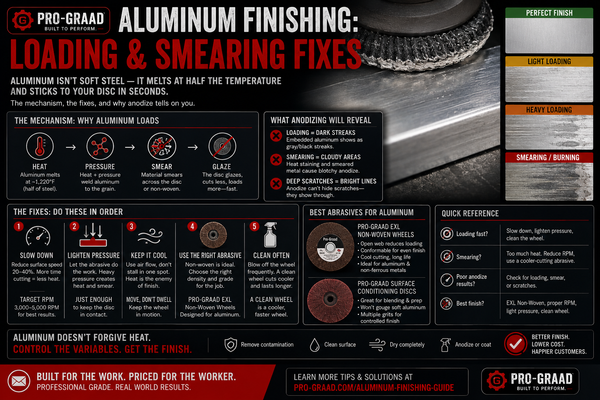
Aluminum oxide accounted for 39.10% of abrasive market share in 2025, while silicon carbide is projected to expand at 5.49% CAGR through 2031. Aluminum oxide works well on steel; silicon carbide is preferred for non-ferrous metals, stone, and ceramics. Using the wrong grain on the wrong material creates excessive heat, poor surface quality, and premature wheel failure. Confirm with your supplier that their grain chemistry matches your workpiece material before ordering.
Failing to Verify OSHA Compliance Documentation
All abrasive wheels shall be closely inspected and ring-tested before mounting to ensure that they are free from cracks or defects, as required by OSHA. This is the operator's responsibility, but a qualified supplier should provide documentation that supports your compliance process, including Safety Data Sheets (SDS) and marking that indicates maximum operating speed. If a supplier cannot supply compliant documentation, the liability for an incident falls harder on your operation.
Single-Sourcing Without a Backup Plan
The new supply chain math factors resilience directly into cost models, meaning building in dual and multi-sourcing options, maintaining critical inventory buffers, and creating surge capacity that can absorb disruption without halting production. A single-source abrasive strategy made sense when supply chains were stable. Today, it is a recognized risk. Qualify at least two domestic abrasive suppliers for every critical product category in your operation.
Where Pro-Graad Fits In
Manufacturers sourcing abrasives for demanding applications need a supplier who understands that product quality and technical support are inseparable. Pro-Graad serves precisely this need, offering industrial abrasive solutions backed by deep application knowledge. Rather than simply selling product off a catalog, Pro-Graad works with buyers to match the right abrasive specification to the actual manufacturing requirement, reducing trial-and-error time and improving surface finish consistency from the first order.
As one industry principal consultant notes, "value creation will shift toward engineered synthetic grains and application-specific bonded systems that deliver measurable productivity gains for OEM buyers." Suppliers like Pro-Graad who operate at that level of application specificity give buyers a genuine edge over competitors still sourcing generically.
Frequently Asked Questions
What certifications should I require from abrasive suppliers in the USA?
At a minimum, look for ISO 9001 certification at the facility level. For aerospace and defense applications, AS9100 certification is preferred. Verify that products comply with OSHA 1910.215 safety requirements and request current Safety Data Sheets for all abrasive products you plan to use. Some suppliers will also carry California Air Resources Board (CARB) abrasive blasting certification if that applies to your operation.
How do I compare domestic vs. imported abrasive suppliers on total cost?
Factor in unit price, lead time, freight cost, inspection cost, and the probability of supply disruption. The Reshoring Initiative's Total Cost of Ownership (TCO) Estimator is a free online tool that helps companies account for all relevant factors, overhead, balance sheet, risks, corporate strategy, and other external and internal business considerations, to determine the true total cost of ownership. Apply that framework to abrasive sourcing. Domestic suppliers often close the unit price gap when total cost is calculated accurately.
What is the difference between bonded and coated abrasives, and does it affect supplier choice?
Yes, significantly. Coated abrasives adhere a layer of abrasive material to the outside surface of the product whereas bonded abrasives are formed by the fusion of abrasive grains and the binder itself. Not all suppliers manufacture both types. If your operation requires both, confirm that your supplier has genuine expertise in each category rather than treating one as a secondary product line.
How large is the U.S. abrasives manufacturing industry in 2026?
There are 227 businesses in the abrasive and sandpaper manufacturing industry in the United States. The market was valued at approximately $7.84 billion in 2025 and is projected to reach approximately $11.47 billion by 2035 at a CAGR of approximately 3.88%. Automotive and aerospace are the largest end-user segments driving demand.
How often should I reassess my abrasive supplier relationships?
Supplier quality management continues through the entire life cycle of a product and for the duration of the relationship with that particular supplier. A formal reassessment annually is the minimum standard. If your production volumes increase, your material mix changes, or your supplier has a quality event, reassess immediately. Building a simple supplier scorecard tracking on-time delivery, defect rate, and response time gives you the data needed to make objective decisions rather than reactive ones.
Final Thought
The U.S. abrasive market is growing, reshoring is accelerating, and domestic suppliers with genuine quality systems are more accessible than ever. The manufacturers who invest time now in qualifying the right abrasive suppliers, those with documented quality management, OSHA-compliant products, and real application expertise, will operate more efficiently and with far less supply chain risk than those who keep defaulting to the cheapest catalog option. Start with a clear understanding of your abrasive type requirements, set a certification standard before you make your first call, and build a dual-source plan before you need it.
Sources
-
IBISWorld Abrasive & Sandpaper Manufacturing Report, 2025, IBISWorld. U.S. industry market size, company count, and growth data. https://www.ibisworld.com/united-states/industry/abrasive-sandpaper-manufacturing/561/
-
U.S. Abrasives Market Size & Share Report, SNS Insider. U.S. market valuation and 10-year growth forecast. https://www.snsinsider.com/reports/abrasives-market-9160
-
Abrasives Market Size, Share & Trends Report 2026-2033, Grand View Research. Global and U.S. market segmentation by product and application. Bonded abrasives include grinding
-
Abrasives Manufacturing Industry Profile, First Research. U.S. import/export concentration and market structure data. https://www.firstresearch.com/Industry-Research/Abrasives-Manufacturing.html
-
OSHA 1910.215, Abrasive Wheel Machinery, U.S. Occupational Safety and Health Administration. Federal safety standards for abrasive wheel equipment. https://www.osha.gov/laws-regs/regulations/standardnumber/1910/1910.215
-
Supplier Quality Management, ASQ (American Society for Quality). Frameworks and criteria for evaluating supplier quality systems. Supplier quality management
-
2025 Reshoring Survey: 59% of Shops Reshored or Are Quoting, AMT Online. Survey data on reshoring drivers and total cost of ownership. https://www.amtonline.org/article/2025-reshoring-survey-59-of-shops-reshored-or-are-quoting
-
Why Reshoring Manufacturing United States 2025 is Surging, Elsner Engineering. Analysis of McKinsey supply chain survey findings and reshoring cost data. https://elsnereng.com/reshoring-manufacturing-united-states-2025/
-
Abrasives Market Size, Share, Growth Report 2026-2031, Mordor Intelligence. Global market share data, grain chemistry breakdown, and top company positioning. https://www.mordorintelligence.com/industry-reports/abrasives-market
-
Coated vs. Bonded Abrasives: Comparing Grain Types, Saint-Gobain Abrasive Materials. Technical explanation of coated vs. bonded abrasive construction. Coated abrasives are grains
-
Understanding OSHA 1910.215: Abrasive Wheel Machinery in Manufacturing, Safety Net Inc. Practical guide to OSHA compliance for abrasive wheel operations. OSHA 1910.215 covers critical
-
Reshoring Initiative, Reshoring Initiative. TCO Estimator tool and reshoring job announcement data. https://reshorenow.org/
-
Future Market Insights, Abrasive Market Forecast to 2036, Future Market Insights. Industry analyst commentary on value shift toward engineered grain systems. https://www.futuremarketinsights.com/reports/abrasives-market
-
VSM Industrial Abrasives USA, VSM Abrasives Corp. ISO 9001 certification and vertical integration quality assurance model. https://www.us.vsmabrasives.com/en/
-
Flexovit Abrasives Performance, Flexovit USA Inc. ISO certification, U.S. manufacturing under premium raw materials. Flexovit USA manufactures abrasives in the USA under ISO certification using premium raw materials.